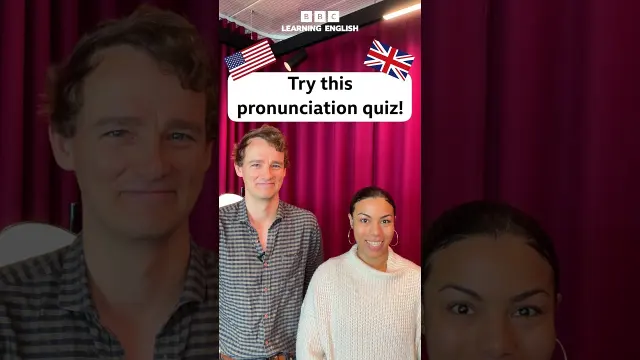
 American English Versus British English Pronunciation Quiz
#Pronunciation Quiz
1 ideas
American English Versus British English Pronunciation Quiz
Get new #Pronunciation Quiz ideas by email
Every Thursday: the week's best ideas, with the newest from #Pronunciation Quiz.
Related tags
Pronunciation Quiz: Test and Improve Your English Sounds
A pronunciation quiz is a set of short exercises that asks you to notice, choose or produce the sounds of a language. It might ask which of two words rhymes, where the stress falls in a long word, or whether two written words sound the same. Unlike a grammar quiz, it rarely has a single "correct" answer you can memorise from a rule book. It trains the ear as much as the voice, and that is exactly what makes it useful.
Where the idea comes from
Pronunciation has been taught formally for a long time, and quizzes grew out of the classroom habit of drilling sounds in pairs. Teachers noticed that learners often hear two different sounds as one, so they built exercises that put those sounds side by side and asked students to tell them apart. Later, language laboratories and recorded material made it possible to practise listening and repeating on your own, and the quiz format travelled naturally into self-study books and, eventually, apps.
The written side of pronunciation leans on the International Phonetic Alphabet, a system of symbols where each sign stands for one sound. You do not need to master it, but learning the handful of symbols that cover the sounds you find difficult is one of the fastest ways to make a dictionary entry readable.
Read more
What a quiz can test
- Vowel contrasts, such as the difference between a short and a long vowel in otherwise similar words.
- Consonant pairs that learners often merge, like the sounds at the start of "think" and "sink".
- Word stress: which syllable a speaker leans on, and how the meaning can shift when it moves.
- Sentence stress and rhythm, including the way small words weaken in fast speech.
- Connected speech, where sounds join, drop or change at the boundary between words.
- Homophones, or words spelled differently that sound identical.
- Accent comparison, most often British and American English, which differ in several vowels and in the placement of stress in some words.
Getting started
Begin with listening rather than speaking. If you cannot hear a contrast, you will struggle to produce it, so give yourself time with discrimination exercises before you try to say anything. Answer honestly and let yourself get items wrong; a wrong answer is the most informative thing a quiz can give you, because it points to a specific sound worth working on.
Say your answers aloud where the format allows it, even quietly. Reading a choice in your head can hide exactly the confusion the quiz is designed to expose.
Practical tips
Keep sessions short and repeat them; ears improve with frequent exposure more than with long sittings. Record yourself on your phone and compare your version with a dictionary recording of the same word. Do not chase a foreign accent, aim for clarity instead. And remember that dictionaries differ: if a word is stressed differently in two of them, both are usually accepted somewhere, so pick one model and stay consistent with it.
Above all, treat the quiz as a map rather than an exam. It shows you where to look, and the real practice happens the next time you speak.
#Pronunciation Quiz: frequently asked questions
How do I start a pronunciation quiz if I've never done one before?
Start with the listening side: play a few items and simply try to tell whether the sounds in each pair are the same or different, without worrying about saying anything yet. Once you can hear the contrast reliably, move on to the items that ask you to choose or repeat aloud. Short, repeated sessions teach your ear far more than one long sitting.
What do I actually need to take one?
Nothing more than the quiz itself and a quiet moment where you can speak softly without feeling watched. Headphones help, because small sound differences are easier to catch when nothing else competes for your attention. If you can, keep a phone handy to record your answers so you can compare them with a dictionary recording afterwards.
Should I pick a British or an American quiz?
Choose whichever version of English you are most likely to speak or listen to in daily life, since consistency matters more than prestige. The two differ in several vowels and occasionally in where the stress falls, so switching back and forth between models can muddy the picture. Dictionaries sometimes disagree too, and when they do, both versions are usually accepted somewhere, so settle on one reference and stay with it.
Do I have to learn phonetic symbols to use a quiz?
No, you can work entirely by ear and by repeating what you hear. That said, picking up just the few symbols for the sounds you personally find hard makes dictionary entries much easier to read and gives you a way to note problems down. Treat it as a small optional extra rather than a course you must finish first.
How should I practise between quizzes?
Read aloud for a few minutes a day and record yourself now and then, then compare against a recorded model of the same word or phrase. Focus on being clearly understood rather than on erasing your accent, which is not the goal of this work. The quiz is only a map of where to look, and the real improvement happens in ordinary conversation.
What are the common mistakes people make with pronunciation quizzes?
The biggest one is answering silently in your head, which hides exactly the confusion the exercise is meant to reveal. Another is treating wrong answers as failures and skipping past them, when those are the most useful items on the page. Finally, don't grind through a long session in one go, and don't expect to fix everything at once, since ears change slowly and only with frequent exposure.
Videos come from YouTube and posts from Instagram; titles and summaries are our own. All rights belong to their creators.