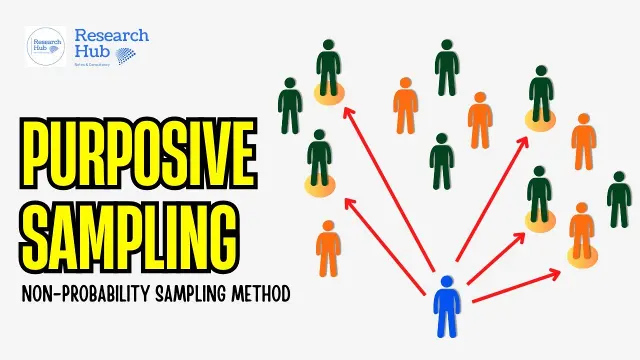
 Understanding Purposive Sampling in Research
#Qualitative Research
1 ideas
Understanding Purposive Sampling in Research
Get new #Qualitative Research ideas by email
Every Thursday: the week's best ideas, with the newest from #Qualitative Research.
Related tags
A Beginner's Guide to Qualitative Research
Qualitative research is a way of studying people and the world that asks not "how many" but "what is happening here, and why". Where quantitative work turns experience into numbers, qualitative work stays close to words, images, gestures and meanings. A researcher might spend months in a village, sit through dozens of interviews, or read hundreds of pages of field notes, all to understand how people make sense of their own lives. The aim is depth and context rather than measurement and generalisation.
Where it comes from
The tradition grew out of several streams. Anthropologists travelling to unfamiliar places developed fieldwork and participant observation. Sociologists studying cities and communities borrowed those methods. Philosophers of knowledge argued that human behaviour cannot be understood by treating people like objects that obey fixed laws: to explain what someone does, you need to grasp the meanings they attach to it. From these roots came the interpretive stance that still shapes the field, namely that the researcher is part of the world being studied and cannot stand entirely outside it.
Main approaches
Read more
Several distinct families sit under the umbrella.
- Ethnography: long-term immersion in a setting, often using observation and field notes, to describe a culture or community from the inside.
- Interviews: from loosely guided conversations to structured protocols, useful for exploring experiences and reasoning.
- Focus groups: discussion among several participants, valuable for seeing how views form and shift in company.
- Case study: close examination of one person, group, organisation or event in its real context.
- Grounded theory: an approach where concepts and theory are built up from the data rather than tested against a pre-existing framework.
- Narrative and discourse analysis: attention to how stories are told and how language constructs meaning.
- Documentary and visual methods: working with texts, images, diaries or recordings people produce themselves.
What beginners should know
The first lesson is that qualitative work is not unstructured. Good studies are carefully designed, but the design evolves as understanding grows. Research questions tend to be open and exploratory, and they are often refined once fieldwork begins.
Sampling is rarely random. Researchers choose participants purposively, seeking people who can speak to the question, and sometimes deliberately look for contrasting or unusual cases. Samples are usually small because the analysis is detailed, and the goal is often to reach the point where new interviews stop producing new ideas.
Data collection and analysis are intertwined. Researchers keep notes, write reflections, and begin coding material early, sorting fragments into themes and comparing them across cases. Rigour comes from transparency: keeping an audit trail, documenting decisions, and being honest about the researcher's own position and assumptions.
Practical tips
Ask better questions rather than seeking more answers. Listen more than you speak in interviews, and resist the urge to fill silences. Record and transcribe carefully, then read the whole corpus before chopping it into codes. Write memos as you go; they become the scaffolding of your argument. Triangulate where you can, drawing on more than one source or method. Expect ambiguity, and treat contradiction in the data as interesting rather than inconvenient.
Most of all, be patient. Qualitative research is slow by design, and its reward is an account of human life that feels recognisably true.
#Qualitative Research: frequently asked questions
How do I start a qualitative research project?
Begin with an open, exploratory question about what is actually happening in a setting and why, rather than a question about how many. Then choose a method that fits that question — immersion in a community, conversations with people who hold relevant experience, or close reading of material they produce. Expect the design to shift as your understanding deepens, and start writing notes from the very first encounter.
What do I need before I begin collecting data?
You need a clear sense of who can speak to your question, and a plan for how you will find and approach them, since participants are chosen on purpose rather than at random. Prepare a way to record and transcribe accurately, and set up a simple system for storing notes and reflections. Above all, be honest with yourself about your own assumptions, because your position shapes what you notice.
Which qualitative approach should I choose?
Pick the one whose kind of evidence matches what you want to understand: long-term observation when you want to describe a culture from the inside, interviews when personal experience and reasoning are the focus, group discussion when you want to see views form in company, or a single case when context matters more than comparison. If you want theory to emerge from the material rather than be tested against it, a grounded approach suits you. Documentary and visual methods work well when people's own texts, images or recordings are the richest source.
How do I keep qualitative work rigorous?
Rigour here comes from transparency rather than from measurement. Keep an audit trail of decisions, write memos as you go, and be explicit about your own position and assumptions. Drawing on more than one source or method also strengthens your account.
What are the most common beginner mistakes?
The classic one is treating qualitative work as unstructured and skipping the design altogether, which leaves the study without a focus. Another is rushing to chop material into codes before reading the whole corpus, or talking too much in interviews and filling every silence. Treating contradictions in the data as a nuisance rather than as the most interesting thing you have found is a close third.
How do I know when to stop collecting data?
Stop when further conversations and observations stop producing new ideas and start confirming what you already understand. Because the analysis is detailed, working with a small number of carefully chosen participants is normal and expected. Patience matters more than volume — the reward is an account of human life that feels recognisably true.
Videos come from YouTube and posts from Instagram; titles and summaries are our own. All rights belong to their creators.