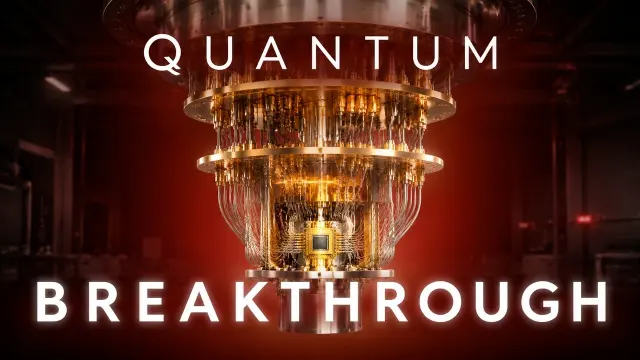
 How a Chinese Quantum Machine Outran Classical Supercomputers
#Quantum Supremacy
1 ideas
How a Chinese Quantum Machine Outran Classical Supercomputers
Get new #Quantum Supremacy ideas by email
Every Thursday: the week's best ideas, with the newest from #Quantum Supremacy.
Related tags
Quantum Supremacy: What It Means and Why It Matters
Quantum supremacy is the name given to a milestone in computing: a quantum computer completes a task that no practical classical computer can match in a sensible amount of time. It is a claim about one demonstration, on one machine, for one problem — not a statement that the computer in question is generally more capable. That distinction explains most of the confusion the phrase attracts.
Where the idea comes from
A classical computer stores information in bits that are either zero or one. A quantum computer uses qubits, which can be held in superpositions of both, and which can be entangled so that their behaviour is correlated in ways no classical system reproduces. Because the state of many qubits grows exponentially in complexity, and because interference can make wrong answers cancel while right ones reinforce, certain problems appear to be solvable with dramatically fewer steps than any classical approach.
The phrase itself took hold in research circles as hardware grew from a handful of qubits to a scale where the question "could this beat a classical machine?" became meaningful rather than philosophical.
Read more
The tasks look like nonsense on purpose
The problems chosen for these demonstrations are rarely useful in themselves. They are usually sampling problems: run a random circuit, then sample from the probability distribution of outcomes. The point is to pick something classically brutal and quantum-native, not something anyone needs. This is why the output often resembles noise, and why the achievement is easy to misread as a stunt.
The verification problem
If no classical computer can check the answer, how do you know the quantum machine produced a correct one? Researchers work around this with cross-checks at smaller sizes where classical simulation is still possible, with consistency between different quantum devices, and with complexity arguments that the task resists efficient simulation. None of this is as tidy as checking a calculator, and the reasoning is part of the debate.
Classical computers keep answering back
Supremacy claims are provisional by nature. Better classical algorithms and better classical hardware can shrink the gap, and a claimed advantage may later be closed by a smarter simulation. What looked unreachable can become routine. The frontier moves, which is why many researchers now prefer the calmer term "quantum advantage."
Beating a laptop is not the same as being useful
A machine that wins a benchmark may still be far from doing anything valuable. Practical applications — in chemistry, materials, optimisation, cryptography — generally require error correction: bundling many noisy physical qubits into a single reliable logical one. That is a separate and much harder engineering problem, and it is the real measure of progress.
What to keep in mind when you read a claim
- Ask what task was run, and against which classical method.
- Distinguish physical qubits from logical ones; the counts differ enormously.
- Noise and error rates matter more than qubit totals.
- A single demonstration is a data point, not a settled verdict.
Seen clearly, quantum supremacy is less a trophy than a marker on a long road — a useful way of asking how far the hardware has actually travelled.
#Quantum Supremacy: frequently asked questions
What does quantum supremacy actually mean?
It refers to a single moment when a quantum machine finishes one specific task faster than any practical classical computer could. It is a claim about one device, one problem, one run — not a verdict that the machine is generally more powerful. That narrowness is where most of the misunderstanding comes from.
Why do the tasks used in these demonstrations look like random noise?
The problems are usually sampling tasks: run a random circuit, then sample from the spread of possible outcomes. Researchers pick them because they are classically punishing and natural for quantum hardware, not because anyone needs the answer. The output resembling noise is a feature of the choice, not a sign that something went wrong.
How can anyone check the answer if no classical computer can verify it?
Verification leans on cross-checks — running smaller versions that a classical machine can still simulate, comparing results across different quantum devices, and complexity arguments for why the full task resists simulation. None of it is as satisfying as checking a calculator, and the strength of that reasoning stays part of the argument.
Why do researchers increasingly say "quantum advantage" instead of "quantum supremacy"?
Because these claims are provisional: better classical algorithms and hardware can close the gap later, turning an unreachable result into a routine one. The softer phrase captures the same idea without implying a permanent winner. The frontier moves, and the words moved with it.
Does winning such a benchmark mean quantum computers are ready for useful work?
Not by itself. Practical uses in chemistry, materials, optimisation and cryptography generally need error correction, where many noisy physical qubits are bundled into one dependable logical qubit. Beating a laptop on a benchmark and doing something valuable are separate achievements.
What should I check when I read a new supremacy claim?
Start with the task that was run and the classical method it was measured against. Then separate physical qubit counts from logical ones, since the two differ enormously, and weigh error rates and noise above headline qubit totals. Treat a single demonstration as one data point rather than a settled conclusion.
Videos come from YouTube and posts from Instagram; titles and summaries are our own. All rights belong to their creators.