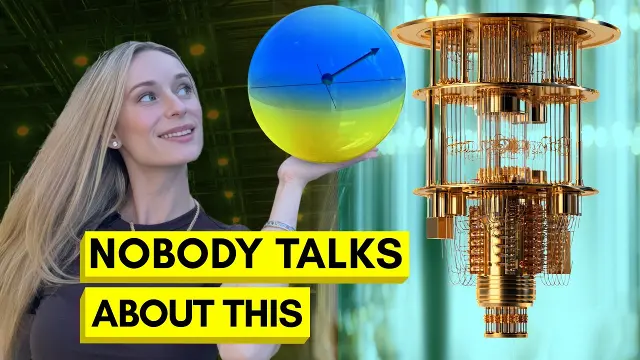
 The Quantum Computing Bottleneck of Physical and Logical Qubits
#Qubits
1 ideas
The Quantum Computing Bottleneck of Physical and Logical Qubits
Get new #Qubits ideas by email
Every Thursday: the week's best ideas, with the newest from #Qubits.
Related tags
Qubits: The Basics of Quantum Information
What a qubit is
A qubit, or quantum bit, is the basic unit of information in quantum computing. In a traditional computer, a bit can be either 0 or 1. A qubit can be described in a more flexible way: it can behave like 0, like 1, or like a combination of both until it is measured. This makes qubits very different from ordinary bits and gives quantum computers their unusual potential.
The idea comes from quantum physics, where very small things such as atoms, electrons, and photons do not always follow the same rules as everyday objects. Qubits use those quantum properties to store and process information in ways that classical computers cannot easily match.
How qubits work
Read more
A qubit is not just “both 0 and 1 at the same time” in a simple everyday sense. It exists in a quantum state that can be influenced by probability. When you measure it, the state gives a definite result, usually read as 0 or 1. Before measurement, the qubit can be thought of as having a mix of possibilities.
Two other quantum features are especially important:
- Superposition: a qubit can hold a blend of states before it is measured.
- Entanglement: qubits can become linked so that the state of one is connected to the state of another, even when separated.
These properties are what make quantum computing exciting, but they also make qubits delicate and difficult to handle.
Where qubits come from
Researchers have found several physical ways to build qubits. Different systems can act as qubits if they can be prepared, controlled, and measured reliably. Some are based on tiny particles, some on circuits, and some on other quantum systems. Each approach has strengths and weaknesses, and no single method is perfect for every use.
The important idea is that a qubit is not a material object by itself. It is a role that a physical system plays when it is controlled in a quantum way.
Why qubits are useful
Qubits are useful because they let quantum computers represent and process information differently from classical machines. For certain kinds of problems, this can open up new approaches, especially where there are many possible combinations or interactions to explore.
Quantum computers are not simply faster versions of ordinary computers. They are built for specific kinds of tasks, and qubits are the reason they can work in a different computational style.
What beginners should know
If you are new to the topic, a few simple ideas help a lot:
- A qubit is not the same as a classical bit.
- Qubits are fragile and can lose their quantum behavior easily.
- Measuring a qubit changes what you can know about it.
- Quantum computers need careful control and error correction to be practical.
It also helps to remember that qubits are a scientific concept as much as a technology. They sit at the meeting point of physics, computer science, and engineering.
A practical way to think about qubits
If a bit is like a switch that is off or on, a qubit is more like a quantum state that can be shaped before it is read. That difference is what makes qubits so important in quantum computing, and also what makes them challenging to use well.
Videos come from YouTube and posts from Instagram; titles and summaries are our own. All rights belong to their creators.