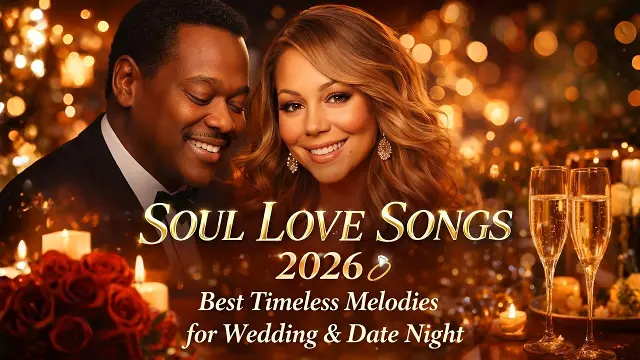
 Soul and R&B Love Songs for Wedding Receptions
#R and B
1 ideas
Soul and R&B Love Songs for Wedding Receptions
Get new #R and B ideas by email
Every Thursday: the week's best ideas, with the newest from #R and B.
Related tags
Rhythm and Blues
Rhythm and blues, often shortened to R&B, is a broad music genre built on strong groove, expressive singing, and a close connection between rhythm and melody. It grew from African American musical traditions, including blues, gospel, jazz, and early popular dance music, and it has long influenced many other styles. R&B can sound smooth, soulful, playful, romantic, or deeply emotional, but it usually keeps a warm beat and a voice-centered feel.
What R&B is
At its heart, R&B is music that puts feeling first. The songs often focus on love, longing, joy, heartbreak, confidence, or everyday life. The vocal performance is usually very important, and singers often use phrasing, melisma, and subtle improvisation to shape the mood. The rhythm may be laid-back or energetic, but it almost always gives the music its pulse and movement.
Where it comes from
Read more
R&B began as a name for Black popular music that blended blues and jazz influences with danceable rhythms. Over time, it developed alongside soul, funk, and later pop and hip-hop, with each era adding new sounds and production styles. Because of that, R&B is not just one fixed sound. It is a family of related styles that share a feeling of groove and emotional expression.
Main styles and related forms
You may hear several kinds of R&B:
- Classic rhythm and blues: driven by horns, piano, and a lively backbeat
- Soul-influenced R&B: rich vocals, gospel feeling, and emotional intensity
- Smooth or quiet R&B: polished, mellow, and intimate
- Contemporary R&B: blends R&B with pop, hip-hop, and electronic elements
- Neo-soul: a warmer, more organic style that draws on classic soul and modern songwriting
These styles overlap, so a song may fit more than one category.
What to listen for
When you listen to R&B, pay attention to:
- The groove: the steady pulse that carries the song
- The vocal tone: soft, smoky, powerful, or vulnerable
- The phrasing: how the singer stretches or places words
- The harmony: often rich and emotionally expressive
- The lyrics: usually personal, romantic, or reflective
These elements work together to create the genre’s mood.
If you are new to R&B
If you are just starting to explore R&B, begin by listening to a few different styles so you can hear how flexible the genre is. Some songs are built for dancing, while others are made for slow listening or emotional moments. Try focusing first on the voice and the rhythm, then notice the bass line, backing vocals, and arrangement. R&B is often at its best when you let it settle in and listen for feeling as much as sound.
A few practical tips
- Listen with headphones or in a quiet space to catch the detail in the vocals
- Notice how the rhythm section supports the singer rather than overpowering them
- Compare older and newer songs to hear how the genre has changed while keeping its core identity
- If you enjoy R&B, explore soul, blues, funk, and gospel to understand its roots
R&B remains one of the most expressive and adaptable music traditions, with a sound that can be smooth, powerful, tender, or bold, often all within the same song.
Videos come from YouTube and posts from Instagram; titles and summaries are our own. All rights belong to their creators.