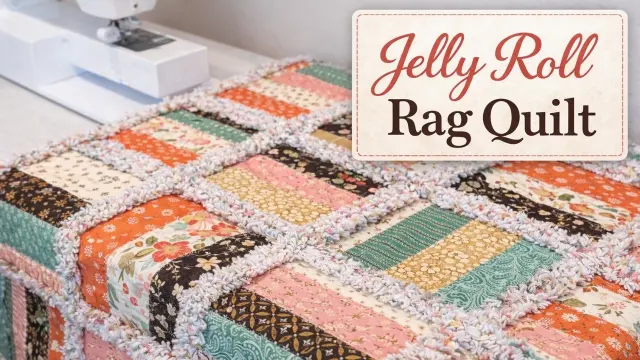
 Easy Step-by-Step Jelly Roll Rag Quilt Assembly Guide
#Rag Quilt
1 ideas
Easy Step-by-Step Jelly Roll Rag Quilt Assembly Guide
Get new #Rag Quilt ideas by email
Every Thursday: the week's best ideas, with the newest from #Rag Quilt.
Related tags
Rag Quilts: A Soft, Frayed Patchwork Guide
What a rag quilt is
A rag quilt is a patchwork quilt made so that the seam allowances are meant to fray. Instead of hiding the raw edges, you expose them on the front or between the layers and wash the quilt so the edges soften into a fluffy, textured finish. The result is usually relaxed, cozy, and a little rustic, with a look that feels less precise than traditional quilted patchwork.
Rag quilting is especially appealing if you like a handmade style that does not need perfect points or exact matching. The frayed seams create much of the charm, so small irregularities are often part of the appeal rather than a flaw.
Common fabrics and styles
Read more
Most rag quilts are made from soft woven fabrics such as cotton, flannel, or a mix of both. These fabrics fray in a way that creates the signature texture. Quilters often choose fabrics with different prints or solids to build contrast between blocks. Many rag quilts use squares, but you can also see rectangles, strips, or simple block patterns.
Some rag quilts are made with all three layers: a top, batting, and backing. Others use lighter construction for a less bulky finish. The style can be adapted for baby quilts, lap quilts, throws, and decorative blankets.
Basic construction
A rag quilt is usually pieced in rows and columns, with the layers sewn together along the block lines. The seam allowance is often wider than in standard quilting so there is room for the edges to fray. After the quilt is assembled, the seam allowances are clipped at regular intervals to encourage even fraying.
The quilting lines are often simple and functional. Straight lines are common because they help hold the layers in place while keeping the overall look casual. The goal is not perfection, but sturdy construction and a soft, flexible feel.
Tips for beginners
If you are new to rag quilts, start with a simple block shape and a manageable size. Large squares are easier to handle than small, detailed pieces. Choose fabrics that are similar in weight so the quilt behaves evenly when washed. Prewashing is a matter of personal preference, but it can affect how much the fabric shrinks and frays.
A few practical tips can help:
- Use sharp scissors or snips for clipping the seam allowances.
- Leave enough seam allowance to support the fraying edge.
- Clip carefully without cutting into the stitching line.
- Wash the finished quilt by itself the first time to catch loose threads.
- Clean the lint filter after washing and drying, since rag quilts shed fibers.
What to keep in mind
Rag quilts are loved for comfort and texture, but they do need secure stitching so they hold up well. Because the edges fray, they are not the best choice if you want a very crisp or formal finish. They are ideal when you want something soft, homey, and forgiving.
If you enjoy patchwork and want a project that feels approachable, a rag quilt is a wonderful place to begin. It combines simple shapes with a tactile finish, and each wash adds to its character.
#Rag Quilt: frequently asked questions
How do I start a rag quilt if I have never quilted before?
Begin with a simple block shape and a modest finished size, since large squares are far easier to handle than small detailed pieces. Sew the blocks into rows and columns with the layers together, keeping the stitching straight and functional. The frayed seams hide small irregularities, so you can learn as you go without chasing perfect points.
What supplies do I need for rag quilting?
You need soft woven fabric for the top and backing, some batting if you want a puffier quilt, and a sewing machine with thread and a basic needle. Sharp scissors or spring-loaded snips are important because clipping the seam allowances is a big part of the work, and a lint brush or good cleaning habit helps afterwards. A rotary cutter and mat make squaring up blocks quicker but are not strictly necessary.
Which fabrics work best for a rag quilt?
Cotton, flannel, or a blend of the two are the usual choices because they fray into a soft, fluffy edge rather than unraveling harshly. Pick fabrics of similar weight so the quilt washes and drapes evenly, and mix prints with solids for contrast between blocks. Prewashing is optional, but it changes how much the fabric shrinks and frays later.
How should I wash and care for a rag quilt?
Wash the finished quilt on its own the first time so loose threads and fibers do not cling to other laundry. Clean the lint trap after washing and drying, since fraying edges shed a lot of fiber. Each wash continues to soften the clipped seams, so the texture improves over time rather than wearing out.
What occasions suit a rag quilt as a gift?
The cozy, handmade look works well for a baby quilt, a lap throw, or a casual blanket for a couch or reading chair. Because the style is relaxed rather than formal, it suits housewarmings, new babies, and everyday comfort gifts better than a crisp decorative piece. Choosing prints that match the recipient's home or interests makes it feel personal.
What mistakes should I avoid when making a rag quilt?
Clip the seam allowances carefully and stop short of the stitching line, because cutting into the seams weakens the whole block. Leave a seam allowance wide enough to actually fray, and keep your stitching secure since the exposed edges put stress on the seams. Also resist choosing very small, intricate pieces at the start, and keep fabric weights consistent so the finished quilt behaves evenly.
Videos come from YouTube and posts from Instagram; titles and summaries are our own. All rights belong to their creators.