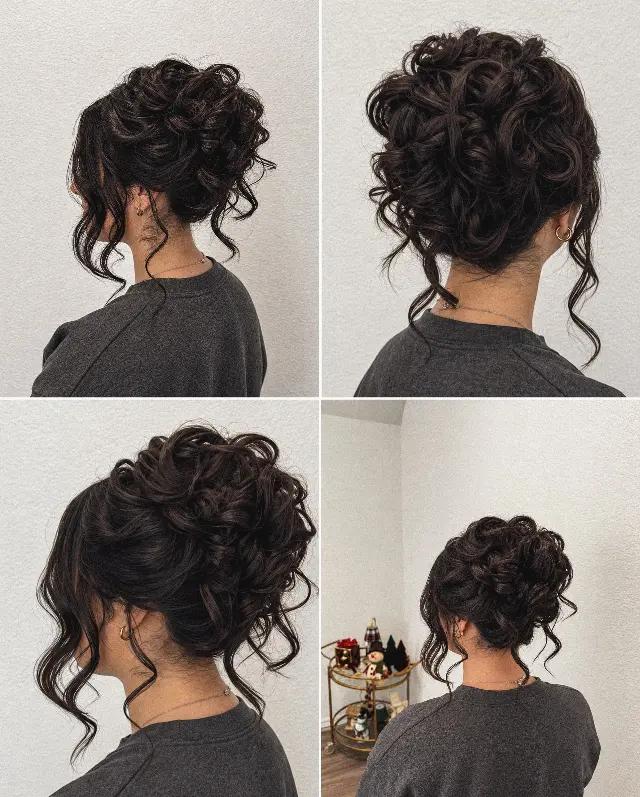
 Romantic updo styled with ribbon details for a special event
#Ribbon Hairstyle
1 ideas
Romantic updo styled with ribbon details for a special event
Get new #Ribbon Hairstyle ideas by email
Every Thursday: the week's best ideas, with the newest from #Ribbon Hairstyle.
Related tags
Ribbon Hairstyles: A Guide to Tying Ribbon Into Your Hair
A ribbon hairstyle is any look where ribbon is tied, woven or pinned into the hair as part of the style rather than as decoration added at the last minute. Sometimes the ribbon does the holding, as in a ponytail bound with a long silk tie; sometimes it simply finishes a braid or circles a bun. Either way, it is one of the oldest and most forgiving hair accessories there is, and it works on almost any length or texture.
Ribbons have appeared in hair for centuries, across folk dress, school uniforms, wedding customs and everyday dressing up. Their appeal is practical as much as pretty: a strip of fabric is soft, cheap, easy to adjust and gentle on hair compared with elastic or metal clips. That versatility is why the look keeps returning in different guises, from crisp little bows on a half-up style to trailing lengths woven through a plait.
The main ways to wear it
- Tied at the base: a ponytail, half-up or braid finished with a bow. The simplest version, and the one most people picture.
- Woven through a braid: the ribbon is threaded in as a fourth strand, or laid alongside one section so it shows between the crossings.
- Wrapped around a bun or ponytail: a narrow ribbon spiralled over the hair to hide the hair tie and add a stripe of colour.
- Threaded and pinned: short lengths tucked into an updo and secured underneath, so the ribbon appears to float in the style.
- Loose and long: a wide ribbon tied simply, with the tails left to hang down the back.
Read more
Choosing a ribbon
Fabric matters more than colour. Satin and grosgrain hold a bow's shape and give a clean, formal finish; velvet and cotton ribbon look softer and more relaxed; organza and chiffon are light and airy but tend to slip. For anything that has to grip hair, a slightly textured ribbon works better than a glossy one. Choose a width to suit the style: narrow ribbon for braids and fine wrapping, wide ribbon for a single prominent bow. Cut the ends on a sharp diagonal or a notch to stop them fraying, and if the fabric ravels easily, a tiny dab of clear nail polish or a folded hem will settle it.
Getting it to stay
Tie over a thin elastic rather than straight onto hair; the ribbon then has something to hold against and won't slide. Keep the bow snug and the loops small if you want it to survive a long day. Bobby pins pushed through the knot, hidden underneath, anchor a bow that keeps drooping. For braids, thread the ribbon with a blunt needle or a hairpin looped through the end, and secure the tail with a small clear elastic before trimming.
A note for beginners
Start with a half-up style and a medium-width grosgrain ribbon. It is the least fiddly combination and teaches you how much tension a bow needs before it looks right. Practise on dry, brushed hair; freshly conditioned hair is slippery and harder to work with. Once the basic bow feels natural, weaving ribbon into a braid is the next step, and it is easier than it looks: keep the ribbon flat against the strand it travels with, and adjust the tension every few crossings rather than at the end.
#Ribbon Hairstyle: frequently asked questions
How do I start if I've never done a ribbon hairstyle before?
Begin with a half-up style and a medium-width textured ribbon such as grosgrain, which is the least fiddly combination and teaches you how much tension a bow needs before it looks right. Work on dry, brushed hair rather than freshly conditioned hair, since slip makes the ribbon harder to control. Once the basic bow feels natural, weaving ribbon into a braid is the natural next step.
What do I need to keep a ribbon hairstyle in place all day?
A length of ribbon, a thin elastic, a few bobby pins and a small clear elastic for finishing the ends will cover most looks. Tie the bow over the elastic rather than straight onto hair, so the ribbon has something to grip and won't slide. Push pins through the knot from underneath to anchor a bow that keeps drooping, and keep the loops small and snug if you need it to survive a long day.
Which ribbon should I choose for my hair?
Fabric matters more than colour: satin and grosgrain hold a bow's shape and give a clean, formal finish, while velvet and cotton look softer and organza or chiffon are airy but tend to slip. For anything that has to grip hair, a slightly textured ribbon works better than a glossy one. Match the width to the style, using narrow ribbon for braids and fine wrapping and a wider one for a bold statement bow.
How do I stop ribbon ends from fraying?
Cut the ends on a sharp diagonal or a notch rather than straight across, which slows fraying and looks neater. If the fabric ravels easily, a tiny dab of clear nail polish or a folded hem will settle it.
What ribbon hairstyle works for a special occasion?
A romantic updo with ribbon threaded and pinned through it looks polished without much effort, with short lengths tucked in and secured underneath so they seem to float in the style. Satin or velvet gives a more formal finish, and a wider ribbon reads dressier than a fine one. Leave the tails long and loose if you want a softer, more romantic line.
What are the most common mistakes people make with ribbon hairstyles?
The usual ones are tying directly onto hair instead of over an elastic, leaving the bow loose with big loops, and adjusting tension only at the very end of a braid. Glossy ribbon and freshly conditioned hair both make slipping worse, so textured fabric and dry hair help. Fraying, untrimmed ends are the last detail most people forget.
Videos come from YouTube and posts from Instagram; titles and summaries are our own. All rights belong to their creators.