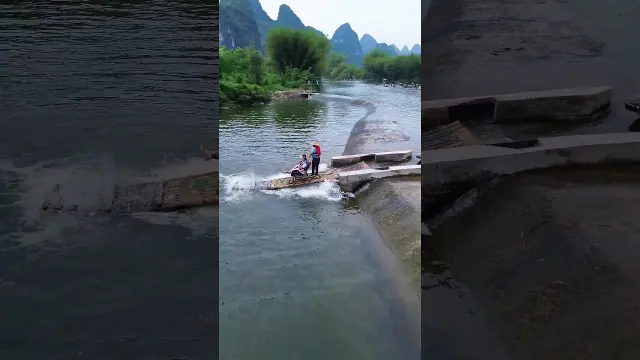
 Bamboo Rafting on the Yulong River in Yangshuo, China
#Riverside Scenery
1 ideas
Bamboo Rafting on the Yulong River in Yangshuo, China
Get new #Riverside Scenery ideas by email
Every Thursday: the week's best ideas, with the newest from #Riverside Scenery.
Related tags
Riverside Scenery: A Guide to the Quiet Edge of Water
Riverside scenery is the landscape that forms along the banks of rivers and the slow water itself — the meeting line between moving freshwater and the land it passes through. It is not a single kind of view. A river carries its own shapes with it: gravel bars, sandbanks, reeds, willows leaning out over the current, stone steps where people wash and talk, bridges, and the flat green corridor that makes a riverbank feel cooler and softer than the streets behind it.
Rivers have always been places where people settled, traded and travelled, so riverside scenes hold both wildness and human traces at once. That double quality is part of why they appeal: a heron standing in shallow water, and a hundred metres downstream, a row of moored boats and a footpath.
Kinds of riversides
Mountain and hill rivers run fast over stone, with clear water, boulders and narrow banks shaded by trees. Foothill rivers slow into braided channels, gravel flats and wide shingle beaches. Lowland rivers meander, forming oxbows, backwaters and marshes thick with reeds and birds. Estuaries are tidal, so the same bank can be mudflat in the morning and open water by afternoon. Canals and riverside towns add a built kind of scenery: quays, walls, arched bridges and reflections of facades.
Read more
Light, season and water level
A riverbank looks different every few weeks, and that variability is the subject rather than a problem. Early morning tends to give still water, mist and long reflections; late afternoon gives low, warm light and strong shadows along the bank. High water changes the whole composition, covering stones and pushing the current into new patterns; low water exposes sandbars and roots. Autumn brings colour in the leaves and clean, low rivers; winter strips the vegetation and reveals the shape of the land.
What beginners should know
Walk a stretch of bank slowly before photographing or sketching it. Look for a foreground — a stone, a branch, a boat — and let the river run diagonally through the frame rather than cutting it in half. Reflections reward a calm surface and a low viewpoint. For moving water, a slightly longer exposure smooths the current, while a short one keeps the texture; both are worth trying. Midday light flattens everything, so earlier or later is usually kinder.
Enjoying a riverbank well
Stay back from unstable banks and wet stones, and remember that currents are stronger than they look, especially after rain upstream. Rivers rise quickly. Keep to paths on vegetated banks, take your litter home, and leave driftwood, shells and plants where they are — they shelter insects, birds and fish. If you are on the water in a raft, canoe or small boat, follow local guidance and wear what the operator provides.
Mostly, riverside scenery asks for patience rather than equipment. Sit for ten minutes without doing anything. Water moves, light shifts, birds arrive. The view is never quite the same twice, which is exactly the point.
#Riverside Scenery: frequently asked questions
What exactly counts as riverside scenery?
It is the landscape that forms where flowing freshwater meets land — the banks, gravel bars, sandbanks, reeds, leaning willows, bridges and paths that a river carries along with it. Because rivers have always drawn people to settle and travel, the scenery usually mixes wild elements with human traces, such as a heron in the shallows just upstream of moored boats.
Which kind of riverside should I choose to visit or paint?
It depends on the mood you want: mountain and hill rivers give fast clear water over stone and boulders, foothill rivers open into braided channels and shingle flats, lowland rivers meander into reed-filled backwaters, and estuaries shift between mudflat and open water with the tide. Built riversides in canal towns offer quays, walls, arched bridges and reflections instead. Pick the one whose character matches the scene you have in mind rather than the one nearest to you.
What do I need to get started sketching or photographing a riverbank?
Very little — the view asks for patience more than equipment. A camera or sketchbook, something to sit on and a good pair of shoes for uneven ground will carry you a long way, and if you want to play with moving water, a way to control exposure time is the one genuinely useful extra. Finding a foreground element like a stone, branch or boat matters more than gear.
When is the best time of day to enjoy a river?
Early morning usually brings still water, mist and long reflections, while late afternoon gives low warm light and long shadows across the bank. Midday tends to flatten everything, so earlier or later is generally kinder. Season and water level change the picture too, so the same stretch is worth revisiting through the year.
How should I look after a riverbank when I visit?
Stay back from unstable banks and wet stones, keep to paths on vegetated ground, and take your litter home with you. Leave driftwood, shells and plants where they lie, since they shelter insects, birds and fish, and if you go on the water in a raft, canoe or small boat, follow local guidance and wear whatever the operator provides.
What mistakes do beginners make with riverside scenes?
The common ones are framing the river so it cuts the picture in half instead of running diagonally through it, shooting in flat midday light, and rushing past a stretch of bank instead of walking it slowly first. Another is ignoring the foreground, which is what gives a river scene depth. Remember too that currents are stronger than they look and rivers rise fast after rain upstream, so never trade safety for a better angle.
Videos come from YouTube and posts from Instagram; titles and summaries are our own. All rights belong to their creators.