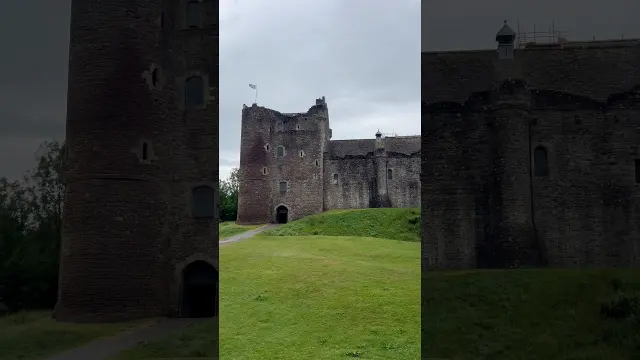
 Exploring Doune Castle: One of Scotland's Greatest Medieval Fortresses
#Scottish History
1 ideas
Exploring Doune Castle: One of Scotland's Greatest Medieval Fortresses
Get new #Scottish History ideas by email
Every Thursday: the week's best ideas, with the newest from #Scottish History.
Related tags
Scottish History: A Guide to Scotland’s Past
Scottish history is the story of a country shaped by mountains, islands, kings, clans, trade, conflict, reform, and a strong sense of identity. It reaches back to prehistoric communities, then through the Roman period, the rise of early kingdoms, the Middle Ages, and the long centuries in which Scotland developed its own law, language, and political traditions.
The roots of Scotland
Before written records, people lived in Scotland for thousands of years, leaving behind stone circles, burial sites, and hillforts. Later came the Romans, who reached the southern part of Britain but never fully controlled the Scottish Highlands and islands. After Roman influence faded, several early peoples and kingdoms formed in what is now Scotland, including the Picts, Gaels, Britons, and Northumbrians. Over time, the kingdom of Alba grew into the Scotland we recognise today.
Castles, clans, and the Middle Ages
Read more
Medieval Scotland was a country of strong local loyalties and powerful families. Castles were built for defence, status, and control of land, while monasteries and burghs became centres of learning and trade. The clan system, especially in the Highlands, was based on kinship, loyalty, and territory, though the way clans worked changed over time and should not be thought of as fixed or uniform.
This period also included struggles over independence, alliances with France, and long rivalry with England. Monarchs such as Robert the Bruce became important figures in the national story, but Scottish history is not only a history of kings. It is also a history of ordinary people, farming communities, merchants, craftsmen, and religious life.
Reform, union, and change
The Protestant Reformation brought major religious change, affecting worship, education, and power. Later, Scotland entered into a political union with England, creating Great Britain while Scotland kept its own legal and educational systems. This did not mean the loss of a Scottish identity; rather, Scottish culture continued to develop in distinctive ways.
The following centuries brought dramatic social and economic change. Agriculture was reshaped, towns expanded, and industry grew. Emigration also became part of Scottish experience, as many people left for opportunity elsewhere. At the same time, literature, philosophy, and education helped shape Scotland’s wider influence.
How to approach Scottish history
If you are beginning to explore Scottish history, it helps to think of it as a layered story rather than a single narrative. Different regions had different experiences, and the Highlands, Lowlands, islands, and burghs each followed their own paths. Some traditions, especially around clans and tartan, are often romanticised in later retellings, so it is useful to look for context and avoid simple myths.
A good way to learn is to follow themes: kingship, religion, migration, landscape, and everyday life. Castles, old churches, town records, museums, and place names can all reveal how Scotland changed over time. Scottish history is richest when you see both the famous events and the quieter lives that shaped the country across the centuries.
Videos come from YouTube and posts from Instagram; titles and summaries are our own. All rights belong to their creators.