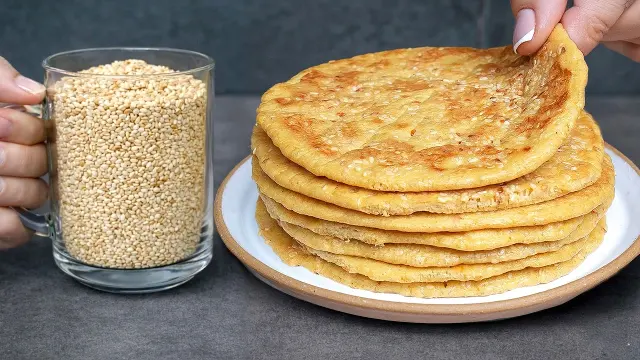
 Sesame Seed and Egg High Protein Flatbread Recipe
#Sesame
1 ideas
Sesame Seed and Egg High Protein Flatbread Recipe
Get new #Sesame ideas by email
Every Thursday: the week's best ideas, with the newest from #Sesame.
Related tags
Sesame: Seeds, Oil and Tahini Uses
What sesame is
Sesame is a small oil-rich seed that has been used in cooking for a very long time. It comes from the sesame plant, which grows seed pods that release the tiny seeds when they ripen. Sesame is valued for its nutty taste, gentle crunch and the way it adds richness to both sweet and savoury dishes.
You may encounter sesame in several forms: whole seeds, toasted seeds, sesame oil and tahini, which is a smooth paste made from ground sesame seeds. Each form has a different flavour and use, but they all share that warm, nutty character.
Common uses in cooking
Read more
Sesame is extremely versatile. Whole seeds can be sprinkled over bread, crackers, salads, rice, noodles and vegetables for texture and flavour. Toasting the seeds briefly before using them often deepens their aroma and gives them a more pronounced taste.
Sesame oil is used in many cuisines as a flavouring oil. A small amount can finish a dish, add depth to stir-fries or dress simple vegetables and grains. Because it is usually strong in flavour, it is often used sparingly.
Tahini is useful in sauces, dips, spreads and baking. It adds creaminess and a slightly earthy taste, and it can also help create smooth dressings when mixed with lemon juice, water, salt and other seasonings.
Main forms and styles
There are a few simple ways to think about sesame:
- Whole sesame seeds, which may be white, black or mixed
- Toasted sesame seeds, which taste more intense than raw seeds
- Sesame oil, used for flavouring and cooking
- Tahini, the paste made from ground sesame seeds
- Sesame salt blends and seed coatings for breads and snacks
White sesame seeds are the most familiar in everyday baking and topping. Black sesame seeds have a deeper colour and a slightly more robust flavour, and they are often used for visual contrast as well as taste.
What beginners should know
If you are new to sesame, start with small amounts and taste as you go. Sesame has a distinct flavour that can quickly become dominant in a dish. A little often goes a long way, especially with sesame oil.
It is also helpful to know that sesame can be added at different stages. Sprinkle it at the end for crunch, mix it into doughs for a subtle nutty note, or toast it first to bring out more aroma.
Practical tips
- Store sesame seeds in a cool, dry place, and keep tahini tightly sealed
- Toast seeds gently in a dry pan and watch them closely, as they can brown quickly
- Pair sesame with honey, soy sauce, citrus, garlic, ginger or warm spices
- Use tahini to thicken sauces and dressings, adding water gradually until smooth
- Try sesame with both sweet and savoury recipes, from pastries to roasted vegetables
Sesame is one of those simple ingredients that can quietly transform a dish. Once you get to know its different forms, it becomes easy to use in everyday cooking, baking and finishing touches.
#Sesame: frequently asked questions
How do I start cooking with sesame if I've never used it before?
Begin with whole seeds or a splash of sesame oil and add them to dishes you already make, such as rice, noodles, roasted vegetables or bread. Taste as you go, because the flavour is bold and can easily take over a plate. Once you are comfortable with the taste, branch out into tahini and toasted seeds.
Which form of sesame should I choose for a recipe?
It depends on the role you want it to play: whole seeds give crunch and visual texture, oil carries aroma, and tahini brings creaminess to sauces, dips and bakes. If a recipe calls for a paste-like consistency, tahini is the right pick, while a finishing touch usually means seeds. White seeds suit everyday baking and sprinkling, while black seeds add contrast and a deeper taste.
How do I toast sesame seeds without burning them?
Use a dry pan over gentle heat and keep the seeds moving so they colour evenly. Stay close and watch them, since they can go from pale to scorched in moments. Take them off the heat as soon as they smell warm and nutty, then tip them onto a cool plate to stop the cooking.
How should I store sesame seeds and tahini?
Keep seeds in a cool, dry spot away from heat and light, and make sure tahini is closed tightly after each use. A quick stir is often needed for tahini, since the paste separates as it sits. If you use sesame only occasionally, smaller jars help it stay fresh.
What are common mistakes people make with sesame?
The biggest one is adding too much at once, which drowns out the other flavours in the dish, especially with the oil. Another is walking away while toasting seeds, or skipping toasting altogether and losing the deeper aroma. Adding sesame at the wrong moment also matters: seeds stirred in at the end keep their crunch, while those mixed into dough soften as they bake.
What kinds of dishes can I use sesame in for a special occasion?
Sesame works across the whole table, from flatbreads and pastries to roasted vegetables, grain salads and dips. It also pairs well with honey, citrus, ginger, garlic and warm spices, so it fits both sweet and savoury menus. For a gathering, a sesame flatbread or a tahini-based dip makes a simple, generous addition.
Videos come from YouTube and posts from Instagram; titles and summaries are our own. All rights belong to their creators.