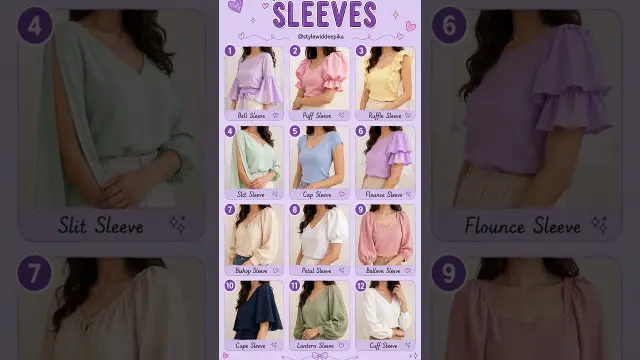
 Twelve Sleeve Types for Tops, Blouses and Kurtis Explained
#Sewing Ideas
2 ideas
Twelve Sleeve Types for Tops, Blouses and Kurtis Explained
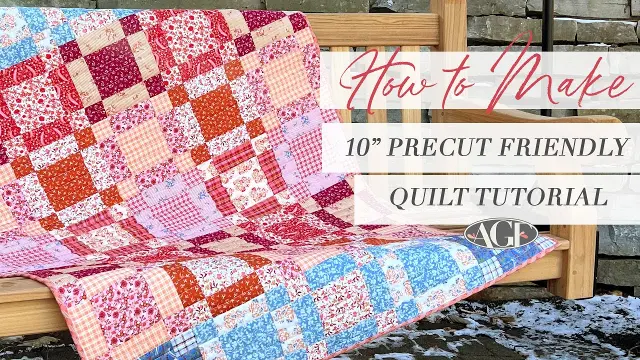 Easy Tutorial for Making a 10-Inch Precut Quilt
Get new #Sewing Ideas ideas by email
Every Thursday: the week's best ideas, with the newest from #Sewing Ideas.
Related tags
Sewing Ideas: A Beginner's Guide to Making Things You Love
Sewing is one of those skills that quietly changes how you look at the things around you. Once you know how a seam is built, a hem becomes something you can fix rather than something you have to live with. It is also an old craft — people have joined and shaped fabric for thousands of years, by hand long before machines existed — and the basic idea has not changed: take flat cloth, cut it thoughtfully, and turn it into something with shape and purpose.
What sewing is used for
Most sewing falls into a few broad areas. Garment sewing covers clothes, from simple skirts and tops to more structured jackets. Home sewing covers curtains, cushions, table linens and bedding. Quilting and patchwork build layered textiles from smaller pieces of fabric, often as decoration as much as warmth. There is also mending and alteration, which is sewing at its most practical: shortening a hem, patching a worn knee, taking in a waistband. Many people start here, and it is a good place to start, because the stakes are low and the lessons are real.
Common styles and approaches
Read more
Hand sewing and machine sewing are not rivals so much as different tools. Hand stitching is slower, portable and often neater for finishing details, buttons and small repairs. A machine makes long straight seams quickly and gives a consistency that is hard to match by hand. Beyond that, approaches range from precise and tailored work, where fit and finish matter most, to loose, improvisational making where leftover fabric and scraps guide the design. Both are valid, and most sewists move between them depending on the project.
Starting out
Beginners usually do best with fabric that behaves: a stable woven cotton or linen rather than something slippery or stretchy. Choose a simple project with few pieces and clear instructions — a tote bag, a pillowcase, a straight-seamed skirt — and finish it before starting another. Learn to press as you go. Pressing seams flat as you sew makes more difference to the final look than almost any other habit, and it costs nothing but a few seconds.
Practical habits worth keeping
- Wash and iron new fabric before cutting, so it does not shrink after the garment is made.
- Keep your machine needle sharp; a dull needle causes skipped stitches and pulled fabric.
- Cut on a flat surface with sharp fabric scissors reserved for cloth only.
- Sew a test seam on a scrap of the same fabric before you commit to the real thing.
- Read the whole pattern or tutorial first, and mark the wrong side of your fabric pieces.
- Accept that seams will be unpicked. It is part of the process, not a sign of failure.
Sewing rewards patience more than talent. The first hem may be uneven, and the second will be better. Start small and keep the things you make in use — a slightly crooked cushion still holds its shape, and it will remind you how far you have come.
#Sewing Ideas: frequently asked questions
How do I start sewing if I've never done it before?
Begin with mending and small repairs, because the stakes are low and you learn real skills quickly. Pick a simple project with few pieces and clear instructions — a tote bag, a pillowcase or a straight-seamed skirt — and finish it completely before starting another. Choose a stable woven fabric like cotton or linen rather than something slippery or stretchy, which is much harder to control.
What do I need to begin sewing?
At minimum: fabric, a needle and thread, sharp scissors kept for cloth only, pins, and an iron. An iron matters more than most beginners expect, since pressing seams as you go shapes the finished look as much as stitching does. If you go on to machine sewing, keep a supply of sharp needles, because a dull one skips stitches and pulls the fabric.
Should I learn hand sewing or machine sewing first?
They aren't competing skills — think of them as different tools for different jobs. Hand stitching is slower and portable, and it's often neater for buttons, finishing details and small repairs. A machine wins on long straight seams and consistent speed, so most people end up using both depending on the project.
What are the most common beginner mistakes?
Skipping the pressing is the big one; flattening each seam as you sew changes the final result more than almost any other habit. Other frequent slips are cutting fabric before washing and ironing it, using dull needles or household scissors, and sewing straight onto the real piece without testing a seam on a scrap first. Reading the whole pattern through before you cut, and marking the wrong side of your pieces, prevents a lot of unpicking later.
How do I care for the things I've sewn so they last?
Wash and iron new fabric before you cut it, so any shrinkage happens before the garment is made rather than after. Afterwards, follow whatever suits the fabric you used, and press rather than tumble-dry heavily where you can. Mend small problems early — a loose button or a worn knee is quick to fix and much cheaper than replacing the item.
What are some easy projects to make as a first sew or a gift?
Cushions, pillowcases and simple tote bags are forgiving, use little fabric, and are genuinely useful once finished. Straight-seamed garments like a basic skirt or top are a good next step, and simple sleeve variations are an easy way to change a pattern you already know. Precut fabric bundles suit patchwork and quilting, where smaller pieces are joined into something larger.
Videos come from YouTube and posts from Instagram; titles and summaries are our own. All rights belong to their creators.