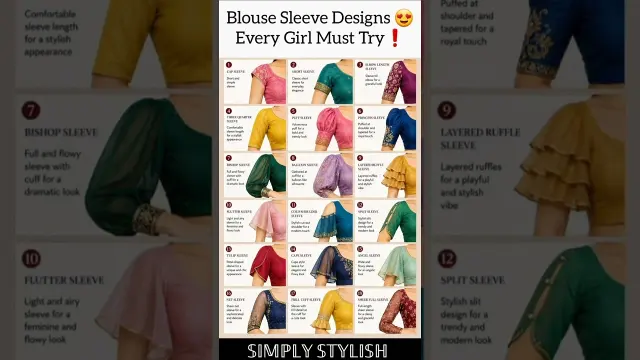
 Eighteen Saree Blouse Sleeve Designs From Cap to Angel
#Sewing Inspiration
1 ideas
Eighteen Saree Blouse Sleeve Designs From Cap to Angel
Get new #Sewing Inspiration ideas by email
Every Thursday: the week's best ideas, with the newest from #Sewing Inspiration.
Related tags
Sewing Inspiration: A Beginner's Guide to Making Your Own Clothes
Sewing is one of those skills that quietly underpins everything around us. Every curtain, cushion cover, school uniform and wedding dress began as flat fabric and a length of thread. Learning to sew means gaining a measure of control over the things you wear and live with: you can alter a hem that never sat right, mend a favourite shirt instead of replacing it, or make something that fits your body and taste exactly.
Where it comes from
People have joined fabric with needle and thread for thousands of years, long before the sewing machine existed. Hand stitching was a household necessity rather than a hobby, and much of the vocabulary still used today — running stitch, backstitch, blanket stitch — comes from that long domestic tradition. The machine, developed through the nineteenth century, moved clothing production into factories, while home sewing shifted over time toward mending, decoration and personal projects. Dressmaking, quilting, embroidery and upholstery all grew from the same root.
What people sew
Read more
The range is wider than it first appears. Dressmaking covers garments from simple skirts to tailored jackets. Home sewing includes curtains, cushions, table linen and bedding. Quilting builds layered textiles from small pieces of fabric, often with a decorative stitched pattern on top. Embroidery and appliqué add surface design to finished cloth. Repair and alteration — taking in a waistband, patching a knee, shortening sleeves — is its own practical branch, and arguably the most useful of all.
Techniques worth learning first
Beginners do best with a small set of fundamentals. Learn to thread and adjust your machine, wind a bobbin, and sew a straight line at an even seam allowance. Practise pressing seams as you go: good ironing does more for a finished look than any advanced technique. Understand grainline and how fabric behaves — woven cloth is stable, knits stretch, and cutting against the grain will make a garment hang badly. Then learn a few hand stitches for finishing and mending, and how to make buttonholes and simple darts.
Choosing a first project
Pick something that does not need to fit closely. A tote bag, a pillowcase, an apron or a simple elastic-waist skirt teaches the basics without the pressure of tailoring. Choose a pattern marked for beginners, read it through completely before cutting, and buy a little extra fabric in case of mistakes. Cotton is the most forgiving material to start with; slippery or stretchy fabrics are better saved for later.
Practical habits
- Keep your machine clean and your needles fresh; a blunt needle damages fabric.
- Cut only with sharp fabric scissors, and use them for nothing else.
- Make a test seam on a scrap of your actual fabric before starting.
- Take your measurements again each time you begin a new pattern.
- Accept that unpicking is part of sewing, not a failure.
Sewing rewards patience more than speed. The first garment will not be perfect, and it does not need to be — every seam teaches you something the next one will benefit from.
#Sewing Inspiration: frequently asked questions
How do I start sewing if I have never touched a machine before?
Start by getting comfortable with the machine itself — threading it, winding a bobbin and sewing straight lines on scrap fabric before you attempt anything real. Once an even seam allowance and a pressed seam feel natural, most projects become a matter of following instructions carefully. Expect the first attempts to be crooked; that is normal and part of learning.
What do I actually need in a beginner sewing kit?
Beyond the machine, you need sharp fabric scissors reserved only for cloth, hand needles and thread, pins or clips, a tape measure, a seam ripper and an iron. A couple of marking tools and a small amount of cotton fabric will carry you through your first projects. Nothing expensive is required to begin.
Which branch of sewing should I learn first — dressmaking, quilting or home sewing?
Home sewing and simple accessories are the gentlest entry, because nothing has to fit a body closely and mistakes are easy to hide. Quilting appeals to people who enjoy precise cutting and repetitive stitching, while dressmaking rewards patience with fitting and fabric behaviour. Choose whichever finished object you actually want to own.
What kind of fabric is easiest to work with as a beginner?
A stable woven cotton is the most forgiving choice: it does not slip, stretch or fray badly, and it presses into crisp seams. Slippery, sheer or stretchy fabrics are worth saving until you have a feel for how cloth moves under the needle. Always make a test seam on a scrap of the real fabric before you commit to a project.
How should I look after a sewing machine so it keeps working well?
Brush out lint after every few sessions, particularly if you have been sewing anything fluffy, and replace the needle as soon as it feels dull or starts skipping stitches. Keep the machine covered when it is idle, oil it where the manual tells you to, and have it serviced now and then if you sew regularly. A blunt needle does far more damage to fabric than most beginners realise.
What mistakes do beginners make most often?
Cutting into fabric before reading the pattern all the way through, skipping the test seam, and rushing the pressing are the usual culprits. Sewing from old measurements, or grabbing household scissors to cut cloth, creates problems that are much easier to prevent than to repair. Unpicking a seam is a normal part of the process, not a sign of failure.
Videos come from YouTube and posts from Instagram; titles and summaries are our own. All rights belong to their creators.