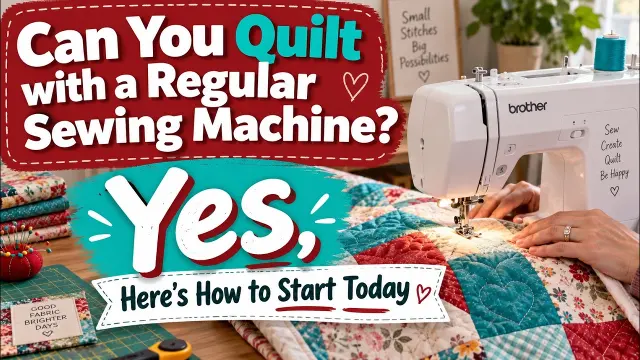
 How to Start Quilting Successfully on a Regular Sewing Machine
#Sewing Machine
1 ideas
How to Start Quilting Successfully on a Regular Sewing Machine
Get new #Sewing Machine ideas by email
Every Thursday: the week's best ideas, with the newest from #Sewing Machine.
Related tags
Sewing Machines: A Beginner's Guide to How They Work
A sewing machine is a mechanical or electronic tool that joins fabric by driving a needle through it while a second thread, carried on a small bobbin underneath, locks with the first to form a stitch. What a hand-sewer does with a needle and a length of thread, the machine does hundreds of times a minute, with far more even tension and speed than fingers can manage. It grew out of the mechanical workshop of the industrial age, and while the engineering has become quieter and more precise, the basic idea has barely changed: two threads, one loop, repeated in a straight or patterned line.
How a stitch is actually formed
The needle pushes the upper thread down through the fabric and, just as it begins to rise, a small hook below catches a loop of it and pulls it around the bobbin thread. The take-up lever tightens the result, the feed dogs beneath the presser foot advance the fabric a fraction, and the cycle begins again. Understanding this loop explains nearly every problem a beginner meets: a tangled underside usually means the machine is threaded incorrectly or the bobbin is loaded the wrong way, not that the machine is broken.
The main kinds of machine
Read more
- Mechanical machines: stitch length and width set by dials. Simple, sturdy, easy to service, and a good place to start.
- Computerised machines: stitches chosen from a panel, with memory and automatic features. Convenient, though more electronics to go wrong.
- Overlockers (sergers): trim, stitch and finish an edge in one pass, mainly for knits and professional-looking seams.
- Embroidery and quilting machines: specialised for decorative stitching or for the wide space a quilt needs.
- Industrial models: built for one job, run for hours, and usually too fast and too single-purpose for a home.
Parts worth knowing
The presser foot holds the fabric flat; the feed dogs move it; the needle plate marks your seam allowance; the tension dials balance the two threads; the reverse lever locks the ends of a seam. Learn to thread the machine in the right order, top and bottom, and to raise the presser foot while doing it so the thread seats properly in the tension discs.
Practical advice for beginners
Start on woven cotton, which behaves predictably, and keep a pile of scraps for testing before you sew anything you care about. Match the needle to the fabric: fine needles for light cloth, sturdier ones for denim or canvas, and a ballpoint for knits. Change the needle often, since a dull or burred point causes skipped stitches and snags. Clean lint from the bobbin area regularly, and have the machine serviced occasionally. Let the feed dogs pull the fabric rather than tugging it, and sew slowly until your hands and eyes trust the rhythm. Most mistakes are undone with a seam ripper in a few minutes, which is worth remembering when the first attempts look less than perfect.
#Sewing Machine: frequently asked questions
How do I get started with a sewing machine?
Begin by learning to thread the machine in the correct order, top and bottom, and practise on scraps of woven cotton, which behaves predictably under the needle. Sew slowly until your hands and eyes trust the rhythm, letting the feed dogs pull the fabric instead of tugging it, and keep a seam ripper nearby since most early mistakes are undone in minutes.
What do I need besides the machine itself?
You need a supply of suitable needles, bobbins that match your machine, good thread, sharp scissors or a rotary cutter, pins, and a seam ripper. A pile of scrap fabric for testing tension and stitch length is just as important as the tools, because you should always trial a setting before sewing anything you care about.
Which kind of sewing machine should I choose?
A mechanical machine with dials for stitch length and width is simple, sturdy and easy to service, which makes it a sensible starting point. Computerised models offer convenient stitch selection and memory but carry more electronics that can fail, while overlockers, embroidery machines and industrial models are specialised tools best added once you know what you actually want to sew.
How should I care for my sewing machine?
Clean lint out of the bobbin area regularly, since fluff builds up quickly and interferes with stitch formation. Change the needle often, as a dull or burred point causes skipped stitches and snags, and have the machine serviced occasionally to keep the timing and tension reliable.
Why does the underside of my stitching tangle?
A tangled underside nearly always means the machine is threaded incorrectly or the bobbin is loaded the wrong way, not that the machine is broken. Raise the presser foot while threading so the thread seats properly in the tension discs, then rethread both top and bottom before assuming anything needs repair.
Can I quilt on an ordinary sewing machine?
Yes, quilting is regularly done on a standard machine, though a model with a wider throat makes handling the bulk of a quilt far easier. Start with small projects to learn how the layers feed, use a walking foot or reduced pressure if the fabric drags, and match your needle to the weight of the cloth.
Videos come from YouTube and posts from Instagram; titles and summaries are our own. All rights belong to their creators.