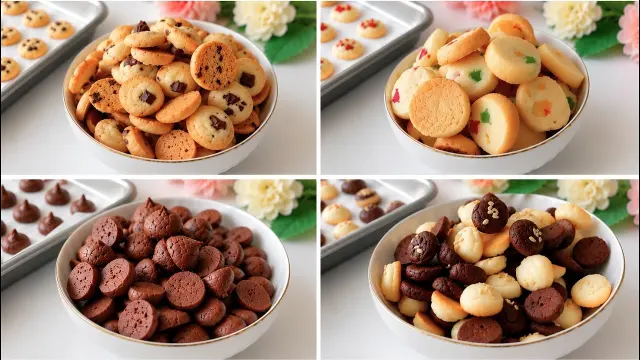
 Four Delicious Homemade Cookie Varieties
#Shortbread
1 ideas
Four Delicious Homemade Cookie Varieties
Get new #Shortbread ideas by email
Every Thursday: the week's best ideas, with the newest from #Shortbread.
Related tags
Shortbread: A Guide to the Classic Scottish Biscuit
Shortbread is one of the simplest things you can bake, and one of the most revealing. Flour, butter and sugar, in roughly that order of quantity, and nothing else strictly required. There is nowhere to hide a mistake, which is why a good batch feels like a small achievement.
What it is
A dense, crisp biscuit with a very high proportion of butter. The traditional proportions are one part sugar, two parts butter and three parts flour by weight. Because fat makes up so much of the dough, shortbread does not puff or spring the way a cake does: it holds its shape, snaps cleanly and then dissolves into a sandy crumb. One piece goes a long way.
Where it comes from
Read more
Scotland, though its ancestors were plainer than what we eat now. Early versions grew out of dried, twice-baked breads that kept through the winter, made with oats and without much sweetness. As wheat flour, butter and sugar became ordinary kitchen ingredients, the biscuit took the form we recognise. It has long been tied to celebrations — given at New Year and Christmas, baked for weddings and christenings — and that association survives in the decorative shapes it is still pressed into.
The meaning of "short"
In baking, "short" describes a crumb that breaks easily rather than stretching. Fat coats the flour and limits the formation of gluten, so the more butter in the dough, the shorter the texture. This is also why shortbread rewards a light hand: overwork it and you gain toughness where you wanted fragility.
Making it: two routes
You can cream soft butter with sugar until pale, then work in the flour, which gives a slightly lighter, more even result. Or you can rub cold butter into the flour and sugar until it looks like fine breadcrumbs, which gives a shorter, more open crumb and is more forgiving of warm kitchens.
Either way, chill the dough before it goes into the oven. Cold butter holds the shape you gave it and spreads less. Bake in a moderate, gentle oven and take it out when it is pale gold at the edges — browned shortbread tastes bitter. It will still feel soft when warm; it firms up as it cools, so leave it in the tin.
Shapes
A round scored into wedges, the classic petticoat tails. Fingers cut in a tray. Small rounds, thick squares, shapes pressed from a mould. Pricking the surface with a fork, called docking, lets steam escape and keeps the biscuit flat.
Ways to vary it
A little rice flour or cornflour for a finer crumb; semolina for a faint bite. Brown sugar for depth, citrus zest, ginger, cardamom or lavender for fragrance. And beyond the plain biscuit, there is the layered version with caramel and chocolate.
Practical tips
- Weigh your ingredients rather than measuring by volume.
- Keep everything cool: butter, hands, tray.
- Handle the dough as little as possible.
- Score the wedges before baking, not after.
- Store airtight; it keeps well and freezes beautifully.
#Shortbread: frequently asked questions
How do I start making shortbread if I've never baked biscuits before?
Start with the classic three ingredients — flour, butter and sugar — and use a simple tray-baked finger or round rather than decorative moulds, since there is no shaping skill to learn first. Weigh everything, keep the butter cold, and stop handling the dough as soon as it comes together. Bake gently until the edges are just pale gold.
What ingredients and equipment do I actually need for shortbread?
Plain flour, butter and sugar are the only necessities; a little rice flour or cornflour is a common optional addition for a finer crumb. You need a mixing bowl, a set of scales, a baking tray and a fork for pricking the surface. Scales matter more than any other tool here, because the dough has no raising agent and no room for guesswork.
Should I use the creaming method or rub cold butter into the flour?
Creaming soft butter with sugar gives a slightly lighter, more even biscuit, while rubbing in cold butter produces a shorter, more open crumb. The rubbing-in route is more forgiving in a warm kitchen, so it is a good choice for beginners or hot days. Both work well — the colder your dough stays, the better either turns out.
Why did my shortbread spread or turn out tough?
Toughness usually comes from overworking the dough, which builds gluten where you want a fragile, sandy crumb; stop mixing as soon as the flour is absorbed. Spreading is almost always warm butter or a warm tray, so chill the shaped dough before baking and handle it lightly. Overbaking is the third common slip — pull it out at pale gold, since browned edges taste bitter.
How should I store shortbread, and does it keep?
Store it airtight once completely cool, and it holds well for a good while without losing its snap. It also freezes beautifully, either baked or as shaped raw dough, so you can bake a batch on demand. Keeping it away from damp air is the main thing, as moisture is what softens the crumb.
What are good ways to serve shortbread for a celebration or as a gift?
Press it into petticoat tails or decorative moulds — shortbread has long been tied to New Year, Christmas, weddings and christenings, so shaped versions suit an occasion. A little citrus zest, ginger or lavender lifts the plain biscuit, and the layered caramel-and-chocolate version makes a richer offering. Stacked in a tin or boxed, it travels well as a gift.
Videos come from YouTube and posts from Instagram; titles and summaries are our own. All rights belong to their creators.