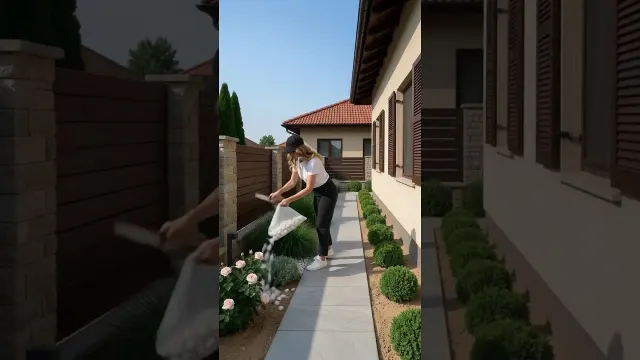
 Side Yard Landscaping Ideas With Stone Paths and Grasses
#Side Yard
1 ideas
Side Yard Landscaping Ideas With Stone Paths and Grasses
Get new #Side Yard ideas by email
Every Thursday: the week's best ideas, with the newest from #Side Yard.
Related tags
Side Yard Ideas: Making the Most of a Narrow Outdoor Space
A side yard is the strip of outdoor space that runs along the side of a house, usually between the building and a boundary wall, fence or neighbouring property. It is often the most overlooked part of a garden: too narrow for a lawn, too shaded for a vegetable bed, too awkward to furnish. Yet it is also one of the most useful spaces on a property, and a little planning turns it from a corridor you hurry through into somewhere you actually want to be.
What makes a side yard different
The defining feature is proportion. Side yards are long and thin, often only a few paces wide, and they are usually enclosed on both sides. That shapes everything else: light arrives late and leaves early, air moves slowly, and the ground tends to stay damper than in an open garden. Access matters too. Many side yards are the only route from front to back, so a path that stays clear and safe comes before any planting.
The main approaches
Read more
Most side yards fall into one of a few roles. The first is circulation: a clean, well-drained route with a hard surface, edged by plants that tolerate brushing past. The second is privacy: a narrow strip is often exactly where a neighbour's window looks straight at yours, so tall, narrow planting or a trellis is worth its keep here. The third is storage: bins, bikes, tools and firewood all need a home, and a side yard can absorb them if you screen them thoughtfully. The fourth is a small retreat: a bench, a table for two, a water feature, a place to sit out of the wind.
Choosing a surface
Path material sets the character of the whole space. Gravel is inexpensive and drains freely but migrates into beds and is difficult to wheel a barrow over. Pavers and cut stone are firm and tidy, and narrow formats laid lengthways make a passage feel longer rather than wider. Bark chip suits a woodland feel and softens sound underfoot. Whatever you choose, plan a slight fall away from the house and keep the surface a step below any interior floor level.
Planting for narrow, shaded ground
Work with the conditions rather than against them. Ferns, hostas, hellebores, epimediums and many grasses cope with limited sun and confined roots. Climbers such as ivy, jasmine and clematis use vertical space, which is the one dimension a side yard has in abundance. Keep beds narrow enough that plants do not close over the path, and choose species that tolerate being cut back hard. Evergreens earn their place because they screen all year.
Practical points for beginners
Measure before you buy anything, including gate widths and the turning circle of a wheelbarrow. Check where water collects after rain. Leave room for a drain or a channel if the ground slopes toward the house. Think about maintenance: a narrow space is hard to work in, so fewer plants, tougher plants and a firm surface will save you hours. And remember the view from inside: a side yard is often seen through a kitchen or hallway window, so give it something worth looking at through the glass.
Videos come from YouTube and posts from Instagram; titles and summaries are our own. All rights belong to their creators.