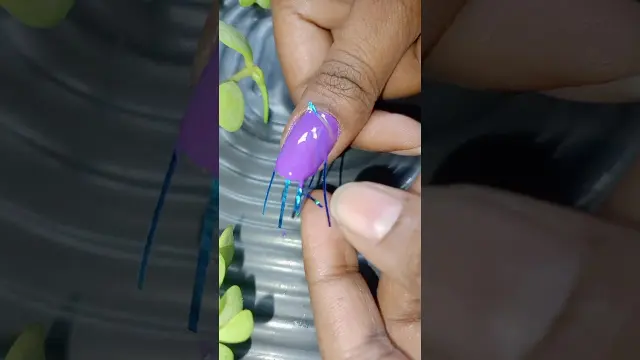
 Simple beautiful nail art design idea
#Simple Design
1 ideas
Simple beautiful nail art design idea
Get new #Simple Design ideas by email
Every Thursday: the week's best ideas, with the newest from #Simple Design.
Related tags
Simple Design: The Quiet Power of Less
Simple design is the practice of removing everything that is not doing a job. It is not the same as plainness or a lack of ideas. A simple object or image has usually been thought about harder than a busy one, because every line, colour and gap has to earn its place. What is left is clarity: a shape you understand at a glance, a surface that lets a material speak, a space that feels calm instead of empty.
Where it comes from
The idea runs through several traditions rather than one. Modernist design of the last century argued that form should follow function, and that everyday objects deserved the same care as precious ones. Alongside it sit older craft habits, especially in Japan, where restraint, natural texture and the beauty of imperfection have long been valued, and in Scandinavia, where lightness, usefulness and modest materials shaped a whole way of living. All of these strands share a suspicion of decoration added for its own sake.
What it is used for
Read more
You meet simple design everywhere: in interiors that rely on light and proportion rather than ornament, in graphics built on strong type and generous empty space, in clothing cut from one good fabric with no unnecessary detail, in crafts where a single shape is repeated, and in beauty, where a clean line of colour or one small motif can say more than a fully decorated surface.
The main directions
- Minimalism in the strict sense: few colours, geometric shapes, smooth surfaces, lots of negative space.
- Warm simplicity: pale woods, linen, clay and wool, where texture replaces pattern.
- Natural and imperfect simplicity: handmade edges, visible grain, slight irregularity accepted rather than corrected.
- Graphic simplicity: a strong silhouette or a single bold element against an otherwise quiet field.
If you are just starting
Begin with a limit rather than an idea. Choose two colours, or one motif, or one material, and let that constraint do the work. Remove one element from your composition and look again; often the version with less is the one that holds attention. Pay attention to proportion and to the space around things, since in simple design the gaps carry as much weight as the objects. Prefer a few good materials to many ordinary ones, and test at small scale before committing: a swatch of fabric held against the light, a corner of a room rearranged, or a single nail painted before you finish the rest of the hand.
Finally, be patient with it. Simplicity shows every mistake, so it rewards care and a willingness to edit. Done well, it does not look like an absence of ideas but like confidence in them.
#Simple Design: frequently asked questions
How do I start with simple design if I have no experience?
Start with a limit instead of a concept: pick two colours, one motif, or one material, and let that narrow choice guide everything else. Then take one element out of what you have made and look again, because the reduced version usually holds attention better. Pay attention to proportion and to the empty space around things, since the gaps carry as much weight as the objects themselves.
What do I actually need to make something in a simple style?
You need very little in the way of supplies, but you do need a few good materials rather than many ordinary ones, since a surface that is not covered in detail lets the material itself be seen. Beyond that, what matters most is patience and a willingness to edit, because simplicity exposes every mistake. Testing at small scale first helps: a fabric swatch held to the light, a corner of a room rearranged, or one nail painted before the rest.
Which direction of simple design should I choose?
It depends on the mood you want rather than on skill level. Strict minimalism leans on few colours, geometric shapes and generous negative space, warm simplicity replaces pattern with texture such as pale wood, linen, clay or wool, natural simplicity accepts handmade edges and irregularity, and graphic simplicity sets one bold element against a quiet field. Choose the one whose feeling matches the space or object you are working on, then stay inside it.
How do I keep a simple piece or room looking its best over time?
Since there is little decoration to distract the eye, upkeep is mostly about keeping the few elements you chose in good condition: dust smooth surfaces, keep natural materials clean and dry, and let them age honestly rather than covering wear with more things. Resist the urge to add something new when a piece starts to feel plain. Editing out an item is usually a better refresh than bringing one in.
Can simple design work for a small occasion or a single detail, like nail art?
Yes, and small formats often suit it best, because a clean line of colour or one small motif can say more than a fully decorated surface. Pick a single element and give it room, letting the surrounding area stay quiet so the one detail reads clearly. If it feels too bare, adjust proportion or placement rather than adding a second motif.
What are the common mistakes people make when trying to simplify?
The most frequent one is confusing simple with plain or empty, and stripping things out without first deciding what each remaining line, colour and gap is doing. Another is filling the space back up whenever it feels bare, which undoes the restraint. Remember that simple work usually takes more thought than busy work, so plan to edit and re-edit rather than getting it right in one pass.
Videos come from YouTube and posts from Instagram; titles and summaries are our own. All rights belong to their creators.