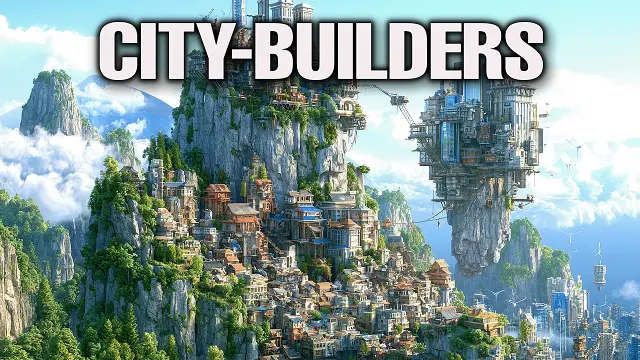
 Ten New City-Builder Games Worth a Look This Year
#Simulation Games
1 ideas
Ten New City-Builder Games Worth a Look This Year
Get new #Simulation Games ideas by email
Every Thursday: the week's best ideas, with the newest from #Simulation Games.
Related tags
A Beginner's Guide to Simulation Games
Simulation games are a broad family of games built around systems rather than stories. Instead of following a scripted plot to an ending, you're handed a set of rules, resources and intertwined moving parts, then invited to see what happens when you push them. The pleasure comes from understanding how things connect: a road layout changes traffic, traffic changes how a neighbourhood grows, and a small decision early on ripples outward for hours.
The genre grew out of a simple idea — that the interesting part of a game can be the model underneath it. Early computing made it possible to run simplified versions of real processes: a city's growth, a business's books, a vehicle's handling. From there it branched in many directions, and the branches are still where most of the variety lives.
The main kinds
City-building and settlement games ask you to plan land, housing, transport and services, then watch residents respond. Management and tycoon games put you in charge of an organisation — a shop, a park, a hospital, a transport network — where money, staff and reputation all pull against each other. Life simulations focus on individual characters, their homes, relationships and daily routines. Farming and crafting simulations slow things right down, tying progress to seasons, patience and small daily tasks. At the technical end sit vehicle and flight simulators, which prioritise accuracy of control over narrative, and on the far side of the map are sandbox games, where the goal is often simply to build something and see whether it holds together.
Read more
What beginners should know
Start with something that has a gentle difficulty curve rather than the most complex thing you can find. Large simulations often look simple and turn out to be dense; beginning with a forgiving one teaches you the genre's habits without punishing you for them.
Read the tutorial, then expect to restart. Almost everyone's first city, first shop or first farm collapses, and that first failure is genuinely the most effective lesson. Treat it as a trial run instead of a verdict on your ability.
Learn to read your own numbers. Most simulation games communicate through dashboards, indicators and warnings, and the players who do well are usually the ones who notice a small warning before it becomes a large problem.
Pause often. Nearly every game in the genre lets you stop time, and using that freely turns a frantic scramble into thoughtful planning.
And resist the urge to look everything up straight away. Efficiency guides can flatten the discovery that makes these games satisfying. Explore first, optimise later — there is no schedule, and no one is timing you.
Above all, simulation games reward curiosity. You don't have to win them. You only have to be interested in what your own choices set in motion.
#Simulation Games: frequently asked questions
What do I need to get started with simulation games?
Mostly patience and a willingness to experiment, since the genre asks you to understand systems rather than follow a story. A comfortable setup where you can sit for a while without rushing helps, because these games reward slow, deliberate play. Beyond that, no special background is needed — curiosity about how things connect matters far more than prior experience.
How do I choose which kind of simulation game to start with?
Think about what you already find satisfying: planning land and neighbourhoods points toward city-builders, running an organisation suits management and tycoon games, and tending a farm or workshop fits if you like slow routines. If you enjoy individual characters and their daily lives, a life simulation will feel natural. Pick the type whose underlying subject genuinely interests you, and the learning curve becomes far less of a chore.
Why did my first attempt collapse, and is that normal?
It's very common — nearly everyone's first city, shop or farm falls apart, and that failure is usually the fastest lesson the genre offers. Treat the first run as a trial where you learn how the systems push back on each other. Start again with that knowledge and the second attempt almost always goes better.
How do I keep a large simulation from becoming overwhelming?
Use the pause function freely, since nearly every game in the genre lets you stop time and plan instead of scrambling. Watch your dashboards and indicators rather than waiting for problems to become obvious, because small warnings are much easier to fix early. If it still feels dense, step back to a simpler game rather than forcing your way through the most complex one available.
Should I follow guides and optimisation videos before I play?
It's usually better to explore first and look things up later, since efficiency guides can flatten the discovery that makes these games satisfying. Wander through the systems, make mistakes and see what your own choices set in motion. There's no schedule and no one timing you, so you can always optimise once you understand the game on your own terms.
Videos come from YouTube and posts from Instagram; titles and summaries are our own. All rights belong to their creators.