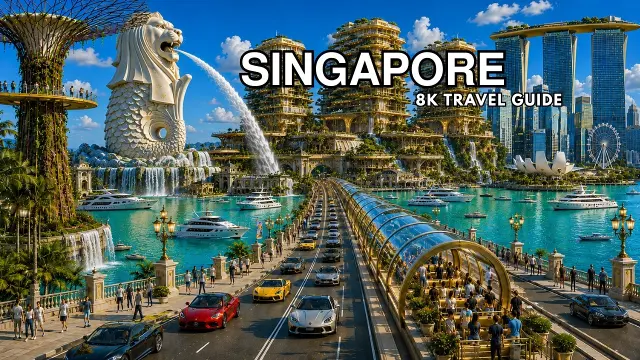
 Singapore Travel Guide: Gardens, Skyline and City Life
#Singapore
1 ideas
Singapore Travel Guide: Gardens, Skyline and City Life
Get new #Singapore ideas by email
Every Thursday: the week's best ideas, with the newest from #Singapore.
Related tags
Singapore: A Guide to the Lion City
Singapore is a city-state at the southern tip of the Malay Peninsula, a small island surrounded by a cluster of smaller ones, and one of the busiest ports in the world. Its name comes from Sanskrit — Singapura, "lion city" — a story that predates the modern skyline by many centuries. What began as a fishing village and trading settlement grew into a British colonial entrepôt, and later into an independent republic. That layered history is why you can walk past a Chinese temple, a mosque, an Indian temple and a colonial-era church on the same street.
A city of neighbourhoods
Singapore rewards you most when you leave the air-conditioned malls and walk its districts, each with its own character.
- Chinatown: shophouses, heritage temples and busy market streets, best explored slowly on foot.
- Little India: flower garlands, spice shops and some of the city's most vivid street life.
- Kampong Glam: the historic Malay and Arab quarter, centred on the golden dome of the Sultan Mosque.
- Marina Bay: the modern face of the city, with waterfront promenades and gardens built on reclaimed land.
- The heartlands: HDB estates where most Singaporeans actually live, full of hawker centres and wet markets.
Read more
Food as a way of life
Eating is close to a national pastime. Hawker centres — open-air food courts with dozens of stalls — are the heart of it: affordable, fast and genuinely excellent. You will find Chinese, Malay, Indian and Peranakan cooking side by side, from chicken rice and laksa to roti prata and nasi lemak. Ordering is simple: find a table, note its number, queue at the stall, and pay first. Tissues on a table mean it is taken.
Green in unexpected places
Despite its density, Singapore is unusually green. Rainforest survives in pockets of the central catchment, and the Botanic Gardens are a good half-day in themselves. The Southern Ridges and the park connectors let you walk for hours through treetops and along the coast. Bring water and expect heat and humidity at any time of year — the climate is tropical, with rain possible in any month.
Practical things worth knowing
- Public transport is clean, cheap and extensive; buy a stored-value card for trains and buses.
- Tipping is not expected. Service charges are usually included.
- Chewing gum is not sold, and eating or drinking on public transport is fined.
- Singapore is strict about littering, jaywalking and smoking outside designated areas — the rules are part of why the city feels so calm.
- English is widely spoken, though you will hear Singlish, a local creole with its own rhythm and charm.
For first-time visitors
Give yourself more than a stopover. Two or three days lets you see the colonial core, wander two or three neighbourhoods, eat your way through a hawker centre and still find an afternoon for greenery. Go early to beat the heat, carry a light layer for fierce air conditioning, and leave room in your plans for simply sitting in a coffee shop and watching the city go by.
#Singapore: frequently asked questions
How should I plan a first visit to Singapore?
Start with the colonial core and Marina Bay, then pick a couple of neighbourhoods to wander on foot rather than trying to cover everything. Leave slack in the plan for sitting in a coffee shop and letting the city pass by, since much of the pleasure here is unhurried. Going out early in the day helps you avoid the worst of the heat.
Which neighbourhood should I choose if I only have time for one?
It depends what you want to see: heritage shophouses and temples in Chinatown, flower garlands and spice shops in Little India, or the Malay and Arab quarter around the Sultan Mosque in Kampong Glam. The heartlands are worth a detour if you want hawker food and wet markets where locals actually shop. All of them reward slow walking more than a checklist.
What do I need to know before eating at a hawker centre?
Claim a table first and note its number, then queue at the stall and pay up front. A packet of tissues left on a table means it is already taken, so respect the reservation. Expect Chinese, Malay, Indian and Peranakan cooking side by side, all affordable and fast.
What should I pack or keep in mind for the climate?
The climate is tropical, so heat, humidity and rain are possible in any month — bring water and something light for showers. Carry a layer for the fierce air conditioning indoors, which can feel shockingly cold after the street. Comfortable shoes matter, since the best of the city is seen on foot.
How do I get around, and are there rules I should watch out for?
Public transport is clean, cheap and extensive, and a stored-value card covers both trains and buses. Tipping is not expected because service charges are usually already included. The city is strict about littering, jaywalking, smoking outside designated areas, and eating or drinking on public transport, so follow the signs — those rules are part of why it feels so calm.
What is a common mistake first-time visitors make?
Treating Singapore as a short stopover and staying only long enough to see the skyline. Give it enough time to wander a few districts, eat properly at a hawker centre and still spend an afternoon among the greenery. Rushing also means missing the small everyday scenes that make the city memorable.
Videos come from YouTube and posts from Instagram; titles and summaries are our own. All rights belong to their creators.