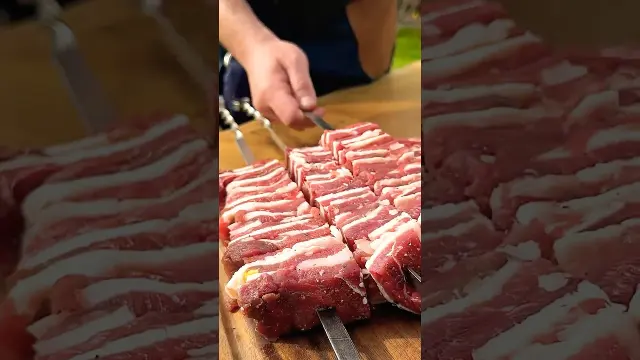
 Insane Napoleon Skewers Grilled Over Charcoal
#Skewers
1 ideas
Insane Napoleon Skewers Grilled Over Charcoal
Get new #Skewers ideas by email
Every Thursday: the week's best ideas, with the newest from #Skewers.
Related tags
Skewers: The Complete Guide to Grilling on Sticks
A skewer is one of the oldest cooking tools there is, and one of the most useful. A thin rod of wood, bamboo or metal holds pieces of food together so they can be cooked over fire, in an oven, or under a broiler. The idea is simple: small, even pieces cook quickly, take on colour on all sides, and pick up smoke and char in the process. Skewers show up in almost every cooking tradition in the world, which is a good sign that the method works.
A short history of cooking on sticks
Cooking meat and vegetables on pointed sticks predates pottery by a wide margin — a stick held over coals was among the first ways people cooked at all. What changed over time was mostly the setup around the fire: the grill grate, the brazier, the long flat blade. In Central Asia and the Caucasus, skewered meat grilled over coals became shashlik; in Japan, small skewers of chicken were refined into yakitori, sold piece by piece. Southeast Asia gave us satay with its peanut sauce, Greece has souvlaki, and Peru grills skewered beef hearts as anticuchos. Each is a local answer to the same basic question.
The main kinds
Read more
- Bamboo and wooden skewers: cheap and everywhere. Soak them in water for at least half an hour before they meet the heat, and they will survive long enough to do the job.
- Metal skewers: reusable and sturdy. Choose flat or twisted blades over plain round ones, which spin and drop your food. They hold heat, so handle them with a thick towel.
- Double-pronged skewers: two thin parallel prongs hold heavy or slippery pieces — chunks of meat, whole mushrooms, a firm fillet — without letting them rotate.
- Long, flat blades: the shashlik style, wide enough to support large pieces and easy to turn with two hands.
What you can skewer
Almost anything that holds its shape: cubed chicken, pork, beef or lamb; prawns; firm fish; halloumi and paneer; cherry tomatoes; mushrooms; courgette and onion; whole chillies; chunks of fruit. Delicate things like flaked fish, soft cheese or a thin slice of aubergine are more likely to tear, so thread them carefully or cook them another way.
Techniques that make a difference
- Cut pieces to the same size so everything finishes at the same moment.
- Leave a small gap between pieces. Food pressed tightly together steams instead of browning.
- Keep the skewer itself and its exposed tip from holding the food above the heat — lay it across the fire evenly.
- Marinate, but drain the marinade before grilling; sugar-heavy sauces burn, so save them for the last couple of minutes.
- Fish and vegetables often travel better over medium, indirect heat than over a blazing fire.
Keeping it safe
If you are using metal, remember the handle stays hot long after you take the skewer off. With bamboo, watch for splinters and use a clean, food-grade set each time. Anything that tastes of char readily on the outside can still be raw in the middle, so check the centre before serving — the outside colour tells you very little.
Skewers are forgiving once you have the two habits in place: even pieces and a little space between them. Everything else is seasoning.
#Skewers: frequently asked questions
What do I need to start cooking with skewers?
A set of skewers and a heat source is genuinely all it takes to begin — bamboo for occasional cooking, metal if you expect to do it often. Add a sharp knife for cutting even pieces, a bowl for marinating, and tongs or a thick towel for handling hot metal, and you are set.
Should I choose bamboo, wooden or metal skewers?
Bamboo and wood are inexpensive and convenient, but they need a good soak before they meet the heat and wear out after a few uses. Metal costs more upfront yet lasts, handles heavier pieces, and is worth choosing in flat or twisted shapes that grip the food rather than letting it rotate.
How do I keep the food from spinning or sliding off?
Flat blades and double-pronged skewers grip the food, which solves most of the spinning problem on their own. Thread pieces through their centre, group similar sizes together, and lay the skewer evenly across the heat instead of letting one end hang off the edge.
Why does my food steam instead of browning?
When pieces are pressed tightly together they cook in their own trapped moisture, so they soften rather than colour. Leave a small gap between pieces and cut everything to a similar size so the heat reaches each one on all sides. Sugary marinades and sauces belong at the very end, because sugar scorches fast.
How should I look after metal skewers?
Wash and dry them soon after cooking — dampness left sitting on metal is what dulls and pits it over time. A quick scrub with a cloth or brush usually does the job, and a light wipe of oil before storing keeps them ready for next time.
What works well for a crowd or a party?
Anything that holds its shape threads nicely: cubes of meat, prawns, firm fish, halloumi, mushrooms, cherry tomatoes and chunks of fruit. Mixing quick-cooking ingredients with sturdier ones lets you build a spread where different skewers come off the heat at different moments, and guests can pick and choose. Just remember that metal handles stay hot long after the skewer leaves the fire.
Videos come from YouTube and posts from Instagram; titles and summaries are our own. All rights belong to their creators.