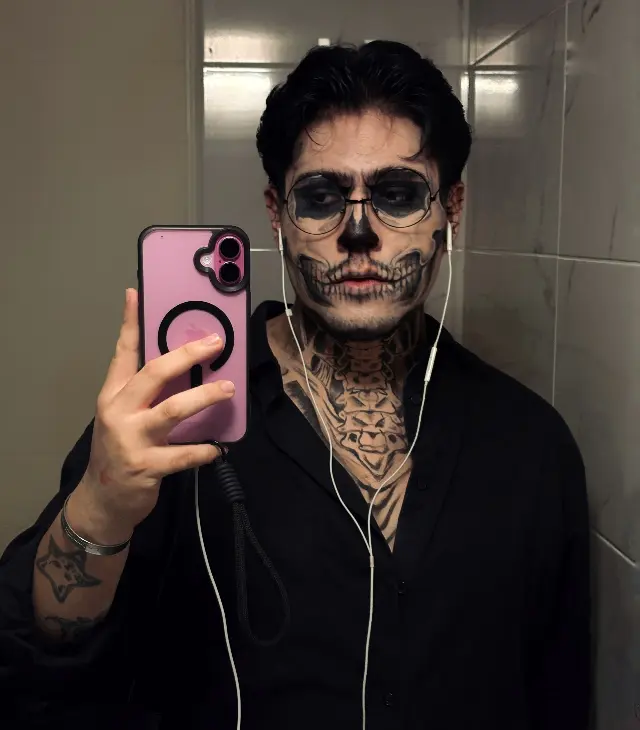
 Spooky Skull Makeup Look for Halloween
#Skull Makeup
2 ideas
Spooky Skull Makeup Look for Halloween
Get new #Skull Makeup ideas by email
Every Thursday: the week's best ideas, with the newest from #Skull Makeup.
Related tags
Skull Makeup Guide
Skull makeup is a face-painting style that transforms the face into a stylized skull or skeletal image. It is most often used for costume occasions, theatrical makeup, Halloween, and creative photography, but it can also be an artistic form of body and face painting. The look may be realistic, simplified, playful, or decorative, depending on how much detail you want to include.
What skull makeup is
At its core, skull makeup uses light and dark contrast to suggest the shape of bone. The usual idea is to make the face appear hollow in certain places and bright in others. Common features include dark eye sockets, a shaded nose area, and teeth drawn across the lips and cheeks. Some versions aim to resemble a human skull closely, while others borrow only the basic shapes and turn them into a more decorative design.
Skull makeup has roots in stage makeup, ceremonial face painting, and costume traditions. It is now widely used in creative beauty looks because it is expressive and easy to adapt. You can keep it simple with a few strong shapes, or build a more detailed design with lines, shading, and decoration.
Read more
Main styles
There are several ways to approach skull makeup:
- Realistic skull makeup: focuses on bone structure, shadow, and symmetry.
- Sugar skull-inspired makeup: uses bright decoration, floral motifs, dots, and ornate line work.
- Half-skull makeup: covers only one side of the face, leaving the other side natural or glam.
- Minimal skull makeup: uses just the key shapes for a quick and wearable costume look.
- Artistic skull makeup: blends skeletal elements with fantasy, glitter, colors, or graphic design.
Basic techniques
A strong skull look usually starts with a pale base or a cleaned-up face so the dark shapes stand out clearly. From there, you can map the major areas:
- Eyes: darken the eye sockets in a rounded or angular shape.
- Nose: draw a hollow or triangular nose shape.
- Cheeks and mouth: add cheek hollows and teeth lines to create the skeleton effect.
- Contours and shadows: soften edges where needed so the design follows the face naturally.
If you want the look to appear balanced, work in stages and compare both sides of the face often. A small brush is useful for detail, while a sponge can help with smoother base color. If you are using face paint, it helps to build color gradually instead of applying too much at once.
Tips for beginners
Start with a simple version first. You do not need to draw every tooth or line perfectly to make the look readable. Clear shapes matter more than complexity. Practice the design on paper or lightly sketch it on the face before filling it in.
A few practical tips:
- Keep the eye area comfortable and easy to see through.
- Blend shadows gently if you want a softer effect.
- Use a reference image for proportion, but adapt it to your own face shape.
- Test any product on a small patch of skin first if you have sensitive skin.
- Remove all makeup carefully after use and cleanse the skin well.
Finishing the look
You can leave skull makeup plain and graphic, or combine it with hair styling, dark clothing, flowers, glitter, or costume accessories. The most effective looks usually match the makeup style to the overall mood: eerie, elegant, theatrical, or whimsical. With a little practice, skull makeup becomes a flexible design that you can simplify or elaborate depending on the occasion.
Videos come from YouTube and posts from Instagram; titles and summaries are our own. All rights belong to their creators.