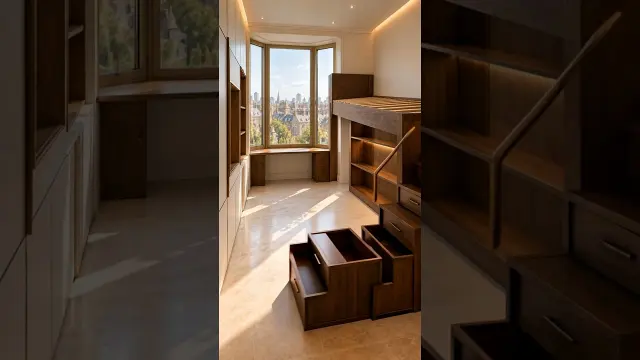
 Tiny bedroom loft bed makeover with hidden staircase storage
#Small Bedroom
3 ideas
Tiny bedroom loft bed makeover with hidden staircase storage
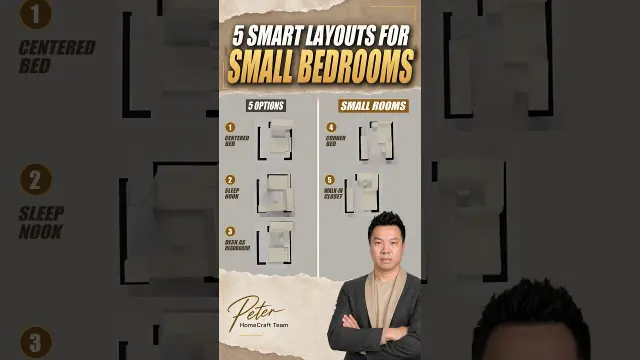 Five Smart Layout Options for Small Bedrooms
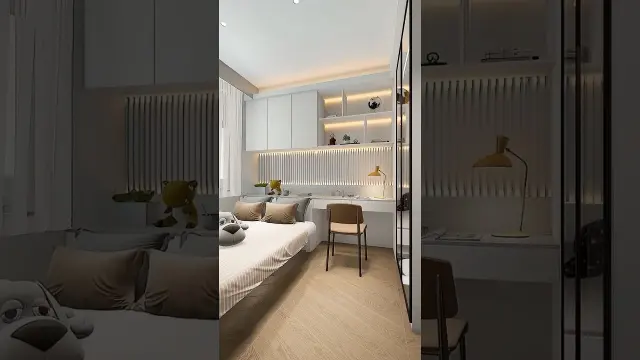 Small Bedroom Ideas to Maximize Space
Get new #Small Bedroom ideas by email
Every Thursday: the week's best ideas, with the newest from #Small Bedroom.
Related tags
Small Bedroom Ideas: Layout, Storage and Style
A small bedroom asks for a different kind of thinking. Instead of filling a room, you are choosing what earns its place. The good news is that compact rooms are often the most restful ones: with fewer things competing for attention, a small bedroom can feel calm, purposeful and genuinely comfortable. The aim is not to make a room look bigger so much as to make it work so well that size stops mattering.
Start with the bed
The bed takes up most of the floor in any small bedroom, so its position decides everything else. Placing the head against the longest wall usually keeps the walkway clear; tucking one side into a corner frees floor space but makes changing the sheets harder, so consider who sleeps there and how often. A bed raised on legs, or one with storage built underneath, gives back a surprising amount of room. In very narrow spaces, a single bed along one wall leaves a corridor for a wardrobe and a small desk.
If the room must hold more than sleeping, think in zones: a bed for rest, a small desk for work, a slim surface for a lamp and a glass of water. You do not need a separate room for each activity, only a clear sense of where each one happens.
Read more
Storage that goes upward
Floor space is precious, wall space rarely is. Shelves above the bed, a tall narrow wardrobe, hooks behind the door and boxes under the bed all use vertical space that otherwise sits empty. Keep the most-used items between knee and shoulder height; reserve the very top for things you need rarely. Baskets, fabric boxes and closed drawers hide clutter that open shelves would display, which matters more in a small room than a large one, where mess has somewhere to spread.
A useful rule: if a piece of furniture has no storage in it, it should earn its place by being beautiful or by doing something nothing else does.
Light and colour
Light colours on walls, ceiling and large furniture reflect light and blur the edges of a room, which makes boundaries harder to read. That does not mean everything must be white. A deep, warm tone on a single wall can give a small room character and depth without shrinking it, especially if the ceiling and the wall behind the bed stay light.
Mirrors are the old, reliable trick: placed opposite a window, one doubles the daylight and the view. Layer lighting rather than relying on a single overhead bulb, since a small room used from morning to night needs softer, lower light in the evening.
Keep it quiet
Too many competing patterns, colours and objects create visual noise, and small rooms have no distance to soften it. Choose a palette of two or three colours, repeat them, and let texture carry the interest. Then edit: a small bedroom rewards the discipline of removing one thing every time you add another. What remains feels chosen rather than stored.
#Small Bedroom: frequently asked questions
How do I start planning a small bedroom layout?
Start with the bed, since it usually decides how the rest of the room works. Place it where the walkway stays clear, then add only the furniture that supports sleep, storage, or another needed activity.
What kind of bed works best in a small bedroom?
A bed with legs can make the room feel lighter, and a bed with built-in storage helps you use the space beneath it. If the room is very narrow, a single bed along one wall can leave room for a wardrobe or desk.
How can I keep a small bedroom from feeling cluttered?
Use vertical storage such as shelves, hooks, and tall wardrobes, and keep everyday items within easy reach. Closed drawers, baskets, and under-bed boxes are especially helpful because they hide visual clutter.
What colors and lighting make a small bedroom feel better?
Light wall and furniture colors help reflect light and make the room feel more open, while one deeper accent wall can add personality without overwhelming the space. Layered lighting works better than one harsh overhead light because it creates a softer, more comfortable mood.
What are common mistakes to avoid in a small bedroom?
One common mistake is adding too many patterns, colors, or decorative objects, which creates visual noise. Another is choosing furniture that takes up floor space without offering storage or another clear purpose.
Videos come from YouTube and posts from Instagram; titles and summaries are our own. All rights belong to their creators.