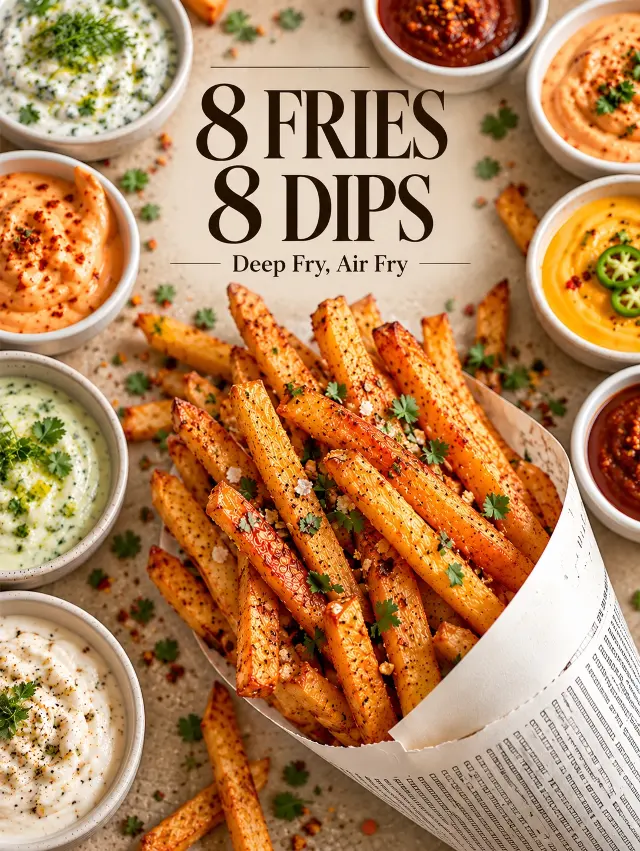
 Eight Homemade French Fries Varieties with Matching Sauces
#Snacks
2 ideas
Eight Homemade French Fries Varieties with Matching Sauces
Get new #Snacks ideas by email
Every Thursday: the week's best ideas, with the newest from #Snacks.
Related tags
Snacks: Simple Bites Between Meals
Snacks are small portions of food eaten between main meals, or sometimes alongside drinks, shared plates, or casual gatherings. They can be as simple as a piece of fruit, a handful of nuts, or toast, or as elaborate as savoury pastries, sandwiches, dips, and sweet treats. Across many cultures, snacks have long played an everyday role: they help bridge the gap between meals, offer quick nourishment, and bring comfort, convenience, and variety to the table.
What snacks are for
A good snack can do a few different things. It may take the edge off hunger, help you stay comfortable between meals, or simply give you something enjoyable to eat in a relaxed moment. Some snacks are meant to be filling, while others are light and meant to be shared. The best choice depends on the occasion, your appetite, and what else you’ve eaten that day.
Common kinds of snacks
Read more
Snacks come in many forms, and most can be grouped into a few broad types:
- Savoury snacks: chips, crisps, savoury biscuits, spiced nuts, sandwiches, rolls, pastries, and finger foods
- Sweet snacks: fruit, cakes, cookies, puddings, small baked goods, and chocolate treats
- Fresh snacks: sliced vegetables, fruit, yogurt, or simple salads
- Dips and spreads: hummus, chutneys, salsas, cheese spreads, nut butters, and bean dips, often served with bread or crackers
Many snacks overlap with other types of food. A sandwich can be a snack or a meal, depending on size and filling. The same is true for soups, wraps, and small baked items.
A few classic qualities of a good snack
When you’re choosing or making snacks, balance matters. A snack that is only sweet or only starchy may not feel satisfying for long. Many people find that combining different elements works well, such as:
- Something crunchy with something soft
- Something fresh with something richer
- Something savoury with a little sweetness
- A carbohydrate paired with protein or fat, when suitable
You do not need to make every snack elaborate. Often the simplest combinations are the most useful and enjoyable.
Tips for making snacks at home
Homemade snacks are easy to adapt. You can keep them plain or season them more boldly, depending on taste. A few practical ideas:
- Keep basic ingredients on hand, such as bread, crackers, fruit, yogurt, eggs, vegetables, nuts, and dips
- Prepare a few components in advance, like chopped vegetables, cooked grains, or a simple sauce
- Season carefully and taste as you go, especially with salt, spice, and sweetness
- Aim for a size that feels satisfying without being too heavy
If you’re serving snacks to others, variety helps. Offering a mix of textures and flavours gives everyone more choice, whether the setting is a family afternoon, a casual tea, or a gathering with friends.
A gentle approach to snacking
Snacking works best when it fits your routine rather than fighting it. Try to notice whether you want food because you’re genuinely hungry, need a little energy, or simply want a treat. All of these can be valid reasons. The key is to choose food that feels satisfying, enjoyable, and appropriate for the moment.
In the end, snacks are about flexibility. They can be quick, homemade, comforting, playful, or practical. Whether you like something crisp and savoury, soft and sweet, or fresh and light, there is always room for a snack that suits your day.
Videos come from YouTube and posts from Instagram; titles and summaries are our own. All rights belong to their creators.