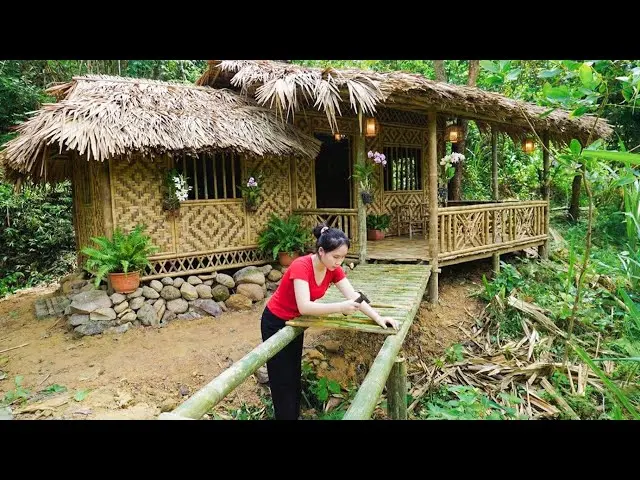
 Solo Build of a Bamboo House and Bridge
#Solo Build
1 ideas
Solo Build of a Bamboo House and Bridge
Get new #Solo Build ideas by email
Every Thursday: the week's best ideas, with the newest from #Solo Build.
Related tags
Solo Building: Creating Projects on Your Own
Solo building is the practice of planning and constructing a project by yourself, without a full crew. It can apply to small carpentry work, garden structures, sheds, furniture, cabins, bridges, and other hands-on projects where one person takes responsibility for the design, materials, assembly, and finish. For many people, solo building is appealing because it gives full creative control and a strong sense of independence.
What solo building involves
At its core, solo building is not about doing everything physically alone all the time. It is about managing a project with one main builder in charge. That means breaking the work into steps you can realistically handle, choosing materials you can lift and move safely, and using methods that reduce the need for extra hands. Good solo building relies as much on preparation as on construction.
The idea has long roots in traditional self-sufficiency, rural craftsmanship, and do-it-yourself building. People have always built small shelters, fences, outbuildings, and household items with limited help. Today, solo building is common in homesteading, off-grid living, backyard projects, and creative woodworking.
Read more
Common types of solo builds
Some projects are better suited to one person than others. Good starting points include:
- simple benches, stools, and shelves
- raised beds, planter boxes, and garden frames
- small sheds and storage units
- fences, gates, and trellises
- tiny shelters and basic outdoor structures
Larger projects can also be done solo, but they usually require more time, careful sequencing, and smart use of temporary supports, clamps, jigs, and preassembled sections. For anything structural, it is important to know your limits and get proper guidance when needed.
Techniques that make solo building easier
Planning is the most important skill. Before you begin, sketch the project, measure carefully, and think through the order of work. Many solo builders divide a project into modules so each part can be handled one at a time.
Useful habits include:
- choosing manageable material sizes and weights
- using clamps, braces, and temporary supports
- predrilling holes to make assembly easier
- labeling parts clearly before construction
- keeping tools and fasteners organized
- building on a level surface whenever possible
Dry-fitting pieces before final assembly can prevent mistakes. Patience matters, because solo work often takes longer than working with help.
What beginners should know
If you are new to solo building, start small. A simple project will teach you how to measure accurately, cut neatly, and think ahead about assembly. Try to choose projects that can be completed in stages without rushing. It helps to practice basic tool use first and to learn how to lift, carry, and position materials safely.
Safety should always come first. Wear appropriate protection, work in good light, and avoid handling pieces that are too heavy or unstable for one person. If a step feels awkward or risky, pause and find a safer method.
A few practical tips
- Build from the ground up in clear stages.
- Keep your workspace tidy so you do not lose time or trip hazards.
- Use repetition to your advantage by making jigs or templates.
- Leave time for corrections and finishing work.
- Accept that solo building is often slower, but it can also be more careful and rewarding.
Solo building is both a craft and a mindset. It asks for planning, patience, and respect for the materials. When done well, it gives you something useful that reflects your own hands and judgment.
#Solo Build: frequently asked questions
How do I start solo building if I have never built anything before?
Start with a small project you can finish in stages, such as a bench, a shelf, or a planter box, and treat it as practice for measuring, cutting, and assembling. Get comfortable with your basic tools on scrap pieces first, then work up to a structure. Choosing something small means mistakes stay cheap and fixable.
What tools and materials do I actually need for a solo project?
You need fewer tools than you might think: something to measure and mark, something to cut, something to drill or drive fasteners, and clamps to act as your extra pair of hands. Beyond that, the key is choosing materials in sizes and weights one person can lift and position. Temporary supports and braces matter as much as the tools themselves.
Which kind of project is realistic to build alone?
Garden structures, small sheds, fences, trellises, and simple furniture are well suited to one builder because each part can be handled and moved by one person. Bigger builds like cabins or bridges are possible solo but demand more time, careful sequencing, and preassembled sections. For anything structural, know your limits and get proper guidance rather than improvising.
How can I hold pieces in place when I have no one to help?
Clamps, braces, jigs, and temporary supports take the place of a second set of hands, letting you position a part and step back before fastening it. Predrilling holes and dry-fitting everything before final assembly also catch problems early. Labeling parts clearly and keeping fasteners organized saves a lot of standing around wondering what goes where.
What mistakes do beginners usually make when building solo?
The most common one is rushing the planning: skipping a sketch, an order of work, or a careful measurement and then discovering the problem mid-build. Another is handling a piece that is too heavy or unstable for one person, which is a safety issue rather than just an inconvenience. Working in good light, on level ground, with a tidy workspace prevents a surprising share of trouble.
How do I take care of a structure I built myself?
Check it over after the first season and then periodically, looking for loosened fasteners, movement, or places where water sits. Keeping outdoor wood finished and cleaned extends its life, and clearing debris away from the base helps prevent rot. Repairs made early are usually small repairs.
Videos come from YouTube and posts from Instagram; titles and summaries are our own. All rights belong to their creators.