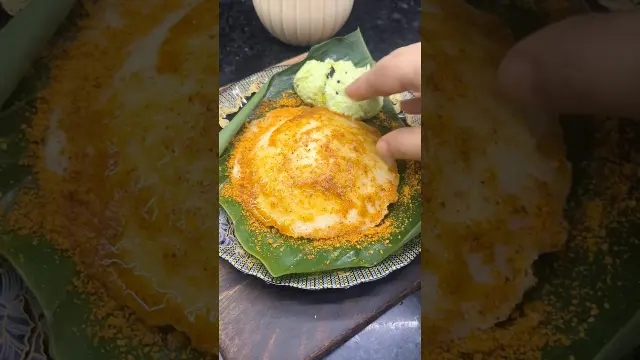
 Ghee Podi Idli: A Simple South Indian Breakfast Idea
#South Indian Breakfast
1 ideas
Ghee Podi Idli: A Simple South Indian Breakfast Idea
Get new #South Indian Breakfast ideas by email
Every Thursday: the week's best ideas, with the newest from #South Indian Breakfast.
Related tags
South Indian Breakfast: A Guide to Idli, Dosa and More
A South Indian breakfast is built on a small number of humble ingredients — rice, lentils, a little salt, water and time — turned into food that is soft, crisp, sour, spicy and comforting all at once. Across Tamil Nadu, Karnataka, Kerala, Andhra Pradesh and Telangana you will find the same family of dishes appearing in home kitchens, roadside eateries and temple canteens, always eaten early, always with something to dip into.
Where it comes from
The cornerstone of the tradition is the fermented batter of rice and lentils, usually urad dal. The grain is soaked, ground to a smooth paste and left to sit, often overnight, so that wild yeasts and friendly bacteria do their quiet work. That fermentation is what gives idli its faint sourness and lightness, and dosa its ability to spread thin and crisp on a hot griddle. Because the batter keeps for a day or two, a household can cook a different breakfast from the same bowl: steamed one morning, poured and swirled the next. The word "tiffin" is often used in the region for these light morning and evening meals, and many dishes are eaten at either hour.
The staples
Read more
- Idli: small steamed cakes, plain or studded with spices, eaten warm with chutney or a sprinkle of podi and ghee.
- Dosa: thin, fermented batter spread across a hot pan, folded around potato masala or left plain and paper-thin.
- Uttapam: a thicker, softer version with onion, chilli or tomato pressed into the surface.
- Vada: savoury lentil doughnuts, crisp outside and soft within, often softened in sambar.
- Ven pongal: rice and moong dal cooked soft with black pepper, cumin and ghee.
- Upma: semolina or vermicelli cooked with vegetables, mustard seeds and curry leaves.
- Appam and puttu: Kerala favourites, the first a lacy fermented rice pancake, the second steamed cylinders of rice flour layered with coconut.
- Pesarattu: an Andhra green gram dosa, often served with a ginger chutney.
What goes alongside
No plate is complete without its companions. Coconut chutney, ground fresh with green chilli and tempered with mustard seeds, is the standard. Sambar, a thin lentil and vegetable stew, brings tang and heat. Dry podi, a coarse spice powder, is stirred into ghee or sesame oil and eaten with idli. Kerala pairs appam with a mild vegetable stew or with kadala curry, and a cup of strong filter coffee closes the meal for many.
Getting started
Give yourself time the day before: soak, grind and let the batter rest somewhere warm until it rises and smells pleasantly sour. Grind the dal until smooth and the rice slightly coarser for dosa; a finer grind suits idli. Salt the batter after fermentation and stir gently rather than vigorously. Heat your pan properly before spreading, and wipe it between dosas for an even surface. A batter that is too thin will tear; too thick, and it will not spread.
Practical tips
- Start with a small batch and learn how your kitchen's temperature affects the rise.
- Keep the batter in a roomy bowl; it expands as it ferments.
- Cook idli in a cloth-lined or greased mould, and let the steam build before covering.
- Serve immediately — these dishes lose their texture as they cool.
Once you have the batter, you have a week of breakfasts.
#South Indian Breakfast: frequently asked questions
Is South Indian breakfast hard to make if I have never fermented a batter before?
It is forgiving as long as you plan ahead, since most of the work happens the day before you eat. Soak the rice and lentils, grind them, and leave the mixture somewhere warm until it has risen and smells pleasantly sour. Begin with a small batch so you can watch how your own kitchen's warmth affects the rise.
What do I actually need in the kitchen to get started?
A grinder or strong blender, a wide bowl with room for the batter to expand, a steamer mould for idli and a well-seasoned flat pan for dosa will carry you through most of the family of dishes. Beyond that you only need rice, lentils, salt, water and patience. A ladle and a little oil for wiping the pan make spreading much easier.
Which dish should I choose to make first?
Idli is the gentlest introduction because it steams unattended and forgives an imperfect grind. Once the batter is behaving, spread the same mixture thinner for dosa, or pour it thicker and press onion and chilli into the top for uttapam. If you want something that needs no fermentation at all, upma or ven pongal are quick alternatives.
How should I store and look after the batter?
Keep it in a roomy bowl or jar so it has space to rise, and refrigerate it once it has fermented to slow it down. Stir gently rather than vigorously, and salt it after fermentation rather than before. A batter that has turned very thin can be thickened with a little rice flour, while a stiff one loosens with water.
What should I serve alongside so the plate feels complete?
Coconut chutney ground with green chilli and tempered with mustard seeds is the everyday partner, with sambar for tang and heat. A coarse spice powder stirred into ghee is the simplest thing to put beside idli, and appam in Kerala is often paired with a mild vegetable stew or kadala curry. Finish with a strong cup of filter coffee if you like.
What are the common mistakes people make with dosa and idli?
The usual culprits are a batter that is too thin, which tears on the pan, or too thick, which refuses to spread. Heat the pan properly before spreading and wipe it between dosas so the surface stays even. Serve as soon as they are cooked, because these dishes lose their texture quickly as they cool.
Videos come from YouTube and posts from Instagram; titles and summaries are our own. All rights belong to their creators.