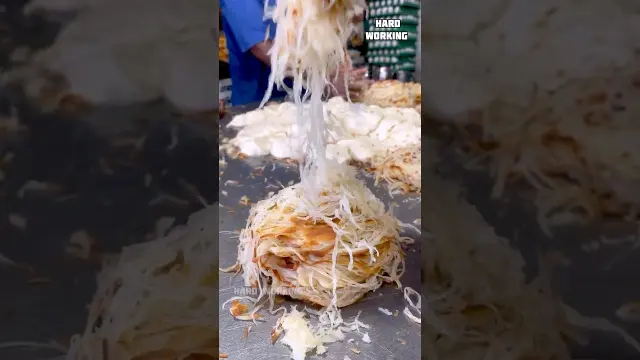
 Nool Parotta: Watching a South Indian Street Food Being Made
#South Indian Street Food
1 ideas
Nool Parotta: Watching a South Indian Street Food Being Made
Get new #South Indian Street Food ideas by email
Every Thursday: the week's best ideas, with the newest from #South Indian Street Food.
Related tags
A Guide to South Indian Street Food
Street food in South India is not a separate cuisine so much as the everyday eating of the region, moved outdoors. In Tamil Nadu, Karnataka, Kerala, Andhra Pradesh and Telangana, the same dishes that appear at the family breakfast table show up at a roadside cart by mid-morning, cooked in front of you on a flat griddle or in a well-used cauldron of oil. The stall is usually small — a pushcart, a bicycle with a box strapped on, a thatched shack with three benches — and the menu is short. That is part of the appeal. Someone has spent years doing one thing well.
What you will find
The best-known items are the tiffin dishes: dosa, the thin fermented rice-and-lentil crepe, served plain, folded, or stuffed with potato masala; idli, the soft steamed cake of the same batter; and vada, the savoury doughnut, crisp outside and airy within. Around them cluster bajji and bonda, sliced vegetables or stuffed dough dipped in gram-flour batter and fried to order, and sundal, boiled legumes tossed with coconut, mustard seeds and curry leaves.
Further south and along the coast you meet appam, the lacy fermented rice pancake with a soft centre, and idiyappam, pressed rice noodles steamed in little nests. Kerala's contribution to the street is the parotta — a layered flatbread slapped and folded until it separates into flakes — often eaten with a simple curry, or chopped and stir-fried with egg and vegetables as kothu parotta. The rhythm of the making is half the pleasure: the slap of dough, the hiss of batter on a hot tawa, the ladle knocking the rim of a steel tumbler.
Read more
Sweet things are usually simple. A sweetened milk or semolina pudding, fried dough in syrup, a hot laddu. To drink, there is tea boiled strong with milk, buttermilk with curry leaves, and coffee frothed by pouring it back and forth between two vessels.
How to eat well
- Go where the crowd is. A stall with a queue is turning its stock over quickly, which matters more than anything else.
- Choose food that is cooked while you watch, and eat it hot.
- Look at the hands and the surfaces, not just the food. A tidy stall usually means a careful cook.
- Ask for the water you drink to be sealed bottled or boiled, and skip ice if you are unsure.
- Start small. A plain dosa or a plate of sundal tells you a lot before you commit to a larger order.
- Say yes to the chutney and sambar. They are how a stall shows its character.
Eating with your hands
Most of this food is designed to be eaten with the fingers, and it genuinely tastes different that way — you feel the crispness of a dosa or the heat of a parotta before it reaches your mouth. Eat with the right hand, keep the left for your water bottle and your bag, and rinse at the tap most stalls keep beside the plates.
Vegetarian by default in most places, cheap, fast and unhurried in equal measure, this is food built for the middle of an ordinary day. Arrive hungry, watch the griddle for a minute, and order what the person beside you is having.
#South Indian Street Food: frequently asked questions
How do I start exploring South Indian street food if I've never tried it?
Begin with one of the tiffin dishes — a plain dosa, a couple of idli, or a plate of sundal — because they are simple, quick to make, and show you how a particular stall cooks. Order small, watch the griddle for a minute, and see what the people beside you are eating before committing to more. Once you know you like a stall, that's the moment to branch out into the fried snacks and the parotta.
What should I look for when picking a street stall?
A queue is the most useful signal, since a stall selling steadily is working through its stock rather than holding it. Beyond that, watch whether your food is made to order in front of you and glance at the cook's hands and the surfaces around the griddle. A tidy, busy stall usually tells you everything you need to know.
Which dishes should I choose first, and how do the regional ones differ?
The dosa, idli and vada family is the shared foundation almost everywhere in the south, with bajji, bonda and sundal alongside them. As you move south and toward the coast you meet appam and idiyappam, while Kerala's street stalls are known for the flaky layered parotta, which can be eaten with curry or chopped and stir-fried. Pick based on what you feel like — something crisp and light, or something soft and filling.
How is the food meant to be eaten, and what should I do with the chutney and sambar?
Most of it is built for the fingers: use your right hand, keep the left for your bottle and bag, and rinse at the tap the stall keeps near the plates. Say yes to the chutney and sambar — they are where a cook shows their character, and the food is duller without them. Eat it hot, straight from the griddle, since the crispness is the whole point.
What common mistakes do first-timers make?
The usual one is ordering a large spread before tasting anything, which leaves you with cold food and no idea what the stall does best. Another is skipping the accompaniments and treating the food as takeaway rather than something to eat on the spot. If you are unsure about the water offered, ask for sealed bottled or boiled instead.
How could I serve South Indian street food at a gathering?
Keep the menu short and cook it live — a hot griddle turning out dosas or a pan of kothu parotta being chopped and tossed gives guests the same theatre a roadside stall does. Add a legume dish like sundal to pick at, finish with something sweet and simple, and serve strong tea or frothed coffee. Small portions, made in front of people, work far better than a large buffet.
Videos come from YouTube and posts from Instagram; titles and summaries are our own. All rights belong to their creators.