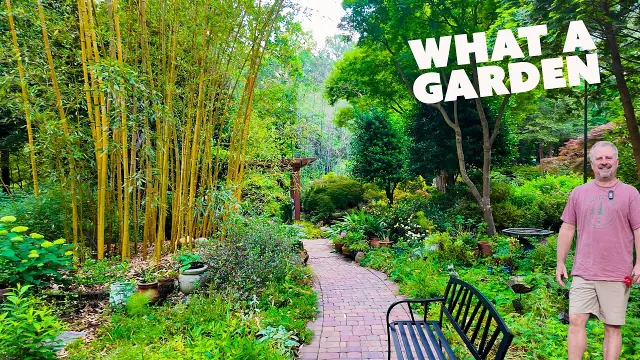
 Incredible Walk Through Tour of the Giberson Garden
#Southern Garden
1 ideas
Incredible Walk Through Tour of the Giberson Garden
Get new #Southern Garden ideas by email
Every Thursday: the week's best ideas, with the newest from #Southern Garden.
Related tags
Southern Garden: A Guide to Plants, Style and Care
A Southern garden is less a single style than a way of working with a particular kind of place: long, humid summers, mild winters, heavy rain that arrives in bursts, and soil that varies enormously from one plot to the next. Gardeners in the American South learn early that the same plant can thrive in one yard and sulk in the next, and that the best gardens are built around those local differences rather than against them.
What defines the look
The classic Southern garden is generous and informal in spirit, even when it is carefully planned. It tends toward layered planting, where something is always in leaf, something is always opening, and the eye is led from ground level up through shrubs to a canopy of trees. Structure comes from evergreens and hedges; softness comes from overflowing borders, climbing roses and vines allowed to wander.
Shade is not treated as a problem but as an asset. Porches, pergolas, arbours and old trees create the deep, cool green that much of the region's garden making is organised around. Paths curve rather than march, and the garden usually reveals itself gradually.
Read more
Signature plants
The palette that most people associate with the region is built on shrubs and trees that handle heat and humidity well:
- Camellias, for glossy evergreen foliage and flowers in the cooler months.
- Azaleas, for a spring display in dappled shade.
- Gardenias, for scent near a door or a seating area.
- Hydrangeas, for soft colour in sheltered, evenly moist spots.
- Magnolias and crepe myrtles, for height, blossom and structure.
- Bananas, palms and other bold foliage for a lush, tropical feeling.
Roses, iris, crinum lilies, ferns and ornamental grasses fill in around them, and native perennials are increasingly used to support birds and pollinators while asking less of the hose.
Getting started
Begin with the soil and the light. Test drainage in the spot you have in mind and watch how the sun moves across it through a day before buying anything. Improve the ground with compost, and plant in autumn where possible, so roots establish before the heat returns.
Group plants by water needs rather than scattering them, and mulch generously to hold moisture and keep roots cool. Water deeply and less often, early in the morning, so foliage dries before evening.
Practical tips
- Choose plants for your actual conditions, not for a photograph.
- Leave room for mature size; Southern gardens grow fast.
- Prune flowering shrubs right after bloom, not before.
- Keep paths and sightlines clear through the lushness.
- Accept a little untidiness; it is part of the charm.
Above all, a Southern garden rewards patience and attention. Watch what flourishes, learn from what does not, and let the garden settle into the shape the place itself suggests.
#Southern Garden: frequently asked questions
How do I start a Southern garden from nothing?
Start by studying the place rather than shopping for plants: check how water drains in the spot you have in mind and watch how sun and shade move across it through the day. Improve the ground with compost and, where you can, plant in autumn so roots settle before the heat returns. Group your plants by how much water they want instead of scattering them around.
Which plants give a Southern garden its characteristic look?
The backbone is usually evergreen shrubs and trees that shrug off humidity, such as camellias, azaleas, gardenias and magnolias, with crepe myrtles for height and blossom. Bold foliage like bananas and palms adds the lush, tropical feeling people associate with the region, while roses, iris, lilies, ferns and grasses fill in around them. Layering these so something is always in leaf and something is always opening matters more than any single choice.
How do I look after a garden through long, humid summers?
Water deeply and less often, early in the morning, so the foliage has dried by evening and roots are encouraged to go down rather than stay at the surface. Mulch generously to hold moisture and keep roots cool, and prune flowering shrubs straight after they bloom rather than before. Choosing plants that suit your own soil and light does more for you than any amount of extra watering.
My yard is mostly shade — can I still make a Southern garden?
Yes, and in this region shade is generally treated as an asset rather than a problem. Deep, cool green comes from porches, pergolas, arbours and old trees, with azaleas, hydrangeas and ferns thriving in dappled light. Keep paths and sightlines clear so the garden still reveals itself gradually as you move through it.
What mistakes do people make when planting a Southern garden?
The commonest is buying for a photograph rather than for the actual conditions of the spot, which is why the same plant can thrive in one yard and sulk in the next. Another is forgetting how fast and how large things grow here, so plants are set too close together. It also pays to accept a little untidiness — that looseness is part of the charm, not a failure.
Any ideas for making a porch or seating corner feel like a Southern garden?
Use shade and scent to do the work: a vine over a pergola or arbour, gardenias positioned near a door or a chair, and a few bold-leaved plants in pots to carry the lushness up close. Let climbers wander a little and keep one clear route through, so the corner feels abundant without becoming a thicket.
Videos come from YouTube and posts from Instagram; titles and summaries are our own. All rights belong to their creators.