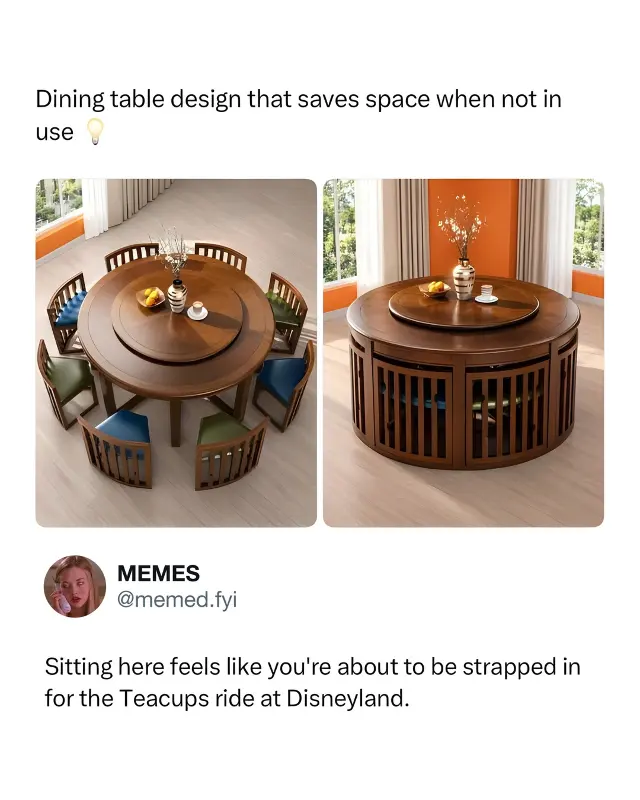
 How Space-Saving Furniture Shaped Small Home Design
#Space Saving Furniture
2 ideas
How Space-Saving Furniture Shaped Small Home Design
Get new #Space Saving Furniture ideas by email
Every Thursday: the week's best ideas, with the newest from #Space Saving Furniture.
Related tags
Space-Saving Furniture for Small Homes
Space-saving furniture is a broad family of pieces built to do more than one job, or to fold, stack, slide or tuck away when they are not in use. It is not a single style or a passing look: it is a practical approach to furnishing rooms where every square metre has to earn its place. The aim is rarely to fit more things into a small room, but to make the room feel calm and usable while still holding what daily life requires.
Where it comes from
Compact living has shaped furniture for a very long time. Fold-away wall beds appear in crowded cities well over a century ago, built-in benches and chests have long doubled as seating in small cottages, and boats and caravans have always relied on tables that drop, beds that slide and cupboards shaped to fit awkward corners. Japanese interiors, where bedding is stored away during the day so a room can serve several purposes, and Scandinavian design, with its light woods and simple modular storage, have both influenced how modern space-saving pieces look and behave. What ties these traditions together is the same idea: a room changes function over the course of a day, and the furniture should be able to change with it.
The main kinds
Read more
- Multifunctional pieces: a sofa with a storage box underneath, an ottoman that opens, a bed with drawers, a bench that hides shoes.
- Transformable pieces: sofa beds, wall beds, fold-down desks, tables that extend or drop on one side, chairs that convert into steps.
- Storage-integrated furniture: shelving that reaches the ceiling, stair drawers, headboards with compartments, hollow coffee tables.
- Vertical and modular systems: stackable chairs, nesting tables, open cube units you can rearrange, hooks and rails that use wall height.
- Sliding or folding doors, which save the space a swinging door needs.
What beginners should know
Measure more than the piece itself. Measure the doorway, the stairwell, the lift, the turning space and the ceiling height, and check where doors, drawers and cupboard fronts will open. A wardrobe that cannot be carried up the stairs is not a space-saving purchase.
Look closely at the mechanism. Hinges, gas struts, runners and folding frames decide whether a transforming piece is a pleasure or a chore; furniture that takes effort to unfold tends to stay folded. Anything fixed to a wall, especially a wall bed or a fold-down desk, needs secure fixing into solid structure, and it is wise to have that installation done properly.
Finally, think about weight and daily friction. Storage beds filled to the brim are heavy to lift, and a table you must clear before every meal will discourage you from using it.
Practical tips
Mark the footprint of a planned piece on the floor with tape and live with it for a day. Use height rather than floor area: shelves, rails and tall slim cabinets store a great deal without crowding the room. Choose light colours and pieces that sit on visible legs so the floor shows through. Leave one surface completely clear as a landing place, and keep at least one item that is simply comfortable, because a room that is efficient but unwelcoming is not really well planned.
#Space Saving Furniture: frequently asked questions
What exactly counts as space-saving furniture?
It covers any piece designed to do more than one job or to fold, stack, slide or tuck away when it is not being used, from storage beds and extendable tables to ceiling-height shelving and sliding doors. The common thread is not a particular look but the idea that a room's function changes through the day and the furniture should change with it. So a plain chest that doubles as seating belongs in the category just as much as a wall bed does.
How do I start planning space-saving furniture for a small room?
Begin by measuring the room properly rather than shopping: note the doorway, stairwell, turning space and ceiling height, and check where doors, drawers and cupboard fronts will swing open. Mark the footprint of anything you plan to buy on the floor with tape and live with it for a day before committing. Also decide which single surface you want to keep completely clear, since that landing place is what keeps a compact room feeling calm.
Which kind of space-saving piece should I choose for my situation?
Match the piece to the job that actually repeats in your day: if guests sleep over occasionally, a sofa bed or wall bed earns its keep, while if the problem is clutter, integrated storage such as stair drawers, hollow coffee tables or headboards with compartments will help more. If the room simply feels cramped, vertical and modular systems free up floor area without adding bulk. Pick the smallest intervention that solves the recurring problem rather than the most ingenious mechanism you can find.
What should I check before buying a transforming or fold-away piece?
Look hard at the mechanism, because hinges, gas struts, runners and folding frames decide whether the piece is a pleasure or a chore, and anything that takes effort to unfold tends to stay folded. Storage beds stuffed to the brim become heavy to lift, and a table you must clear before every meal will put you off using it. Anything fixed to a wall needs secure fixing into solid structure, so have that installation done properly rather than attempting it casually.
How do I care for space-saving furniture so the mechanisms keep working?
Treat the moving parts as the delicate part of the piece: keep runners and folding frames clean and free of grit, and avoid overloading compartments that are meant to lift or slide. Leave the piece unfolded now and then so hinges and struts are not left under tension for long stretches, and check wall fixings periodically since vibration loosens them over time. Keeping stored items to a sensible weight does more for longevity than any product you might buy.
What mistakes do people make with small-room furniture?
The most common is trying to fit more things into the room instead of making it feel usable, which usually means buying storage that crowds the floor rather than using height. Another is choosing dramatic pieces that are awkward to operate daily, or forgetting the delivery route entirely and ending up with a wardrobe that cannot come up the stairs. It also pays to keep something in the room that is simply comfortable, because an efficient but unwelcoming space is not actually well planned.
Videos come from YouTube and posts from Instagram; titles and summaries are our own. All rights belong to their creators.