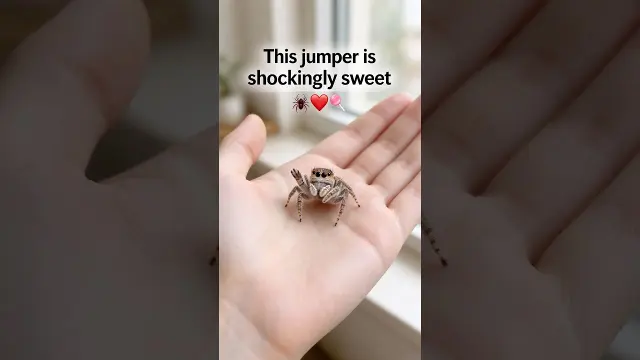
 Adorable Jumping Spiders Showing Their Cute Side
#Spider
1 ideas
Adorable Jumping Spiders Showing Their Cute Side
Get new #Spider ideas by email
Every Thursday: the week's best ideas, with the newest from #Spider.
Related tags
Spiders: a simple guide to these web-builders
Spiders are air-breathing arachnids found almost everywhere on land, from gardens and forests to houses and sheds. They are not insects: unlike insects, spiders have eight legs and two main body sections. Most spiders are shy, and many are helpful because they feed on other small animals, especially insects.
Their best-known skill is making silk. Spider silk is used to build webs, line retreats, wrap eggs, and help young spiders travel. Not every spider makes a classic round web. Some hunt on the ground, some wait in flowers, some hide in cracks, and some leap or run after prey. This variety is one reason spiders are so successful.
Common kinds of spiders
You’ll usually meet spiders in a few broad groups:
Read more
- Web builders, which make nets, funnels, sheets, or cobweb-like webs
- Hunting spiders, which catch prey without using a prey-capture web
- Jumping spiders, which are small, active hunters with excellent eyesight and curious behavior
- Crab-like or ambush spiders, which wait still and strike quickly
Many people notice the tiny, alert jumping spiders first because they often seem bold and expressive. Other spiders are less obvious and prefer to stay hidden.
Why spiders matter
Spiders are important in gardens, fields, and homes because they help keep insect numbers in balance. They are part of the natural food web themselves, serving as prey for birds, lizards, wasps, and other animals. In this way, spiders are both hunters and a food source for larger creatures.
Some people also admire spiders for their forms and patterns. A spider’s shape, web, and movement have inspired art, decoration, stories, and design for a long time.
What to know if you’re new to spiders
If you want to observe spiders more closely, take your time and stay calm. Move slowly, because quick movements can make them hide. A magnifying glass or a phone camera can help you notice details like eye arrangement, leg posture, and silk lines. It’s best to watch without touching, since some spiders are delicate and handling can stress them.
If a spider is indoors and you’d rather move it, use a cup and a piece of card to gently guide it outside. Keep a respectful distance if you do not know the species, and avoid trying to pick up spiders you cannot identify.
Simple ways to appreciate spiders
- Look for webs in the morning, when dew makes them easier to see
- Notice where spiders choose to hide: corners, plants, stones, and bark
- Observe how different spiders move: waiting, stalking, or leaping
- Leave some undisturbed spaces in a garden so they can live there
Spiders can seem mysterious at first, but once you notice their habits, they become much easier to understand. They are careful, varied, and quietly useful little predators that have adapted beautifully to the world around them.
Videos come from YouTube and posts from Instagram; titles and summaries are our own. All rights belong to their creators.