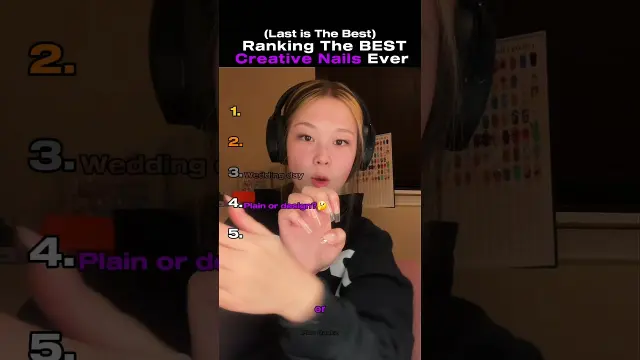
 Ranking Creative Nail Looks from Wedding to Stiletto
#Stiletto Nails
2 ideas
Ranking Creative Nail Looks from Wedding to Stiletto
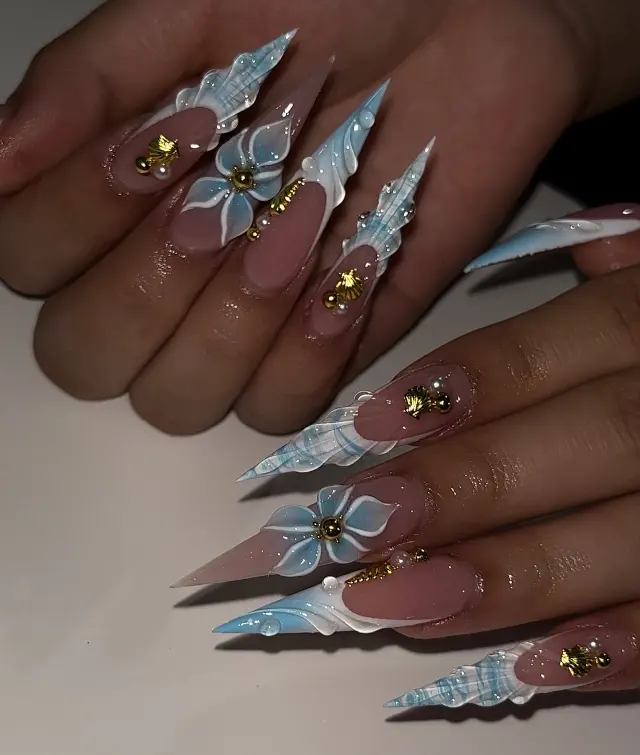 Long Stiletto Nails in Bright Blue With a Tropical Feel
Get new #Stiletto Nails ideas by email
Every Thursday: the week's best ideas, with the newest from #Stiletto Nails.
Related tags
Stiletto Nails: A Guide to the Pointed Nail Shape
Stiletto nails are a dramatic nail shape: long, narrow, and tapering steadily from the sides to a fine point at the tip. The silhouette is unmistakable, closer to a blade than to the soft oval or square shapes most people wear day to day. The name comes from the stiletto heel, the slender pointed shoe that became a symbol of glamour in the mid-twentieth century, and the shape borrowed both its outline and its reputation for boldness.
How the shape is built
A natural nail cannot usually be filed into a true stiletto on its own. The point needs length and strength that a natural nail rarely has, so the shape is normally created with an extension: acrylic, hard gel, or a structured gel overlay built over a form or tip, then filed into the taper. Press-on sets offer the same outline without a salon visit. A good stiletto has straight, even sidewalls and a smooth curve along the top, with the point centred rather than leaning to one side.
Variations on the point
Read more
The classic version is very sharp, but the family is broad. A slightly blunter point is often called a short stiletto and is easier to live with. Coffin or ballerina nails keep the taper but end in a flat edge. Some people ask for a "Russian almond", which is narrower than a standard almond but stops short of a true point. Length, curvature, and the amount of taper all change the character of the shape.
What people do with them
Because stilettos offer a large, uninterrupted surface, they suit decoration well. French tips redrawn along the taper, ombré fades, chrome and mirror finishes, matte top coats, fine line art, and small stones are all common. Solid, saturated colours let the silhouette do the work, while nude and sheer shades soften it for everyday wear. Seasonal motifs appear constantly, which is part of the appeal: the shape is a canvas as much as a style.
Practical notes for beginners
Start shorter than you think. A shorter point keeps the look while making typing, buttons, and zips far easier, and it is much less likely to catch. Ask for a slight downward curve at the free edge, since a completely flat point is more fragile. Keep the cuticle area and sidewalls neat; a sharp shape shows uneven edges more than a rounded one does. Book regular maintenance, because extensions grow out and the balance shifts as the nail moves forward. At home, treat the extensions as tools to be careful with: use the pads of your fingers rather than the tips, and avoid using them to open packaging or peel labels. If a nail lifts, snags, or feels painful, have it seen to rather than gluing it back down yourself. Well-made and well-kept, a stiletto is a striking shape that can be as wearable as you choose to make it.
#Stiletto Nails: frequently asked questions
What exactly is a stiletto nail shape?
It is a long, narrow nail that tapers steadily from the sides down to a fine point, closer to a blade than to a soft oval or square. The name comes from the pointed stiletto heel, and the shape carries the same glamorous, bold reputation. What sets it apart is the straight, even taper rather than a rounded or flat free edge.
Can I get stiletto nails on my natural nails?
Usually not a true point, because a natural nail rarely has the length and strength the shape demands. The taper is normally built with an extension such as acrylic, hard gel, or a structured gel overlay shaped over a form or tip, and press-on sets can give the same outline without a salon appointment. Whatever the method, a good stiletto has even sidewalls and a centred point rather than one that leans to a side.
How do I choose between a stiletto, coffin, and almond shape?
It comes down to how sharp an ending you want and how much you plan to do with your hands. A short stiletto keeps the look but blunts the point slightly, coffin and ballerina shapes keep the taper but finish with a flat edge, and a Russian almond is narrower than a standard almond without reaching a true point. If it is your first time, a shorter, softer version is the safer place to begin.
How should I look after stiletto nails day to day?
Treat the extensions as delicate tools: press with the pads of your fingers instead of the tips, and don't use them to open packaging or peel off labels. Keep the cuticle area and sidewalls neat, since a sharp shape shows uneven edges more than a rounded one, and book regular maintenance as the nail grows and the balance shifts. If a nail lifts, snags, or feels painful, have it looked at by a professional rather than glueing it back yourself.
Are stiletto nails a good choice for a wedding or a special occasion?
They work well for occasions because the long, uninterrupted surface is a natural canvas for decoration such as redrawn French tips, ombré fades, chrome finishes, fine line art, or small stones. For something softer, nude and sheer shades let the shape read as elegant rather than dramatic, while saturated colours make the silhouette the focus. A slightly blunter point is often more practical if the event involves a lot of handling things.
What mistakes do beginners make with stiletto nails?
Going longer and sharper than they can comfortably manage is the most common one, which makes typing, buttons, and zips frustrating and leaves the tips more likely to catch. Another is asking for a completely flat point, when a slight downward curve at the free edge is more durable. Rushing the finishing also shows: uneven edges are far more visible on a tapered shape than on a rounded one.
Videos come from YouTube and posts from Instagram; titles and summaries are our own. All rights belong to their creators.