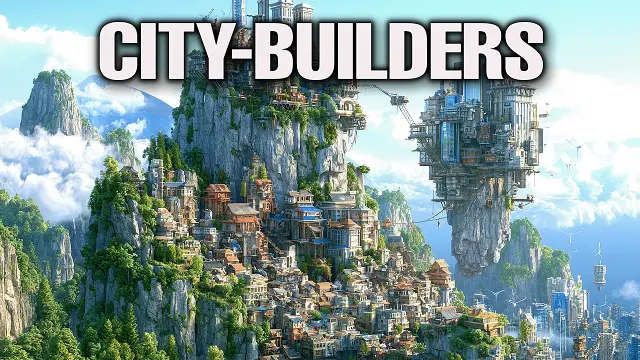
 Ten New City-Builder Games Worth a Look This Year
#Strategy Games
1 ideas
Ten New City-Builder Games Worth a Look This Year
Get new #Strategy Games ideas by email
Every Thursday: the week's best ideas, with the newest from #Strategy Games.
Related tags
Strategy Games: A Beginner's Guide to Thinking Ahead
Strategy games are games in which the outcome depends less on reflexes than on decisions. You look at a situation, weigh what you have against what your opponent has, and choose a course of action that will pay off later rather than immediately. That single idea — acting now for a result you will only see in a few moves — is what ties together a chessboard, a table of miniature armies, a map of a fictional empire and a quiet puzzle about running a railway.
The family is old. Board games built around calculation were played in ancient Egypt, Mesopotamia, India and China long before anyone wrote down rules for them. Chess and go descend from that deep tradition of two people facing each other across a grid with everything in plain view; backgammon is just as ancient but comes from a different branch, one where the dice decide part of what you are allowed to do and the skill lies in making the most of what you are given. Wargames as a formal hobby grew out of nineteenth-century military training exercises, and when computers arrived they inherited both lineages at once: the rigid rules of the board and the hidden information of the battlefield.
The main kinds
- Abstract strategy: no theme, no luck, everything visible. Chess and go are the classic examples. Excellent for learning to calculate.
- Turn-based strategy: players take turns, so you can think as long as you like. Often built on a grid or hex map.
- Real-time strategy: everyone acts at once on a clock. The challenge is deciding quickly rather than deeply.
- 4X games: explore, expand, exploit, exterminate — long games about building a civilisation from a single settlement.
- Grand strategy: broad and slow, concerned with diplomacy, economy and the shape of whole nations.
- Wargames: historical or hypothetical battles, usually with detailed rules for terrain and supply.
- City builders and management games: no direct opponent; the puzzle is balancing growth against resources.
- Tower defence and tactical games: small, contained problems solved with placement and timing.
Read more
Where to begin
Pick one game and stay with it for a while. Strategy rewards familiarity with a single set of rules far more than a scattered tour of many. If you already enjoy puzzles, start with an abstract game or a small tactical one; if you like stories and maps, a turn-based or 4X game will hold you better.
Read the rules properly before your first game, then accept that you will lose the first few. Losing is the normal way this hobby teaches. Afterwards, ask yourself one question: at what point did the game turn? Not "what went wrong", but where the balance shifted. That habit improves faster than any tip about openings.
Other practical habits worth forming:
- Keep your goal in view. Most beginners collect options instead of pursuing a plan.
- Value time and position, not just material. Being a move ahead is often worth more than a piece.
- Play against people slightly better than you, and ask them afterwards what they saw.
- When you lose badly, replay the game in your head once, then stop thinking about it.
Strategy games are slow on purpose. The pleasure is in noticing, a few turns later, that the move you hesitated over was the right one.
#Strategy Games: frequently asked questions
What exactly makes a game a strategy game rather than something else?
A strategy game is one where the result turns on the choices you make rather than on how fast your hands move. You read the situation, compare what you have with what your opponent has, and pick a move whose reward only shows up several turns later. That delayed payoff is the thread running through a board of pieces, a table of miniature armies and a quiet puzzle about running a railway.
How do I choose which kind of strategy game to start with?
Start from what you already enjoy outside of games: if puzzles and clear rules appeal to you, a themed abstract game or a small tactical one will feel natural, while if you like maps, stories and slow building, a turn-based or empire-building game will hold your attention. Games with no opponent at all, like city builders, suit people who prefer balancing resources to facing someone down. Pick one and stay with it rather than sampling widely, because strategy rewards knowing a single rule set deeply.
Do I need to buy a lot of equipment or a special setup to begin?
Most branches of the hobby ask for very little beyond the game itself: a board game needs only the box, and a computer strategy game needs only a machine you already own. Miniature wargaming is the exception, since it usually involves assembling and painting figures before you can play, so it is better treated as a later step. Reading the rules fully before the first session matters far more than any purchase.
How do I get better without simply playing more games?
After each game, ask yourself one question: at what point did the balance shift? Not what went wrong, but where the advantage moved, which trains you to spot turning points instead of collecting regrets. Keep a single goal in view rather than gathering options, and treat position and time as valuable in their own right, not just the pieces or resources you hold. Playing people slightly stronger than you and asking what they saw is the fastest shortcut of all.
Why do I keep losing my first games, and is that normal?
It is entirely normal, and it is how the hobby teaches. Nobody calculates well in an unfamiliar system, and the early losses are the cost of learning what the rules actually reward. Accept them, replay the game once in your head afterwards, then let it go instead of brooding over it.
What is the most common mistake beginners make?
Collecting options instead of committing to a plan. New players tend to grab every available choice and end up with no coherent direction, while a weaker but focused plan usually beats scattered strength. The second frequent error is valuing stuff over position and timing, when being a move ahead is often worth more than a captured piece.
Videos come from YouTube and posts from Instagram; titles and summaries are our own. All rights belong to their creators.