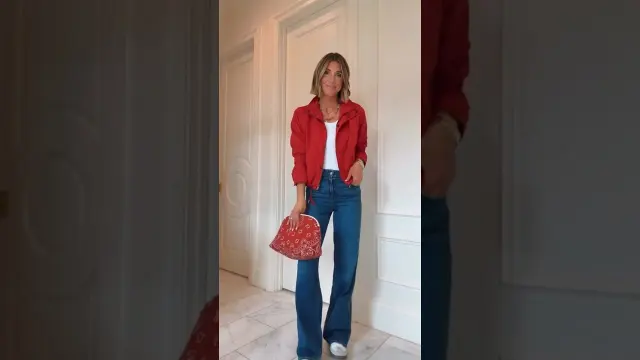
 Five Casual Outfit Formulas for More Interesting Everyday Dressing
#Striped Knitwear
1 ideas
Five Casual Outfit Formulas for More Interesting Everyday Dressing
Get new #Striped Knitwear ideas by email
Every Thursday: the week's best ideas, with the newest from #Striped Knitwear.
Related tags
Striped Knitwear: A Guide to Patterns, Styles and Care
Striped knitwear is any knitted garment — sweater, cardigan, vest, dress or scarf — in which two or more colours form bands across the fabric. The stripes may be horizontal, vertical, diagonal or narrow enough to read as a texture rather than a pattern. It is one of the oldest decorative ideas in knitting, because changing colour is one of the simplest ways to make a plain piece of cloth more interesting, and it has never really left the wardrobe.
Where stripes come from
Knitted stripes appear in traditional dress across many regions, from the guernsey and fisher knitwear of the Atlantic coast to the bold horizontal bands of Alpine and Scandinavian folk knitting. In the nineteenth century, striped jerseys became associated with sailors and seaside leisure, and from there with sportswear and, eventually, everyday wear. The pattern has since moved between function and fashion so often that it now belongs to no single tradition — which is why it fits almost anywhere.
Horizontal, vertical and everything between
Read more
The direction of a stripe changes the way a garment reads. Horizontal bands widen the body visually and feel relaxed, casual and a little nautical. Vertical stripes lengthen and look sharper, often used on cardigans and fine-gauge knits. Diagonal and chevron stripes are more graphic and typically appear on statement pieces. Narrow pinstripes read almost as a solid colour from a distance, while broad blocks of colour make the garment itself the focus of an outfit.
The colours matter as much as the width. Two neighbouring tones, such as cream and oatmeal, give a quiet, tonal effect; high contrast, such as navy and white or red and ecru, gives the classic bold look.
Stripes in a knitted fabric
Stripes can be knitted in, which means the colour changes are part of the fabric itself, worked row by row so that the unused colour is carried along the back. This gives a smooth surface but requires care with tension at each colour change, and the floats behind the work should stay loose. Alternatively, stripes can be added afterwards — printed, embroidered or worked in a contrasting yarn — or created with textured stitches, where raised and flat bands make a stripe without any second colour at all.
What beginners should know
Start with a two-colour project in a simple stockinette or garter stitch, and keep the stripe sequence written down, because it is easy to lose count. Change colour at the beginning of a row, twist the two yarns around each other at the edge to avoid a gap, and check that your rows are even — uneven tension shows up far more in stripes than in a single colour. If you are knitting in the round, be aware that the carried yarn creates a slight step where colours change; many knitters hide this at a side seam or the back.
Wearing and caring for striped knitwear
Because stripes already provide pattern, they work best with calm companions: plain trousers, denim, a simple skirt. A striped sweater under a plain blazer, or a fine striped knit with tailored trousers, is a reliable formula. Store folded rather than hung, wash according to the fibre, and dry flat to keep the shape and the edges of each band crisp.
Videos come from YouTube and posts from Instagram; titles and summaries are our own. All rights belong to their creators.