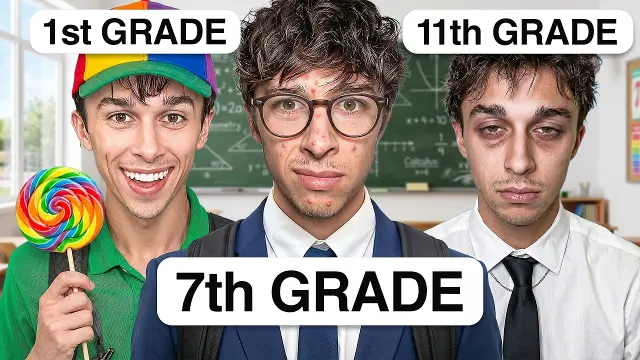
 Exploring The Unique Problems Of Each School Grade
#Student Stories
1 ideas
Exploring The Unique Problems Of Each School Grade
Get new #Student Stories ideas by email
Every Thursday: the week's best ideas, with the newest from #Student Stories.
Related tags
Student Stories: Tales from Inside the Classroom
Every school day holds its own small dramas: the exam you were sure you had failed, the teacher who explained one thing in a way that finally made everything click, the friend who shared a lunch when yours was forgotten at home. Student stories are the accounts people give of exactly this — what learning feels like from the inside, told by the person doing it.
What the idea covers
The term is broad and welcoming. A student story might be a written reflection, a diary entry, a short essay, a recorded interview, a comic strip, a piece of fiction drawn from real experience, or simply a conversation between classmates. What binds them together is the point of view: they belong to the learner, not to the institution. Rather than describing what a school or course is supposed to do, they describe what it actually felt like to be there.
Where it comes from
Read more
Reflection has always been part of education. Apprentices kept notebooks, students wrote letters home, teachers asked for journals. What has changed is how easily such accounts can be shared, and how much interest there is in hearing from learners themselves rather than only from adults describing them. Many schools now build reflection into ordinary coursework, and many people write about their studies simply because writing helps them understand what happened.
The main kinds
- Everyday accounts, which record the ordinary texture of school life.
- Turning-point stories, about a decision, a failure or a moment of understanding.
- Stories of belonging, about friendship, language, culture or finding your place.
- Retrospective accounts, written years later by someone looking back.
- Invented stories that borrow the shape of real experience to explore it.
What makes a student story land
Specificity does more work than drama. A described smell of chalk, the exact words a classmate said, the particular hour when you gave up on a problem — these are what readers recognise. Honesty about difficulty is usually more absorbing than a story where everything goes well, and stories about confusion, boredom or embarrassment often speak to more people than success does.
Practical advice for beginners
Start with one scene rather than a whole year, and write it down before you decide what it means. Keep names and personal details of others vague or changed, and ask before publishing anything that identifies a classmate or a teacher. Write in your own voice; formal language is not required and often gets in the way. If you are sharing your story publicly, read it once aloud, and remember that you can leave out anything you are not ready to tell.
Whether you keep yours private or pass it on, a student story is a record of something that will not come again in quite the same form.
#Student Stories: frequently asked questions
How do I get started with a student story?
Pick a single moment rather than a whole term and write it down as it comes back to you, before you decide what it means. Detail carries the piece: what the room smelled like, what someone actually said, how the hour felt. You can shape the meaning afterwards.
What do I need before I begin writing one?
Nothing special beyond a memory you keep returning to and something to write with. Honesty matters more than skill, and plain everyday language usually works better than a formal essay voice. If you plan to share it, think in advance about which details involve other people.
Which kind of student story should I choose?
Let the memory decide: an ordinary day calls for an everyday account, a decision or failure calls for a turning-point story, and questions of friendship or belonging call for a story about finding your place. Retrospective accounts suit experiences you now see differently, and invented stories let you explore something you are not ready to tell directly.
How do I protect classmates and teachers when I write about school?
Keep names and identifying details vague or changed, and ask the person involved before publishing anything that would point to them. You are always free to leave out the parts you are not ready to share. A story can stay private, and that is still a finished story.
How should I look after a story once it is written?
Let it sit for a while, then read it aloud to hear where it drags or explains too much. Trim the parts that tell the reader what to feel instead of showing what happened. Revising is where most of the writing actually happens.
What mistakes do beginners make most often?
The common ones are trying to cover an entire year, straining for drama, and slipping into stiff school-essay language. Confusion, boredom and embarrassment usually reach more readers than a story where everything goes well. Keep the scope small and the voice your own.
Videos come from YouTube and posts from Instagram; titles and summaries are our own. All rights belong to their creators.