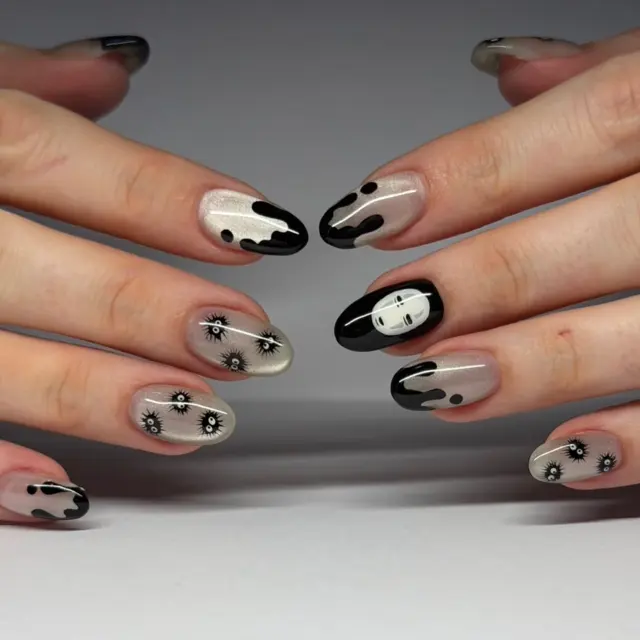
 Kaonashi Nail Art: Gel Design Inspired by Spirited Away
#Studio Ghibli
1 ideas
Kaonashi Nail Art: Gel Design Inspired by Spirited Away
Get new #Studio Ghibli ideas by email
Every Thursday: the week's best ideas, with the newest from #Studio Ghibli.
Related tags
Studio Ghibli: The Art, Food and Craft of Its World
Studio Ghibli is a Japanese animation studio whose films are recognised almost instantly by their look: painted skies, crowded kitchens, steam rising from a pan, a cat waiting on a wall. The name comes from an Italian word for a hot desert wind, chosen to suggest a fresh breeze blowing through the animation industry. The studio grew out of a small group of animators who had already made a feature film together and wanted the freedom to work on their own terms, and that working method — storyboards drawn by hand, films built image by image — still shapes everything it makes.
What the films are like
The animation is drawn and painted, not modelled on a computer. Backgrounds are often made with watercolour and gouache, and the camera lingers on ordinary things: a kettle coming to the boil, grass moving in wind, a train crossing water at dusk. Stories mix Japanese folklore and spirits with European towns, forests and seasides, and they rarely explain themselves fully. Many follow a young girl or woman doing everyday work — cleaning, baking, delivering, caring for a house — while something larger and stranger happens around her. Flight, nature, hunger, and the uneasy meeting of the human and spirit worlds are recurring subjects.
Why it inspires making
Read more
What draws people to this world is rarely the plot alone. It is the atmosphere: warm light through a window, a room that looks lived in, a meal that looks genuinely good. The food in these films has become a subject in its own right, with home cooks recreating stews, breads and packed lunches. The interiors and gardens feed into home decoration and illustration, the characters are simple enough in shape to be embroidered, painted on nails, cut from paper or baked into biscuits, and the quiet, slightly nostalgic mood suits craft that takes time.
Getting to know it
Start with a few of the best-known films and watch them twice: once for the story, once with your attention on the backgrounds and colour. Keep a sketchbook nearby and note the palettes — dusty blues, deep greens, ochres, warm off-whites. Reading about how the backgrounds are painted is useful, but drawing from life will teach you more.
Practical tips for your own work
- Choose one clear motif rather than a whole scene; a soot sprite, a silhouette or a single bowl of food reads better at small scale than a crowded composition.
- Limit your palette to four or five colours and hold it across a whole piece.
- Draw from real kitchens, gardens and animals; the charm in the films comes from close observation, not from copying.
- Keep shapes soft and edges slightly broken, which is what gives the painted backgrounds their warmth.
- These characters are protected work, so keep your pieces personal, credit the source when you share them, and avoid selling reproductions.
Take your time with it. The pleasure in this kind of making is the same one the films keep returning to: attention paid to small, ordinary things.
#Studio Ghibli: frequently asked questions
How should a beginner start with Studio Ghibli films?
Begin with a couple of the studio's best-known films and watch each one twice — once following the story, once with your attention only on the backgrounds and colour. Keep a sketchbook nearby and note down the palettes you keep noticing: dusty blues, deep greens, ochres and warm off-whites. Reading about how the backgrounds are painted helps, but drawing from life will teach you more.
What do I actually need to make Ghibli-inspired art?
Nothing specialised — paper, a pencil and a small set of paints in the shades you keep seeing on screen will take you a long way. Watercolour and gouache suit the soft, slightly broken edges of the studio's painted backgrounds, while plain cotton or a neutral nail base gives you a surface for embroidery or gel work. The look comes from close observation rather than expensive materials.
Which motif should I choose for a small project?
Pick one clear element rather than a whole scene — a single bowl of food, a cat waiting on a wall, a small soot sprite, a silhouette in a doorway. Simple shapes read clearly at nail or embroidery scale, while crowded compositions tend to turn muddy. Limiting yourself to a small palette and holding it across the whole piece is what gives it coherence.
What common mistakes should I avoid?
Reaching for too many colours is the usual one; a restrained palette carried through the piece always looks more convincing. The other is copying frames exactly instead of drawing from your own kitchen, garden or pet, which is where the charm actually comes from. If you share the result, credit the source and keep it personal rather than selling reproductions.
How do I care for hand-painted or embroidered pieces inspired by these films?
Spot clean or wash gently by hand in cool water and let them dry flat, away from direct sun, so painted surfaces and threads keep their colour. Store textile pieces folded loosely rather than pressed under heavy things, and keep painted work out of damp rooms. A little care goes a long way, since these materials age beautifully when they aren't roughed up.
Any ideas for using this theme at an occasion?
A quiet, nostalgic mood works well for gatherings — warm light, simple flowers, and a table of homely food like stew, fresh bread and biscuits cut into small character shapes. Hand-made decorations such as paper silhouettes or painted place cards let guests take something home. Keep it understated rather than costumed, and the atmosphere does the work.
Videos come from YouTube and posts from Instagram; titles and summaries are our own. All rights belong to their creators.