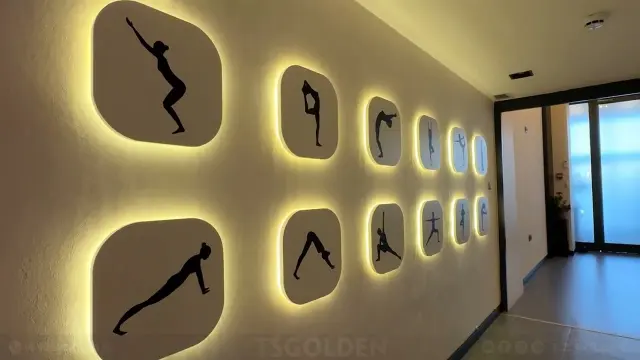
 Inside a Modern Pilates Studio Interior in Başakşehir
#Studio Tour
1 ideas
Inside a Modern Pilates Studio Interior in Başakşehir
Get new #Studio Tour ideas by email
Every Thursday: the week's best ideas, with the newest from #Studio Tour.
Related tags
Studio Tour: A Look Inside Creative Workspaces
A studio tour is a look inside someone's working space — the room behind the finished object. It might be a painter's attic, a potter's wheel room, a photographer's white-walled set, a textile atelier, a designer's desk or the calm floor of a movement studio. What all of them share is a simple promise: you get to see the place where the work actually happens, with the mess left in.
The idea has deep roots. Artists' studios have long been visited, described and painted — collectors climbing the stairs to see a canvas half-finished, friends dropping by to talk while someone works. The open studio tradition grew from that: a few days a year when workshops unlock their doors and anyone can wander in. The digital studio tour is a continuation, just with a camera instead of a staircase.
What people look for
Most of the pleasure is in the details, not the showpiece. The jars of brushes, the shelf of failed experiments, the roll of paper leaning in a corner, the way the light changes over a day.
Read more
- Light: where it enters, what it falls on, how it is softened or blocked.
- Layout: which zone is for making, which for storing, which for thinking.
- Tools: the ones worn smooth, the improvised ones, the ones never used.
- Materials: how raw stock is kept, sorted and found again.
- Work in progress: the honest middle stages that finished photographs usually hide.
The main kinds
Studios differ by craft. A ceramic studio revolves around water, clay and drying space. A photography studio is built for control — seamless backdrops, adjustable lights, room to move. A fashion or textile atelier is organised around cutting tables, dress forms and long runs of shelving. Design and architecture offices tend to be part workspace, part archive, with material samples and drawings never far from hand. Movement studios — pilates, yoga, dance — are the opposite of messy: clear floors, mirrors, props stacked neatly, everything arranged so the body has space.
If you are setting up your own
Borrow freely from what you see. Give yourself one clear wall. Store upwards. Put heavy things on wheels so the room can change shape. Keep the tools you reach for most within arm's reach and move the rest out. Good task lighting matters more than general lighting. And resist the urge to hide every trace of work — a room that looks used is easier to use.
Visiting or filming one
Ask before photographing, especially unfinished work. Do not touch anything without an invitation; some materials are fragile or hazardous. And be gentle about the mess. What looks like disorder is often a system its owner understands perfectly.
Look at enough of these spaces and you start to see the same quiet logic everywhere: light, order, a little chaos, and a place to put your hands.
#Studio Tour: frequently asked questions
How do I start setting up a studio of my own?
Begin with the work itself: decide which tasks need to happen in the room and arrange the space around them so each has its own zone. Give yourself one clear wall to work against, store upwards rather than outwards, and put anything heavy on wheels so the room can change shape as your work does. Borrow freely from studios you have seen, but resist copying a look you cannot actually work in.
What should I look for when I visit or film a studio tour?
The interesting details are rarely the showpiece — watch how light enters and what it falls on, how the space is divided between making, storing and thinking, and how tools and materials are kept where the owner can find them again. Look at works in progress too, since the honest middle stages are what finished photographs usually hide. Always ask before photographing, and never touch anything without an invitation, as some materials are fragile or hazardous.
Which kind of studio tour should I choose to follow?
Pick the one closest to the craft you are curious about, because each is organised around a different problem — clay and drying space for ceramics, controlled backdrops and light for photography, cutting tables and dress forms for textiles, samples and drawings for design work. Movement studios such as pilates or yoga are the opposite of messy, with clear floors, mirrors and neatly stacked props, and they teach a different lesson about arranging a room. If you are setting up your own space, look at several kinds rather than only your own.
How do I keep a working studio tidy without hiding the work?
Aim for a system rather than a showroom: keep the tools you reach for most within arm's reach, move the rest out of the way, and store vertically so the floor stays open. Good task lighting matters more than general lighting, and it also makes the room easier to use late in the day. A room that looks used is easier to work in than one scrubbed clean after every session, so let some traces stay.
What are common mistakes people make with their studio space?
The usual ones are treating the room as a display rather than a place to work, filling it with equipment that never gets used, and hiding every trace of the process so nothing can be picked up again quickly. Another is ignoring light and relying on a single overhead source instead of proper task lighting where the hands actually are. Finally, people often mistake another person's mess for disorder, when it is usually a system its owner understands perfectly — do not reorganise your own space around someone else's photographs.
How can I share my studio with others — through an open studio or a filmed tour?
The open studio tradition grew out of people simply climbing the stairs to see work half-finished, so a few days when your door is unlocked is a good place to start. If you film instead of inviting people in, decide in advance what stays out of frame and ask collaborators before showing their unfinished work. Either way, explain your system rather than apologising for it — visitors are there because the mess is the interesting part.
Videos come from YouTube and posts from Instagram; titles and summaries are our own. All rights belong to their creators.