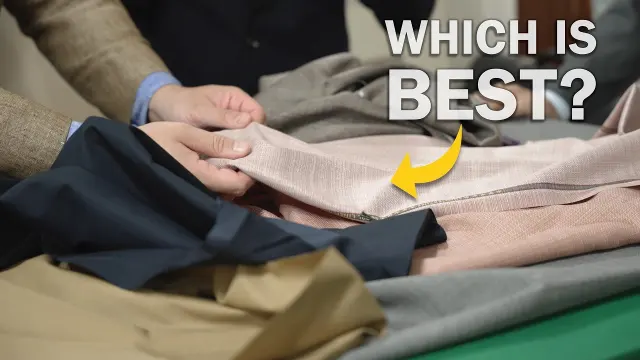
 Choosing the Best Summer Fabrics with Italian Tailors
#Summer Suits
1 ideas
Choosing the Best Summer Fabrics with Italian Tailors
Get new #Summer Suits ideas by email
Every Thursday: the week's best ideas, with the newest from #Summer Suits.
Related tags
Summer Suits: A Guide to Warm-Weather Tailoring
A summer suit is tailoring built for warm weather. It follows the same architecture as any suit — jacket, trousers, often a waistcoat — but the cloth, the construction and the colour all shift to cope with heat. Where a winter suit is designed to hold its shape and keep warmth in, a summer suit is designed to let air move and light bounce off.
Why the cloth matters most
The single biggest difference is fabric. Wool still dominates, but in open, breathable weaves rather than dense ones. Fresco, a crisp high-twist wool, is the classic choice: it resists creasing and lets air through. Worsted hopsack has a visible basket texture and hangs well. Tropical wool is woven thin and light. Linen is the oldest hot-weather cloth of all, cool and dry to the touch, though it wrinkles by nature — a blend with wool or silk softens that. Cotton and cotton-linen mixes suit more casual cuts, and silk adds a slight sheen for evening.
Weight is usually described in grams per square metre. Anything genuinely light sits at the lower end of that scale; the point is not the number but the openness of the weave.
Read more
Construction
A summer jacket is often half-lined or unlined at the back, so heat escapes instead of being trapped between you and the cloth. Some are made with a soft, unstructured shoulder — less padding, sometimes none — which makes them lighter and less formal. Patch pockets, a slightly shorter length and a natural shoulder all read as warm-weather details.
Colours and patterns
Light colours reflect heat and, just as usefully, look right in strong sun. Beige, stone, sand, pale grey, cream and soft blue are staples. Navy remains the most versatile, especially in a lighter weave. Patterns tend to be quiet: a fine check, a subtle stripe, a houndstooth in two pale tones. Lighter cloth shows more, so simple finishes and clean lines tend to work best.
What to know before buying
Fit is harder to get right in light cloth, because there is less fabric to hide behind. The shoulder should sit exactly where your own does, and the jacket should close without pulling across the chest. Ask whether the trousers are lined to the knee — a common compromise between structure and comfort.
Care is different too. Linen creases with wear and is meant to; press it rather than fight it. Many summer cloths are dry-clean only, but airing a jacket after wearing does a great deal. Give a suit a day's rest between outings so the fibres recover.
Wearing it
A summer suit moves easily between formal and relaxed. With a shirt and a light tie it holds up for business and ceremonies; with an open collar, or a knitted polo, and unstructured shoes it suits a long lunch, a wedding in the sun or a warm evening. The point of the garment is that it lets you wear tailoring at all when the temperature argues against it — so keep everything around it simple, and let the cloth do the work.
#Summer Suits: frequently asked questions
What makes a summer suit different from a regular suit?
The cut can look almost identical, but a summer suit is built to shed heat rather than hold it. The cloth is woven open and light so air passes through, and the jacket is often half-lined or left unlined at the back so warmth escapes instead of getting trapped against your body. Softer shoulders and lighter colours finish the job of keeping you comfortable in strong sun.
Which fabric should I choose for a summer suit?
Start with an open-weave wool such as fresco, hopsack or tropical wool — these breathe well and resist creasing, which makes them the most forgiving everyday choice. Linen is the coolest option and the oldest hot-weather cloth, though it wrinkles by nature, so a blend with wool or silk softens that. Cotton and cotton-linen work nicely for more casual cuts, and silk brings a slight sheen if you need something for evening.
How should a summer suit fit, and what should I check before buying?
Fit is less forgiving in light cloth because there is less fabric to hide behind, so pay close attention to the shoulder — it should sit exactly where your own does — and make sure the jacket closes without pulling across the chest. It is also worth asking whether the trousers are lined to the knee, since that is a common compromise between structure and comfort. Trying the jacket on with the shirt you plan to wear helps more than measuring alone.
How do I care for a summer suit?
Airing a jacket after wearing does a great deal, and many summer cloths are dry-clean only, so reserve cleaning for when it is genuinely needed. Give the suit a day's rest between outings so the fibres can recover their shape. Linen creases as you wear it and is meant to, so press it gently rather than fighting the wrinkles out of it.
What colours and patterns work best for warm-weather tailoring?
Light colours such as beige, stone, sand, cream, pale grey and soft blue reflect heat and look right in bright sun. Navy stays the most versatile option, particularly in a lighter weave, if you want one suit that covers the most ground. Keep patterns quiet — a fine check, a subtle stripe or a houndstooth in two pale tones — because lighter cloth shows more detail and clean, simple finishes read better.
Where can I wear a summer suit?
It moves easily between formal and relaxed settings, which is much of its appeal. With a shirt and a light tie it holds up for business and ceremonies, while an open collar or a knitted polo with unstructured shoes suits a long lunch, a wedding in the sun or a warm evening out. Keep everything around it simple and let the cloth do the work.
Videos come from YouTube and posts from Instagram; titles and summaries are our own. All rights belong to their creators.