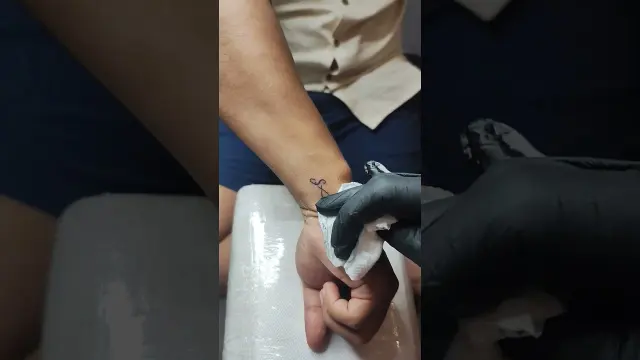
 Minimal hand tattoo ideas for couples
#Tattoo Design
1 ideas
Minimal hand tattoo ideas for couples
Get new #Tattoo Design ideas by email
Every Thursday: the week's best ideas, with the newest from #Tattoo Design.
Related tags
Tattoo Design: Styles, Ideas and How to Plan a Piece
A tattoo design is the drawing that comes before the ink: the shape, the lines, the colours and the placement that a tattoo artist translates onto skin. It is the part of the process where nearly all the decisions are made, and because a tattoo is meant to last, it rewards patience more than impulse.
A very old craft
Marking skin is one of the oldest forms of human decoration and identity. Cultures across the Pacific, Japan, North Africa, the Americas, Southeast Asia and Europe developed their own traditions, with meanings ranging from rank and lineage to protection, mourning and belonging. Sailors carried some of these motifs around the world, and in the twentieth century the tattoo went from fairground curiosity to a mainstream craft with studios in most towns. Knowing a little of that history helps you see how a design that looks simple can carry a great deal of intention.
The main styles
Read more
Traditional, or old school, work relies on bold outlines and a small palette of strong colours, built to stay readable on skin. Neo-traditional keeps that boldness but adds depth and detail. Japanese tattooing is built on large, flowing compositions and a settled set of motifs. Blackwork uses solid black shapes and negative space, while dotwork and geometric designs build form from repeated marks. Fine line and single needle styles favour delicate, thin strokes. Realism imitates photographs and paintings; illustrative and watercolour styles lean on looser, more painterly effects. Lettering, script and ornamental designs do their own thing entirely.
Choosing placement and scale
A design and a body part are not separate questions. Curved areas such as the shoulder, calf or forearm let a composition wrap and move; flat areas such as the back or thigh suit large, detailed work; hands, fingers, ribs and feet are demanding places to heal. Think about how visible you want the piece to be, and remember that every line softens and spreads a little as skin ages, so very fine detail needs space. Sun exposure fades ink, which matters if the tattoo will spend its life in daylight.
Working with an artist
Bring references you actually like, and say what draws you to them — the mood, the line weight, the subject — rather than asking for a copy. Good artists will redraw an idea in their own hand and will tell you honestly if something will not work at the size you want. A stencil placed on the skin before any ink is the moment to speak up about position and scale. Ask about hygiene, aftercare and how the studio handles changes, and raise any concerns about allergies with the artist and, if you have them, a healthcare professional.
A tattoo does not need a profound meaning to be worth having. Liking it, and liking how it sits on you, is reason enough.
#Tattoo Design: frequently asked questions
How do I get started with a tattoo design if I have no drawing skills?
You don't need to draw anything yourself — your job is to gather references that genuinely appeal to you and explain what you like about them, whether that's the mood, the line weight or the subject. A good artist redraws the idea in their own hand, so a rough description or a saved photo is a perfectly normal starting point. Expect a conversation or two before anything is finalised, since the design is the stage where nearly every decision gets made.
Which tattoo style should I pick?
Let the effect you want decide: bold outlines with a limited colour palette stay readable over time, while fine line and dotwork give a lighter, more delicate look that needs more space to hold up. Heavier blackwork and geometric pieces read as graphic shapes, whereas realism and illustrative styles lean closer to painting or photography. Ask the artist which approaches suit your subject at the size you're considering rather than choosing on looks alone.
How do I decide on placement and size?
Treat the design and the body part as one question, because curved areas such as the shoulder or forearm let a composition wrap and flow, while flat areas like the back or thigh carry larger, more detailed work. Hands, fingers, ribs and feet are harder to heal and harder to keep out of the sun. Remember that lines soften as skin ages, so very intricate detail needs room to breathe.
What should I know about caring for a tattoo afterwards?
Follow the aftercare instructions your own artist gives you, since studios differ and they know the work they did. Keep the area clean, avoid picking or scratching it, and be mindful of sun exposure and swimming while it settles. If anything looks unusual or you have concerns about allergies or healing, raise it with your artist and a healthcare professional rather than relying on internet advice.
What are the most common mistakes people make with a tattoo design?
The biggest one is rushing: bringing a finished image and asking for an exact copy leaves no room for the artist to adapt it to your body. Another is cramming delicate detail into a small space where it will blur together as the skin ages. Speak up about position and scale while the stencil is on your skin and nothing is permanent yet — that's the moment it's easiest to change.
Where can I find ideas for a small matching tattoo with a partner?
Look for motifs you both actually respond to rather than trends, and keep the piece simple enough that it still reads clearly at a small scale. Minimal line work on the hand is a popular choice precisely because it's restrained, but hands are demanding places to heal, so it's worth discussing alternatives with the artist. Matching doesn't have to mean identical — variations on the same idea often sit better on two different people.
Videos come from YouTube and posts from Instagram; titles and summaries are our own. All rights belong to their creators.