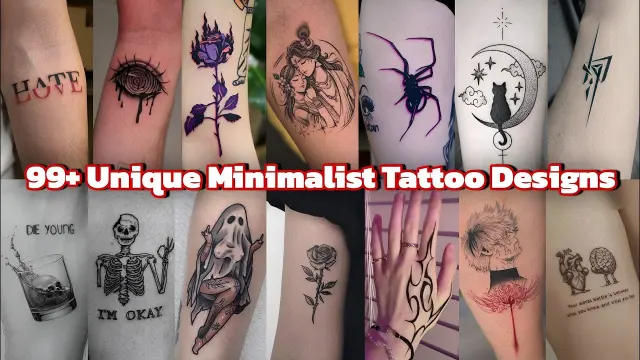
 Unique Minimalist Tattoo Design Ideas for Your Next Ink
#Tattoo Inspiration
1 ideas
Unique Minimalist Tattoo Design Ideas for Your Next Ink
Get new #Tattoo Inspiration ideas by email
Every Thursday: the week's best ideas, with the newest from #Tattoo Inspiration.
Related tags
Tattoo Inspiration: Finding a Design You'll Keep
A tattoo is a permanent mark made by placing pigment beneath the surface of the skin. People have decorated and marked their bodies for thousands of years, across nearly every culture, for reasons that range from remembrance and belonging to pure decoration. Because the result lasts, the search for inspiration is worth taking slowly: the idea you love in a photograph is not always the idea you will still want in ten years.
The main styles
Traditional, sometimes called old school, uses bold outlines, a limited palette and simple, readable shapes. It ages well and stays legible as the skin changes. Neo-traditional keeps that structure but adds depth, colour and finer detail.
Japanese work, known as irezumi, is built around large flowing compositions — water, wind, flowers, mythical creatures — designed to wrap the body rather than sit in a rectangle. It rewards commitment to scale.
Read more
Blackwork covers solid black shapes and ornamental pattern. Dotwork builds shading and texture from clusters of small dots, while fine line work uses a thin, delicate stroke for lettering, botanical drawings and minimalist symbols. Geometric designs rely on symmetry and precision; watercolour-style pieces imitate soft washes of pigment; lettering ranges from a single word to a whole script.
What suits you
Style is only half the decision. Consider placement and size together: a small, intricate design may lose its detail over time, while a large one needs a body part with room for it. Think about visibility in daily life, whether at work or in the sun, and about how the design will sit on the body's natural curves. Skin tone, texture and how easily you scar all affect the final result.
Gather references rather than finished artwork. Collect images you respond to and notice what repeats — a line weight, a mood, a subject. Your tattoo artist can then design something original in that spirit instead of copying someone else's piece.
Practical advice
Choose an artist by their portfolio, not by price or convenience. Look for healed work as well as fresh photographs, and book a consultation to discuss the idea, the size and what is realistic for the placement. Ask questions; a good artist will tell you when an idea will not work as drawn.
Eat beforehand, bring water, and expect the process to take longer than the tattoo itself. Afterwards, follow the aftercare instructions your artist gives you exactly, keep the area clean, and avoid swimming and sun exposure while it heals. If healing looks unusual, ask a healthcare professional rather than guessing.
Above all, give yourself time. Leave the idea for a few weeks, live with a sketch, and see whether you still want it.
#Tattoo Inspiration: frequently asked questions
How do I start looking for tattoo inspiration?
Start by collecting images you genuinely react to rather than hunting for a finished design to copy. After a while, look back and notice what keeps appearing — a line weight, a mood, a subject, a particular style — because that repetition is the real signal about your taste. Bring those references to an artist so they can build something original in that spirit instead of reproducing someone else's piece.
Which tattoo style should I choose?
It depends on what you want the design to do over time: bold traditional work with strong outlines and simple shapes tends to stay readable as skin changes, while fine line, dotwork and watercolour-style pieces are more delicate and lose detail more easily. Larger flowing styles such as Japanese compositions are designed to wrap the body and reward committing to scale. Look at healed examples of any style you are considering, not only fresh photographs.
How do I choose the right tattoo artist?
Choose by portfolio rather than by price or convenience, and look specifically for healed work alongside fresh pictures. Book a consultation to talk through the idea, the size and what is realistic for the placement you have in mind. A good artist will tell you honestly when an idea will not work as drawn.
How should I care for a new tattoo?
Follow the aftercare instructions your artist gives you exactly, keep the area clean, and stay away from swimming and sun exposure while it heals. Eat beforehand and bring water on the day, and expect the appointment to take longer than the tattoo itself. If the healing looks unusual to you, raise it with a healthcare professional rather than guessing.
What common mistakes should I avoid?
The biggest one is rushing: an idea that looks striking in a photograph is not always one you will still want years from now. Another is copying someone else's finished artwork instead of gathering references and letting an artist interpret them. It also pays to think through visibility in daily life — work, sun, clothing — before settling on placement and size.
How do I decide on placement and size?
Treat placement and size as one decision, since a small intricate design can lose its detail over time while a large one needs a body part with enough room for it. Consider how the design will sit on the body's natural curves and how visible it will be in your everyday life. Skin tone, texture and how easily you scar all affect how the finished piece will look.
Videos come from YouTube and posts from Instagram; titles and summaries are our own. All rights belong to their creators.