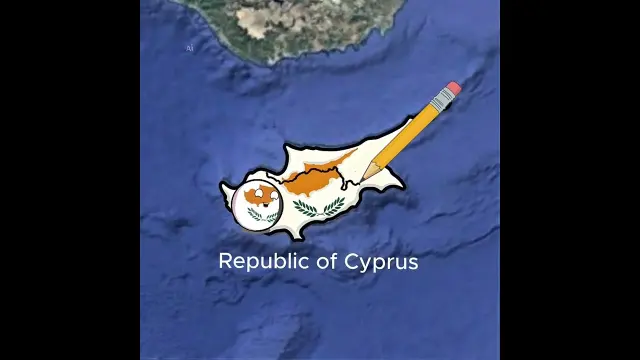
 Overview of special territories in Portugal, Chile, Argentina, and Asia
#Territories
1 ideas
Overview of special territories in Portugal, Chile, Argentina, and Asia
Get new #Territories ideas by email
Every Thursday: the week's best ideas, with the newest from #Territories.
Related tags
Understanding Territories
What a territory is
A territory is a defined area of land, sea, or both that is recognized for a particular purpose. In everyday use, the word often refers to a part of a country that has its own administrative status, but it can also mean any area under control, ownership, or jurisdiction. Territories can be large or small, densely populated or remote, and they may sit within a nation or far from it.
The idea of territory is closely tied to boundaries, identity, and governance. Some territories belong fully to a country’s political system, while others have a more limited or special arrangement. Because of this, the word can describe geography, law, and politics at the same time.
Main kinds of territories
Read more
There are several common types of territories:
- Administrative territories are areas used for government and planning, such as districts, provinces, or regions.
- Dependent territories are places that are linked to a country but do not have the same status as its main regions.
- Overseas territories are territories located away from the country’s main landmass.
- Autonomous territories have some self-government and may make decisions on local matters.
- Disputed territories are claimed by more than one authority or state.
- Protected territories may be set aside for conservation, culture, or special land use.
These categories can overlap. A place may be both overseas and autonomous, for example. The exact meaning depends on the legal and historical context.
Where territories come from
Territories often arise through history, settlement, conquest, treaties, colonization, or later political agreements. Some were once colonies or military outposts and later became special administrative units. Others were formed to recognize local language, culture, or distance from a central government. In many cases, a territory reflects a practical need: governing land that is separated, sparsely populated, or distinct in identity.
What territories are used for
Territories help organize land and people. They are used for:
- governance and local administration
- law and taxation
- voting and representation
- land management
- cultural recognition
- border control and resource planning
For a resident, a territory may shape daily life through local laws, public services, and civic rights. For a visitor or researcher, knowing the status of a territory helps you understand which rules apply and how it relates to the larger country or region.
What to know as a beginner
If you are learning about territories, start by asking three questions: Who governs it? How much independence does it have? And how is it connected to the larger state or region? Those answers will usually tell you whether you are dealing with a territory, a province, an autonomous area, or something more complex.
It also helps to remember that the word can be used in both formal and informal ways. In maps, law, and history, “territory” may have a specific meaning. In general conversation, it can simply mean an area of land. That flexibility is what makes the term useful, but also easy to confuse.
A practical way to think about it
When you see the word territory, think of a place with a recognized boundary and a particular relationship to authority. That relationship may be direct, shared, distant, or disputed. Understanding that relationship is the key to understanding the territory itself.
Videos come from YouTube and posts from Instagram; titles and summaries are our own. All rights belong to their creators.