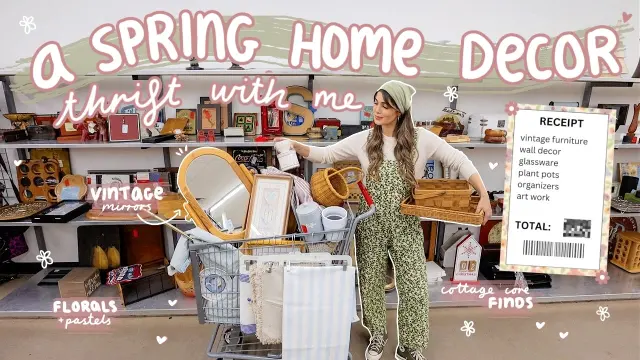
 Thrifting Cute Home Decor for Springtime Vibes
#Thrift Shopping
1 ideas
Thrifting Cute Home Decor for Springtime Vibes
Get new #Thrift Shopping ideas by email
Every Thursday: the week's best ideas, with the newest from #Thrift Shopping.
Related tags
Thrift Shopping: A Beginner's Guide to Secondhand Finds
Thrift shopping means buying things that someone else has already owned and given away. The shops that sell them are usually run by charities, community groups or small businesses, stocked by donations or by goods bought in bulk from households clearing out their cupboards. It sits within a much older habit of passing possessions on rather than throwing them away, and it has grown into a pastime in its own right: half the pleasure is the browsing, and the other half is going home with something that cost very little and exists nowhere else.
What you find, and what you don't
Clothing is what most people come for, but a good secondhand shop also carries kitchenware, glassware, crockery, books, records, picture frames, toys, linens, small furniture and the occasional oddity nobody can identify. What you will not find is consistency. Stock depends entirely on what has been donated that week, so nothing is guaranteed to be there twice. This is the central thing to understand before you go: thrift shopping rewards an open mind and punishes a specific shopping list.
Kinds of shops
Read more
Charity shops are the most familiar, staffed largely by volunteers, with proceeds going to a cause and stock that is sorted but rarely curated. Consignment shops sell items on someone's behalf and take a share, so quality tends to be higher and prices with it. Vintage and resale boutiques are curated rather than accidental, with a dealer's eye behind the rails. Car boot sales, flea markets, church halls and swap events are the looser, messier end of the same spectrum, often where the best surprises turn up. Knowing which kind you are walking into tells you what to expect from the prices and the condition of the goods.
How to shop well
Go without a fixed plan. Pick up things that catch your eye and put most of them back; the discipline is in the returning, not the finding. Check what matters and is easy to miss: seams, underarms and collars on clothing, chips on the rims of crockery, cracks in furniture joints, missing pieces from games and sets. Look for care labels, because a wool coat that has to be dry-cleaned is a different proposition from a cotton shirt. Try things on where you can, or know your measurements and carry a small tape; sizes have shifted over the decades and an old label is only a rough guide.
Inspect electricals and anything mechanical with extra care, and be willing to walk away from items you cannot test or safely assess.
Bringing it home
Wash clothing and textiles before wearing or using them, following the care label, and clean hard goods thoroughly. Mend small faults rather than dismissing them, and give yourself permission to alter what you buy. A hem taken up or a button replaced turns a near-miss into something you actually wear.
The habit pays off slowly. Some trips yield nothing, and that is normal. The reward is a home and a wardrobe built from things with a history, kept in use for longer than they otherwise would have been.
#Thrift Shopping: frequently asked questions
How do I start thrift shopping if I've never done it before?
Start small and local: pick a charity shop or a weekend market near you and go with an hour to spare rather than a mission to complete. Walk the whole shop once before picking anything up, so you see the stock as a whole instead of diving at the first rail. Expect the first trip or two to be mostly practice, since learning what a shop tends to carry is part of the skill.
What should I bring with me when I go thrifting?
Bring your own measurements written down, plus a small tape measure, because sizing on older garments has shifted and a label is only a rough guide. Wear clothes that are easy to slip things over, so trying on is quick where a fitting room exists. A bag for your finds helps at markets and car boot sales, where bags are rarely provided.
Which kind of secondhand shop should I choose?
It depends what you want out of the trip: charity shops are cheap and unpredictable, consignment shops cost more but are better sorted, and vintage boutiques are curated by someone with a dealer's eye. Markets, church halls and swap events sit at the messier end, and that is often where the oddest and best things surface. Going in knowing which kind of shop it is tells you what to expect from both price and condition.
How do I check secondhand items before buying them?
Look at the places wear shows first: seams, underarms and collars on clothing, chips along the rims of crockery, cracks where furniture joints meet, and missing pieces in games and sets. Read the care label, since a coat that needs dry-cleaning is a very different commitment from a cotton shirt. Be extra cautious with electricals and anything mechanical, and be prepared to leave behind what you cannot test or safely judge.
How should I clean and care for thrifted things once I get them home?
Wash clothing and textiles before wearing them, following whatever the care label says, and clean hard goods thoroughly rather than giving them a quick wipe. Small faults are worth mending instead of rejecting, and altering a hem or swapping a button often turns a near-miss into something you genuinely use. Treating each find as a small project is what keeps thrifted things in circulation longer.
What are the common mistakes people make when thrift shopping?
The biggest one is arriving with a specific list and leaving disappointed, because stock depends entirely on what was donated that week and nothing is guaranteed to be there twice. Another is buying something only because it is cheap, without checking condition or whether it fits your home or wardrobe. Finally, many people skip the returning: picking things up freely is fine, but the discipline lies in putting most of them back.
Videos come from YouTube and posts from Instagram; titles and summaries are our own. All rights belong to their creators.