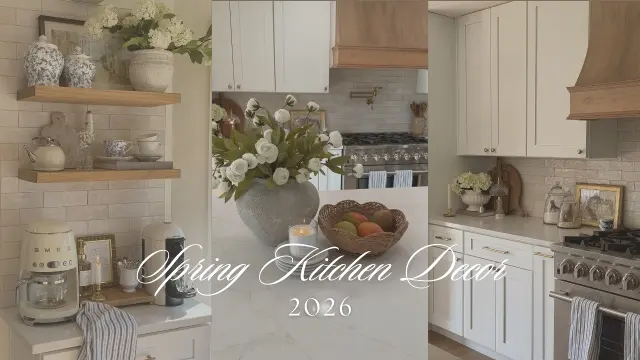
 Spring Kitchen Decorating Ideas with Vintage and Thrifted Pieces
#Thrifted Finds
1 ideas
Spring Kitchen Decorating Ideas with Vintage and Thrifted Pieces
Get new #Thrifted Finds ideas by email
Every Thursday: the week's best ideas, with the newest from #Thrifted Finds.
Related tags
Thrifted Finds: A Beginner's Guide to Secondhand Treasure
A thrifted find is something useful, beautiful or quietly special that you discover in a charity shop, a flea market, a car boot sale or a secondhand listing. Unlike a purchase made from a catalogue, it comes to you by chance. That element of surprise is a large part of the appeal: you learn to look closely, to recognise quality, and to see possibility in things other people have passed by.
Where the habit comes from
Buying secondhand is far older than the modern word for it. For most of history, households mended, handed down and traded their possessions as a matter of course. Rummage sales and church jumble tables kept the practice alive through the twentieth century, and interest grew again as people began thinking about waste and mass production. Today the appeal is usually several things at once: cost, character, curiosity, and the quiet satisfaction of keeping something in use rather than in a landfill.
The main kinds of find
Read more
Thrifted finds tend to fall into rough groups, and each rewards a different kind of attention. Homeware is the most common starting point — crockery, glassware, linen, picture frames, small furniture. Clothing offers well-made pieces from earlier decades, often in fabrics that are harder to find new. Books, records and craft supplies are usually plentiful and inexpensive. Then there are the oddments: a set of vintage tools, a hand-embroidered cloth, a bowl with a maker's mark underneath, which is where many people discover a lasting interest.
What beginners should know
Start with a short list of things you genuinely want, so that the abundance of a large shop does not overwhelm you. Check an item thoroughly before buying — look for chips, cracks, worn seams, missing pieces and anything that would be difficult or costly to repair. Examine the underside of ceramics and the inside of garments for labels and marks, which tell you about material and origin. Ask yourself whether you would still want the piece if it cost twice as much; this is a reliable way to separate a real find from a passing impulse.
Practical tips
- Bring a note of measurements for spaces where you intend to put things.
- Carry a small bag or basket, and a spare tote for anything bulky.
- Go early for choice, or late for markdowns, depending on what you are after.
- Keep a running list of what you are hunting for, and keep it realistic.
- Wash textiles and disinfect hard surfaces before they come into the house.
- Learn one or two simple repairs; a replaced button or a glued handle brings many pieces back to life.
The pleasure of the search
Thrifting rewards patience more than speed. Some visits will yield nothing at all, and that is normal; the discipline of looking carefully is part of what makes a good find feel earned. Go often, keep an open mind, buy what you truly love, and let the rest stay on the shelf for someone else.
#Thrifted Finds: frequently asked questions
How do I get started with thrifted finds if I've never done it before?
Begin by visiting a few different kinds of places — a charity shop, a flea market, a car boot sale — just to get a feel for what each one tends to carry and how it is priced. Go in with a short wish list of things you actually want, because a large shop full of cheap objects can easily overwhelm a beginner. Treat the first few trips as practice rather than as shopping, and let your eye learn what quality looks like.
What should I bring and check before buying something secondhand?
Take measurements of the spaces or shelves where you plan to put things, plus a basket and a spare bag for anything bulky. Examine each piece closely for chips, cracks, worn seams and missing parts, and weigh whether a repair is something you can realistically do. Look at the underside of ceramics and the inside of garments for labels and marks, which tell you about material and where a piece came from.
Which kinds of thrifted finds are best for a beginner to focus on?
Homeware is usually the easiest place to start, since crockery, glassware, linen and picture frames are plentiful and inexpensive, and flaws are easy to spot. Books, records and craft supplies are similarly forgiving because they carry little risk and are simple to use. Clothing and small furniture reward more experience, so they are better once you can judge fabric, seams and structure with some confidence.
How do I care for thrifted items once I get them home?
Wash textiles and wipe down hard surfaces before anything comes into the house, and give glassware and ceramics a good soak and rinse. Check seams, handles and joints, then make small repairs early so a loose button or a wobbling leg does not become a bigger problem. Store delicate pieces away from damp and direct sun, and use them rather than saving them, since gentle everyday use keeps most household objects in good condition.
What are the common mistakes people make when thrift shopping?
The usual one is buying on impulse because something is cheap, then finding it does not fit the space or the life you actually have. Another is skipping the inspection and discovering a chip, a stain or a missing piece only at home, when it is too late to put the item back. A good test is to ask whether you would still want the piece at twice the price — if the answer is no, it was the bargain talking rather than genuine affection.
How can I use thrifted pieces for seasonal decorating, such as a spring kitchen?
Secondhand crockery, glass jars, vintage tins and old linens can be grouped by colour or texture to give a kitchen a fresh, seasonal feel without buying anything new. Mixe plain modern pieces with a few characterful finds so the result looks collected rather than cluttered, and change out just a handful of items when the season turns. Rotating what you already have is cheaper and less wasteful than restyling from scratch each year.
Videos come from YouTube and posts from Instagram; titles and summaries are our own. All rights belong to their creators.