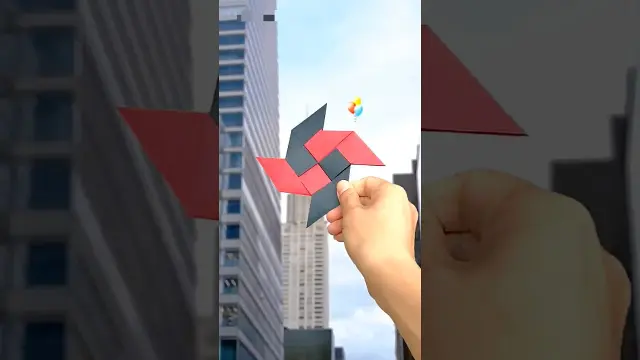
 Easy Paper Shuriken Tutorial With a Throwing Technique
#Throwing Toys
1 ideas
Easy Paper Shuriken Tutorial With a Throwing Technique
Get new #Throwing Toys ideas by email
Every Thursday: the week's best ideas, with the newest from #Throwing Toys.
Related tags
Throwing Toys: A Beginner's Guide to Safe Play
Throwing toys are objects made to be sent through the air by hand — sometimes to fly far, sometimes to come back, sometimes simply to land where you aimed. They are among the oldest kinds of playthings we know of, because the idea behind them is basic: a shaped object, a good grip, and a movement of the arm. What separates a toy from a stone is design. A throwing toy is built to travel predictably, to be caught or collected, and to be safe enough to use again and again.
The main kinds
Broadly, throwing toys fall into a few families. There are gliders and paper flyers, which rely on light weight and folded or moulded wings to stay aloft. There are spinning disc toys, whose curved profile and spin let them glide rather than simply fall. There are returning toys such as boomerangs, whose curved shape makes them arc back toward the thrower. There are target toys — rings, balls, darts with soft tips — where the point is accuracy rather than distance. And there are simple projectile toys, from beanbags to weighted sacks, that are forgiving to catch and easy to aim.
How flight works
Read more
Most throwing toys depend on the same few ideas. A stable shape keeps the object from tumbling. Spin steadies it, the way a spinning top stays upright. A slight upward angle at release lets the air carry it. And a smooth, consistent motion of the arm matters more than raw strength — a clean throw almost always beats a hard one. A flying disc, for instance, stays up because air moving over its curved surfaces produces lift, while its spin keeps it from tipping over; tilt it too far and the lift fails. With paper planes and discs, small adjustments to the shape or the angle change the flight a great deal, which is why they reward patience and quiet practice.
Starting out
Choose a toy that suits the space you have. Soft, light things belong indoors; anything with speed or edges belongs outside, in open ground away from windows, roads and other people. Before you throw, look at what is behind your target, not just at the target itself. Agree on a throwing line and a landing zone so nobody wanders into the path. For catching, keep your eyes on the object and let your hands give a little as it arrives.
Techniques worth learning
- Grip: hold the toy the same way each time so your body learns the feel.
- Stance: stand side-on for distance, square-on for accuracy.
- Release: let go at the point where the toy is moving forward, not at the top of your swing.
- Follow-through: finish the movement toward the target instead of stopping short.
- Practice: short, repeated throws teach more than a few long ones.
A note on care
Check toys for cracks, splits or loose parts before use, and retire anything that has become sharp or unbalanced. Throwing toys are best enjoyed with attention — the fun comes from skill and shared rules, not from force. Taught well, they give children and adults alike a gentle lesson in aim, patience and looking out for the people around them.
#Throwing Toys: frequently asked questions
How do I get started with throwing toys if I've never tried one?
Start with something soft and light, like a beanbag, a soft ball or a paper flyer, so mistakes cost nothing while you learn the basic motion. Pick a spot that matches the toy — a soft, slow object can be used indoors, while anything fast or edged belongs outside in open ground well away from windows, roads and other people. Before your first throw, agree on a throwing line and a landing zone so nobody drifts into the flight path.
Which kind of throwing toy should I choose for the space I have?
Let the room decide for you: gliders and paper flyers need a bit of air but little force, spinning discs want open ground, and target toys are happiest with a short, safe backdrop. If your space is tight, favour light objects that lose speed quickly rather than anything dense or sharp. It also helps to think about what you actually want from the toy — distance, accuracy or the fun of a return.
Why does my disc or paper plane keep tipping over instead of flying?
Most failures come down to shape, spin and release angle rather than strength. A spinning disc stays level because the spin holds it steady while air moving over its curved surfaces produces lift, and tilting it too far in either direction kills that lift. A clean, consistent arm movement released with a slight upward angle works far better than a hard throw, so slow down and repeat the same motion.
What are the most common mistakes beginners make?
The usual culprits are gripping differently each time, releasing at the top of the swing instead of as the toy moves forward, and stopping the arm short instead of following through toward the target. Throwing with force rather than control is another frequent problem — a short, repeatable throw teaches much more than a few hard ones. Watching what lies behind the target, not just the target itself, is the safety habit most often skipped.
How do I catch a throwing toy reliably?
Keep your eyes fixed on the object the whole way in and let your hands soften slightly as it arrives, as though cushioning it rather than grabbing at it. Soft, forgiving shapes such as beanbags or light balls make catching much easier to learn, which is why they are a good starting point. Practising short, easy throws with a partner teaches timing faster than long, wild ones.
How should I look after throwing toys so they stay safe?
Give them a quick check before every session and set aside anything that has cracked, split, come loose or gone out of balance, since a sharp or wobbly edge spoils the flight and can hurt. Store them flat and dry so shapes and surfaces don't warp between uses. Retiring a worn toy is part of the hobby, not a loss.
Videos come from YouTube and posts from Instagram; titles and summaries are our own. All rights belong to their creators.