 Timeless Interior Design Trends That Last Long Term
#Timeless Design
2 ideas
Timeless Interior Design Trends That Last Long Term
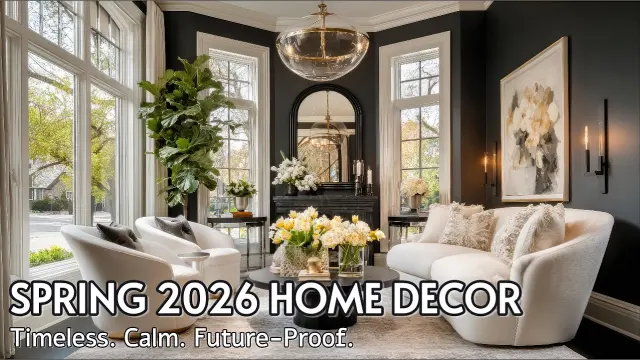 Future Proof Your Home with Timeless Spring Decor Design
Get new #Timeless Design ideas by email
Every Thursday: the week's best ideas, with the newest from #Timeless Design.
Related tags
Timeless Design: Principles That Never Go Out of Style
Timeless design is the quality that lets a room, a piece of furniture or an object stay pleasing long after the fashion that produced it has moved on. It is not a single style you can buy in one shopping trip. It is a way of choosing — a set of habits about proportion, material and restraint that keep a space feeling right year after year, quietly, without asking for attention.
Where the idea comes from
Every design culture has had this instinct. Classical architecture worked from rules of proportion that builders returned to for centuries. Vernacular building traditions — farmhouses, townhouses, workshops — arrived at lasting forms because they were shaped by local materials, climate and everyday use rather than by novelty. In the nineteenth and twentieth centuries, craftspeople and designers pushed back against cheap mass production by arguing that honest materials and good craftsmanship were more valuable than ornament. What these traditions share is the belief that a thing should be well made, useful and understandable, and that beauty follows from those qualities rather than being applied on top of them.
The principles behind it
Read more
- Proportion and balance. Things feel calm when their scale relates to one another and to the space around them. A large piece needs room to breathe; a small one needs company.
- Honest materials. Wood that looks like wood, stone that shows its grain, linen that creases. Materials that age visibly and gracefully are more forgiving than finishes that can only look new.
- Restraint. A limited palette of colours and a small number of shapes let each element be seen. Fewer, better things is the working rule.
- Function first. If something works well, its form tends to settle into something sensible. Comfort and use keep a design honest.
- Negative space. Empty space is part of the composition, not a gap waiting to be filled.
How it shows up in a home
Timeless interiors usually lean on a neutral foundation — soft whites, stone, wood, off-black — and add colour sparingly, so the palette can be revisited later without redoing the whole room. Warm minimalism strips a room to essentials but softens it with texture. Classic traditional looks draw on panelling, natural fibres and symmetrical arrangements. Mid-century modern and Nordic-inspired styles give clean lines and warm timber. What unites them is not the look but the discipline: durable materials, simple silhouettes, and decoration chosen slowly.
Practical tips for beginners
Start with the bones of the room: floors, walls, lighting, the largest pieces. These are the hardest and most expensive to change, so choose them for long life, not for the moment. When you fall in love with something, wait a week before buying it. Photograph your room in daylight and again in the evening — good design works in both. Mix old and new, and let worn surfaces stay. Test a paint colour on the wall rather than on a sample card, because light changes everything.
Finally, remember that timelessness is not coldness. A room that holds your books, your photographs and the objects you actually use will always look more settled than one arranged for a photograph. Choose slowly, keep what works, and let the rest go.
#Timeless Design: frequently asked questions
What does timeless design actually mean, and how is it different from a trend?
Timeless design is less a look than a way of choosing: good proportion, honest materials and restraint, so a space keeps feeling right as fashions move on. A trend asks you to replace things when the look changes, while a timeless choice is meant to stay useful and pleasant for years. The test is whether a piece still makes sense to you after the novelty has worn off.
Where should a beginner start when furnishing a room with this in mind?
Start with what is hardest to change later: floors, walls, lighting and the largest pieces of furniture. Choose those for long life and quiet usefulness rather than for the current mood, then add smaller things slowly. Photograph the room in daylight and again in the evening, because a good scheme has to work in both.
Which style should I pick, warm minimalism, classic traditional or mid-century?
Any of them can be timeless, since what unites them is the discipline rather than the look: durable materials, simple silhouettes and decoration gathered slowly. Pick the one whose shapes and textures suit how you actually live, and let the building itself have a say. A neutral foundation of soft whites, stone, wood and off-black leaves room to shift the mood later without redoing the whole room.
How do I look after natural materials so they age well instead of looking worn out?
Let materials behave like themselves and treat signs of use as part of their character: wood that shows grain, stone with visible markings, linen that creases. Gentle, regular care and a light touch do more than heavy restoration, and worn surfaces are often better left alone. Choose finishes that can be refreshed rather than ones that only ever look new.
What mistakes do people make when they are aiming for a timeless interior?
The common ones are filling every gap, following a single source too closely and buying quickly because something caught the eye. Treating empty space as part of the composition, and giving a purchase time before committing, avoids most of it. Test paint on the actual wall too, since light changes how a colour reads.
Can a timeless room still feel warm and personal, and can it be dressed for an occasion?
Yes. Timelessness is not coldness: a room holding your books, photographs and the things you genuinely use always looks more settled than one styled for a picture. For a celebration, work with what is already there, adding temporary touches in the existing palette and textures rather than rebuilding the scheme around the event.
Videos come from YouTube and posts from Instagram; titles and summaries are our own. All rights belong to their creators.