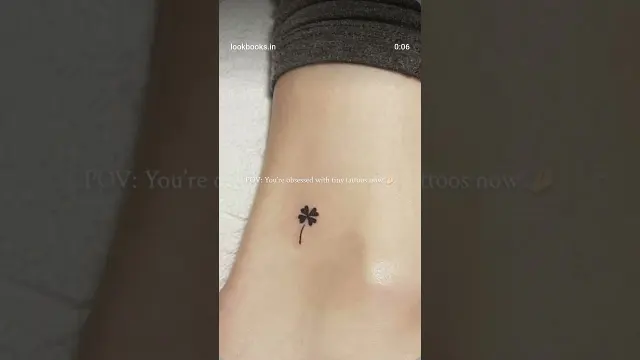
 Tiny Details and Aesthetic Minimalist Tattoo Inspiration
#Tiny Tattoos
1 ideas
Tiny Details and Aesthetic Minimalist Tattoo Inspiration
Get new #Tiny Tattoos ideas by email
Every Thursday: the week's best ideas, with the newest from #Tiny Tattoos.
Related tags
Tiny Tattoos: A Guide to Small, Minimalist Ink
A tiny tattoo is exactly what it sounds like: a small design, often no bigger than a fingertip, placed somewhere it can be shown or hidden as you like. What makes these pieces interesting is not their size but the ratio between size and meaning. When there is very little room, every line has to earn its place, so the result tends to be simple, deliberate and easy to live with.
Small marks have accompanied tattooing for as long as people have been marking their skin, but the modern taste for the miniature has more to do with how tattooing fits into ordinary life: a first tattoo, a private reminder, a shape that sits under a sleeve or beside a ring rather than across a whole arm.
The main styles
- Fine line: thin, delicate outlines, often with little or no shading. Elegant, but the lines are the whole design, so precision matters.
- Single needle: a technique using a very fine needle configuration, giving soft, drawing-like detail. It suits small scale but tends to soften over time.
- Micro-realism: tiny portraits, animals or objects rendered with fine shading. Impressive, though detail at this scale is fragile.
- Dotwork and stippling: shading built from tiny dots, which can look gentle and textured.
- Hand-poked: ink applied slowly by hand with a single needle, often used for simple symbols and lettering.
- Script and symbols: short words, initials, dates, moons, arrows, botanical sprigs — the quiet vocabulary of small tattoos.
Read more
What to know before you book
Simplicity ages best. Skin changes over the years, and very fine detail has less room to spread than a bold line does. If a design is dense, ask whether it can be drawn larger or stripped back; a good artist will tell you honestly what will hold up.
Placement shapes the design. Areas that bend, stretch or see a lot of sun — fingers, ribs, feet, the inside of the wrist — tend to fade faster and may need touching up. Somewhere flatter and more protected will keep a small piece sharper for longer.
Think about the reason, not just the picture. Tiny tattoos are often chosen as a first tattoo or as a private note to yourself, so take your time. Live with the idea for a while, sketch it, and see whether you still like it weeks later.
Choose your studio carefully. Visit in person, ask about hygiene and licensing, look at healed work rather than only fresh photographs, and never rush a decision to save money. A small tattoo is still a tattoo.
Afterwards, follow the aftercare instructions you are given, keep the area clean, and protect it from sun while it heals. If something looks unusual while it is healing, ask your artist or a pharmacist rather than guessing.
Done thoughtfully, a tiny tattoo is less a statement than a detail — quiet, personal, and easy to keep.
#Tiny Tattoos: frequently asked questions
How do I start planning a tiny tattoo if it's my first one?
Start with the meaning rather than the picture: decide what you want the mark to hold for you, then let that shape the design. Sketch it, sit with the idea for a few weeks, and see whether you still like it once the novelty has worn off. When you're ready, visit studios in person to ask about hygiene and licensing before you commit.
What do I actually need to bring or prepare before an appointment?
You mostly need a settled design, a clear idea of where it will sit on your body, and an honest conversation with the artist about how it will age at that size. Look at healed work rather than only freshly photographed pieces, since healed results tell you far more about an artist's hand. Eat and rest beforehand, and skip the urge to bargain — a small tattoo is still a tattoo.
Which style of tiny tattoo should I choose?
It depends on how much detail you want to survive the years: fine line and single needle pieces look delicate and drawing-like, but the lines are the entire design, so precision matters. Micro-realism is impressive at close range yet fragile at miniature scale, while dotwork, simple symbols and short script tend to stay legible and gentle. Whatever you pick, simplicity generally ages better than dense detail.
Where should I place a small tattoo so it lasts well?
Flatter, more protected spots keep a small piece sharper for longer, because skin there stretches and sees less sun. Areas that bend, crease or catch a lot of light—fingers, ribs, feet, the inner wrist—tend to fade faster and may need touching up. Ask your artist to be honest about how your chosen placement will treat the design over time.
How should I care for a tiny tattoo while it heals?
Follow the aftercare instructions your artist gives you, keep the area clean, and shield it from sun while it heals. Resist picking or scratching as it settles, since that is what costs you crisp edges. If anything looks unusual during healing, ask your artist or a pharmacist rather than guessing.
What are the most common mistakes people make with tiny tattoos?
Going too small with too much detail is the classic one—dense designs need room, so ask whether yours can be drawn larger or stripped back. Rushing the studio choice to save money is another, along with choosing placement by looks alone rather than by how that skin behaves. And treating it as a casual purchase rather than a permanent one is the mistake underneath all the others.
Videos come from YouTube and posts from Instagram; titles and summaries are our own. All rights belong to their creators.