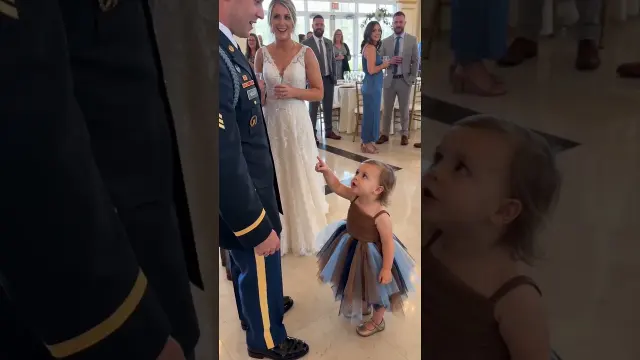
 Little Flower Girl Shares Funny Moment at Army Wedding
#Toddler Humor
1 ideas
Little Flower Girl Shares Funny Moment at Army Wedding
Get new #Toddler Humor ideas by email
Every Thursday: the week's best ideas, with the newest from #Toddler Humor.
Related tags
Toddler Humor: Why Little Ones Laugh and How to Join In
A toddler's laugh is one of the most disarming sounds there is. It arrives suddenly, often at something an adult barely notices, and it can stop just as quickly. Understanding what is happening behind that giggle helps you enjoy it more, and gives you a few reliable ways to bring it back.
What toddler humor actually is
Humor in the early years is not really about jokes. It grows out of play, surprise and a growing sense of how the world is supposed to work. A young child spends a great deal of energy learning what normally happens: shoes go on feet, spoons go in mouths, dogs say woof. Once that pattern is firmly in place, breaking it becomes funny. A shoe worn as a hat is hilarious precisely because the child knows it is wrong.
This is why the same silly moment can be repeated a hundred times and still get a laugh. The pleasure comes from recognizing the rule and then enjoying it being playfully broken, in a setting where the child feels completely safe.
Read more
The kinds of humor toddlers enjoy
- Physical comedy: wobbling, falling over on purpose, funny walks, exaggerated faces.
- Wrongness in the right place: an animal making the wrong sound, a banana used as a telephone.
- Peekaboo and hiding: the joy of something disappearing and coming back.
- Silly sounds: nonsense words, raspberries, invented noises that break the rhythm of ordinary speech.
- Being the one in charge: a toddler telling you the wrong answer and waiting, delighted, for you to be confused.
Around the age of two and three, children also begin to enjoy very simple wordplay, often based on sounds rather than meaning. Nonsense that sounds almost like a real word can be funnier than an actual joke, and a child's first attempts at making one up are usually more charming than clever.
What beginners should know
Timing and mood matter more than the material. A tired, hungry or overstimulated child rarely finds anything funny, no matter how good the joke. Watch for the moment when your child is relaxed and playful, and let the silliness be short. Humor that goes on too long tips easily into overexcitement.
Follow your child's lead. Notice what makes them laugh, then offer small variations on it rather than something brand new. Repetition is not boring to a toddler; it is how they master a moment.
Keep laughing with them, not at them. Gentle teasing can be affectionate within a close relationship, but a young child cannot always tell the difference between being included in the joke and being the joke. If a game ends in tears rather than giggles, it has probably gone a step too far.
Practical ideas
Make everyday routines slightly absurd: put the wrong sock on, pretend the spoon is lost, sing the tidy-up song with deliberately mixed-up words. Use pauses, because anticipation does much of the work. Let your child be the funny one sometimes, and laugh generously when they try.
Most of all, treat these small moments as worth having. A shared giggle over nothing in particular is one of the simplest ways to connect, and the memory of it tends to stay with you long after the joke has stopped being funny.
#Toddler Humor: frequently asked questions
How do I start being funny with my toddler?
Start by paying attention rather than planning material — notice what already makes your child giggle and build small variations on it. Keep the silliness brief and pick a moment when your child is relaxed, fed and not overtired, since mood matters far more than the joke itself. Follow their lead instead of introducing something brand new.
What kind of humor does a toddler actually understand?
Very young children are not really following jokes; they are enjoying surprise and playful wrongness. Something that breaks a rule they already know — a shoe worn as a hat, a cow saying meow, a spoon used as a phone — lands because they recognize the mistake. Physical comedy, peekaboo, silly sounds and being playfully in charge all work for the same reason.
Why does my toddler laugh at the same silly thing again and again?
Repetition is how a young child masters a moment, so the hundredth time can be as funny as the first. Each repeat confirms that the pattern is safely broken and that nothing bad follows, which is where the pleasure comes from. Offering small twists on the familiar game keeps it fresh without losing what works.
What are common mistakes when trying to make a toddler laugh?
The usual slip is pushing the silliness past the point where it tips into overexcitement, which often ends in tears rather than giggles. Another is laughing at your child rather than with them, since a young child cannot always tell whether they are included in the joke or are the joke. Going for a big new gag instead of a small variation on what already works is also a common miss.
How can I bring humor into everyday routines?
Make ordinary moments slightly absurd — put the wrong sock on, pretend the spoon has vanished, sing a familiar song with deliberately mixed-up words. Pauses do much of the work, because anticipation is where the laugh builds. It also helps to let your child be the funny one sometimes and to laugh generously when they try.
My toddler's jokes don't make sense — should I still laugh?
Yes, and warmly, because the attempt matters more than the punchline. Early wordplay usually runs on sound rather than meaning, so nonsense that almost sounds like a real word can be funnier to your child than an actual joke. Laughing at their effort encourages them to keep experimenting with humor.
Videos come from YouTube and posts from Instagram; titles and summaries are our own. All rights belong to their creators.