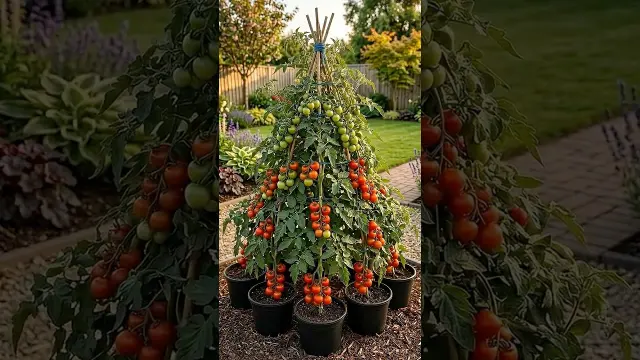
 Tomato Teepee Vertical Garden for Small Spaces
#Tomato Growing
1 ideas
Tomato Teepee Vertical Garden for Small Spaces
Get new #Tomato Growing ideas by email
Every Thursday: the week's best ideas, with the newest from #Tomato Growing.
Related tags
Growing Tomatoes: A Complete Beginner's Guide
Growing tomatoes is one of the most rewarding things you can do with a patch of sun and a few pots. The tomato began as a small, wild fruit in the Andean region of South America and was first cultivated in Mesoamerica, where it was domesticated long before it travelled to Europe and the rest of the world. Botanically it is a fruit of the nightshade family, treated in the kitchen as a vegetable and in the garden as a warm-season annual, though the plant is actually a tender perennial that will keep growing as long as conditions suit it.
Choosing what to grow
The first decision is the habit of the plant. Determinate varieties grow to a set height, ripen their crop in a short burst and then stop, which makes them neat, manageable and good for containers. Indeterminate varieties keep extending and fruiting until cold weather ends them; they need more room and more support but give a long, steady harvest.
Beyond that, the choice is mostly about fruit. Cherry tomatoes are the easiest and most forgiving, quick to ripen and generous. Salad and slicing types sit in the middle, and beefsteak types promise the largest fruit at the cost of a longer wait. Heirloom varieties carry colour, shape and flavour that rarely reach a shop shelf, while modern hybrids tend to offer reliability and disease resistance. If you are new to this, grow two or three kinds rather than a dozen, and see which suits your space.
Read more
Sowing and planting out
Tomatoes need warmth. Sow indoors or under cover in a fine seed compost, barely covering the seed, and keep it consistently damp and warm. Prick seedlings out into individual pots as soon as the first true leaves appear, and give them as much light as you can so they grow sturdy rather than spindly.
Before planting outside, harden the plants off over a week or so, gradually lengthening their time outdoors. Choose a sunny, sheltered spot and wait until nights are reliably mild. Plant deeply, burying part of the stem, because tomatoes root readily along it and a deeper root system means a stronger plant. Water them in well.
Day-to-day care
- Water regularly and deeply rather than little and often; irregular watering is a common cause of split fruit.
- Mulch the soil surface to hold moisture and keep it off the leaves.
- Feed once the first flowers set fruit, following the instructions on whatever you use.
- Give plants a stake, cage or teepee early, before they need it, and tie stems loosely as they climb.
- Pinch out side shoots on indeterminate plants if you want fewer, larger trusses, and remove lower leaves that touch the soil.
- Grow flowers nearby to bring in pollinators and beneficial insects, and rotate where you plant each year.
Harvesting
Pick when the fruit is fully coloured and gives slightly at the touch; it will ripen a little further on a windowsill but flavour is best from the vine. At the end of the season, green fruit can be ripened indoors, used in chutney, or eaten fried. A single plant, tended carefully, will teach you more than any book.
#Tomato Growing: frequently asked questions
What is the easiest way to start growing tomatoes for the first time?
Begin with seed sown indoors or under cover in a fine, damp compost, kept warm and given plenty of light once the seedlings appear. Move the young plants into individual pots, then accustom them gradually to outdoor conditions before planting them in a sunny, sheltered spot once the nights are mild. Starting small with a few plants in pots teaches you more than a large, ambitious plot.
Which type of tomato plant should I pick — determinate or indeterminate?
Determinate varieties stop at a set height and ripen most of their crop in one go, which suits containers and small spaces. Indeterminate varieties keep growing and fruiting until the cold stops them, so they need more room and sturdy support but reward you with a long harvest. Choose based on how much space and staking you can offer.
What is the difference between cherry, beefsteak and heirloom tomatoes?
Cherry types are the most forgiving and quickest to ripen, while beefsteak types give the biggest fruit but take longer to get there. Heirlooms bring unusual colour, shape and flavour that rarely reach a shop shelf, and modern hybrids are bred for reliability. If you are new to this, grow a few different kinds rather than many, and see what suits your space.
What are the most common mistakes when caring for tomato plants?
Watering a little and often is the usual culprit behind split fruit, so water deeply and regularly, and mulch to hold moisture. Another frequent slip is waiting to stake the plants until they are already sprawling, when tying them in early is far easier. Also keep lower leaves off the soil and rotate where you plant each season.
How do I grow tomatoes in a small space or on a balcony?
Compact, determinate plants in generous pots work well where ground space is limited, and a teepee-style frame lets you train stems upward instead of outward. Put the pots somewhere sunny and sheltered, and tie the stems loosely as they climb. Growing a few flowers nearby helps bring in pollinators and beneficial insects.
How do I know when tomatoes are ready to pick?
Pick when the fruit has reached its full colour and gives slightly when you press it, since flavour is best straight from the vine. Fruit that is still firm will ripen a little further indoors on a windowsill. At the end of the season, any green fruit left can be ripened indoors or used in cooking rather than wasted.
Videos come from YouTube and posts from Instagram; titles and summaries are our own. All rights belong to their creators.