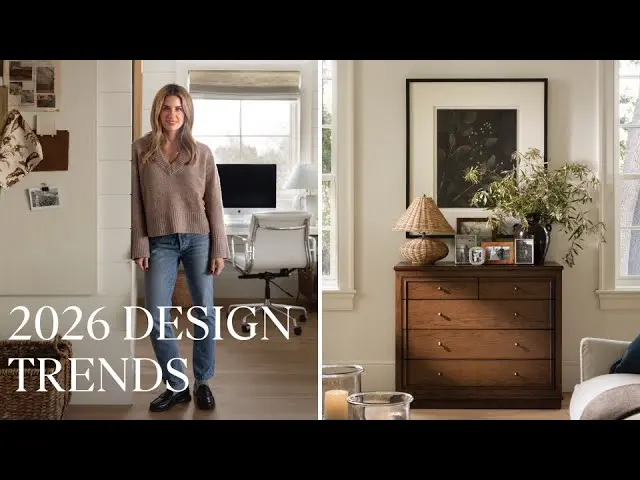
 Interior Design Trends and Visions with Shea McGee
#Traditional Style
1 ideas
Interior Design Trends and Visions with Shea McGee
Get new #Traditional Style ideas by email
Every Thursday: the week's best ideas, with the newest from #Traditional Style.
Related tags
Traditional Style: A Guide to Timeless, Layered Interiors
Traditional style is one of the oldest and most forgiving ways to furnish a home. It draws on the European and colonial interiors of the past — the Georgian, Victorian and country house rooms that were built around craftsmanship, comfort and a sense of arrival — and it has never really gone out of use. Where modern design strips a room back, traditional design builds it up, layer by layer, until it feels lived in rather than staged.
What defines it
The backbone of the look is symmetry. Think of a fireplace with matching armchairs on either side, a pair of lamps on a sideboard, a mirror centred above a console. Balance is what makes a traditional room feel calm and intentional, even when it is full of things.
Colour tends to be warm and grounded: cream, sage, ochre, brick, deep green and navy. Walls often carry a little depth — a soft glaze, a subtle wallpaper, a painted panel — rather than flat bright white. Wood is important and usually dark or medium in tone: mahogany, walnut, oak, fruitwood.
Read more
Furniture is solid and shapely, with turned legs, rolled arms, buttoned upholstery and carved detail. Fabric does a lot of the work: velvet, linen, wool, chintz, ticking. Prints are classically floral, striped, damask or toile, and they are often mixed on purpose — a bold floral sofa with a quieter stripe on the curtains and a small check on a cushion.
The pieces that carry it
You do not need a house full of antiques. A traditional room usually has a few anchors: a wingback or a high-backed sofa, a wooden chest or sideboard, a rug with a faded pattern, a pair of lamps with fabric or brass shades, a framed picture or two, and something inherited or secondhand that has a story. Books, ceramics, baskets and plants fill the gaps.
Lighting matters more than people expect. Traditional rooms want warm, low, scattered light — table lamps and wall lights rather than one bright ceiling fixture — so the room softens as the evening comes in.
How to make it feel current
The mistake people make is buying a whole period room at once, which can read as a museum set. Instead, mix eras: put an old piece next to something plain and modern, keep the walls simple, and let one or two things be the loudest voice. Limiting the palette to three or four colours stops the layers from turning into clutter.
Practical advice for beginners: start with the largest surface, which is usually the floor or the rug, then choose the sofa, then the curtains, then the small things. Measure before you buy anything upholstered. Buy the good piece once rather than three cheap versions of it. And leave room to add slowly — traditional style rewards patience, because it is really a record of what you have chosen to keep.
#Traditional Style: frequently asked questions
How do I start a traditional-style room without buying everything at once?
Begin with the biggest surface in the room, which is usually the rug or the floor, and let it set the colour mood before you choose anything else. Work upward from there — sofa, then curtains, then the small decorative pieces — so each layer responds to the one before it. Traditional rooms are built slowly, and leaving space to add things over time is part of what makes them feel collected rather than staged.
Do I really need antiques to get the traditional look?
No — you need a handful of solid anchors rather than a house full of period furniture. A high-backed sofa or wing chair, a wooden chest or sideboard, a faded-pattern rug, a matched pair of lamps and a framed picture will carry most of the look. One inherited or secondhand piece with a bit of history does more for the room than a showroom set, and it is the cheapest way to add character.
Which traditional style should I choose — Georgian, Victorian or country house?
Choose by the architecture you already have rather than by taste alone: formal, symmetrical rooms suit the Georgian manner, taller rooms with more ornament can take Victorian weight, and softer, less grand spaces sit naturally in the country house idiom. All three share the same bones of symmetry, warm colour and substantial furniture, so the differences are mostly a matter of how much decoration the room can hold. It also helps to decide how formal you want the room to feel day to day.
How do I care for traditional fabrics and wooden furniture?
Keep upholstery out of direct sun, vacuum it gently and regularly, and deal with spills straight away rather than letting them set. Wood prefers a stable, not-too-dry room, a wipe with a barely damp cloth, and a occasional light application of polish rather than heavy layers that build up. Rotating cushions and keeping lamps away from fabric will noticeably extend the life of both.
How do I stop a traditional room from looking cluttered or dated?
Hold the palette to a small handful of related colours and let only one or two things in the room be loud. Pairing an old piece with something plain and modern, and keeping the walls relatively quiet, gives the layered look room to breathe. Buying an entire period room at once is what tips it into museum-set territory, so mix eras instead.
What are the common mistakes people make with traditional style?
The usual ones are buying everything in a single shopping trip, overfilling the room with pattern, and skipping measurements before ordering upholstery. Another is choosing a bright overhead light where warm, low, scattered lamplight is what actually makes these rooms feel soft in the evening. Buying one good piece instead of several cheap substitutes saves money in the long run and shows in the room.
Videos come from YouTube and posts from Instagram; titles and summaries are our own. All rights belong to their creators.