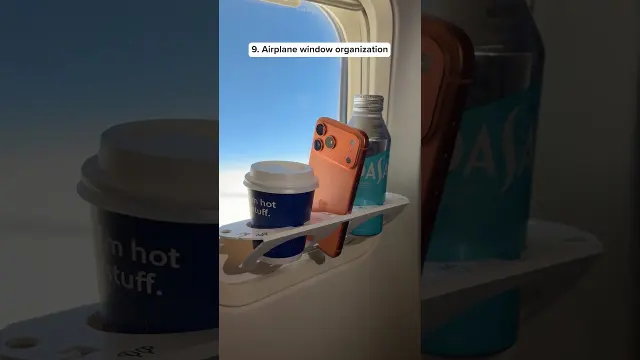
 Top Ten Travel Gadgets for the Airport and Airplane
#Travel Accessories
1 ideas
Top Ten Travel Gadgets for the Airport and Airplane
Get new #Travel Accessories ideas by email
Every Thursday: the week's best ideas, with the newest from #Travel Accessories.
Related tags
Travel Accessories: A Practical Guide to Packing Well
Travel accessories are the small, portable items that make moving from one place to another easier, more comfortable or more organised. They are not the destination and they are not the suitcase itself — they sit in between, filling the gaps that luggage and clothing leave behind. A packing cube, a neck pillow, a universal adapter, a refillable bottle: none of these will make a trip memorable, but their absence is felt constantly.
The category grew out of practical necessity rather than fashion. As rail networks, then airlines, then budget carriers pushed more people through more journeys, travellers began improvising solutions to recurring problems — how to keep liquids from leaking, how to sleep upright, how to keep a phone alive through a long layover. Many of today's accessories are simply good versions of things people were already doing with plastic bags and rolled-up jumpers.
The main kinds
- Organisers: packing cubes, dopp kits, cable pouches and folder-style sleeves. They compress clothing, separate clean from worn, and let you find one thing without unpacking everything.
- Comfort items: neck pillows, eye masks, earplugs, light blankets and compression socks for long seated stretches. Choose soft, washable materials and check that nothing constricts.
- Power and connectivity: adapters, power banks, charging cables and multi-port plugs. Buy certified products from known makers rather than the cheapest unbranded option.
- Security and identification: money belts, luggage tags, document wallets and small locks. Keep essential documents on your body rather than in a checked bag.
- Containers: refillable bottles, travel-sized jars, leak-resistant pouches. Check the current rules of whichever airline or airport you are passing through before filling them.
Read more
What beginners should know
Buy for the trip you actually take, not the one you imagine. A week of city breaks calls for a different kit than a camping trip or a long-haul flight. Start with the basics — something to organise clothes, something to carry documents, something to charge a phone — and add only when a real annoyance repeats itself.
Weight and bulk matter more than they seem. Accessories are the easiest way for a light bag to become a heavy one, so favour items that fold flat, nest inside each other or do two jobs. Look for durable fabrics, repairable zips and closures that are simple to operate with cold hands or in a hurry.
It also helps to have a home for everything. A single small pouch for cables, a fixed pocket for passports, a set routine for what goes where means you notice quickly when something is missing — and you spend less of your trip searching. Good accessories are the ones you stop thinking about.
#Travel Accessories: frequently asked questions
How do I start building a set of travel accessories without overspending?
Begin with the trip you actually take rather than an imagined one, and cover only the gaps that keep annoying you: something to organise clothes, something to hold documents, something to keep a phone charged. Add a new item only when a real problem repeats itself, so your kit grows from experience instead of guesswork.
What should a beginner pack as travel accessories for a first trip?
The essentials are organisers for clothing, a pouch or wallet for documents, charging gear and cables, and a refillable container for drinks. Anything beyond that is optional and depends on how you travel. Keeping the kit small at first makes it easier to notice what you genuinely miss.
How do I choose between the different kinds of travel accessories?
Think in categories — organisers, comfort items, power and connectivity, security and identification, and containers — and pick the ones that match your journey type and length. Favour items that fold flat, nest inside one another or serve two purposes, since weight and bulk build up faster than expected. Check that materials are durable and closures are easy to use in a hurry.
How should I care for travel accessories so they last?
Choose soft, washable materials for comfort items and follow the care label rather than guessing at temperatures. Wipe down containers and pouches between trips, let everything dry fully before packing it away, and store the kit in one fixed place so nothing goes missing between journeys. Inspect zips and seams occasionally and repair rather than replace.
What common mistakes do people make with travel accessories?
The usual ones are buying for a hypothetical trip, letting small items pile up until a light bag turns heavy, and cramming everything into one undifferentiated pile. Another is skipping the check on current airline and airport rules for bottles and containers before filling them. Giving every item a fixed home makes it obvious when something is missing.
Are travel accessories worth it if I travel rarely?
Yes, but keep the set minimal — a few well-made basics will serve you across city breaks, family visits and longer journeys alike. The value comes from removing recurring friction, not from owning a large collection. Buy certified, durable versions of the few things you use and skip the rest.
Videos come from YouTube and posts from Instagram; titles and summaries are our own. All rights belong to their creators.