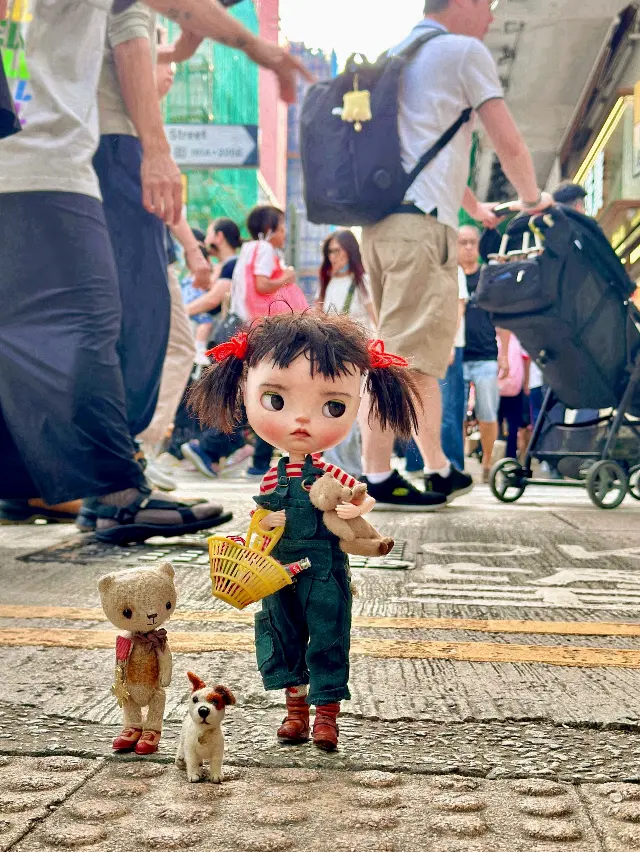
 A Light-Hearted Hong Kong Travel Poem About Food and Shopping
#Travel Poetry
1 ideas
A Light-Hearted Hong Kong Travel Poem About Food and Shopping
Get new #Travel Poetry ideas by email
Every Thursday: the week's best ideas, with the newest from #Travel Poetry.
Related tags
Travel Poetry: Writing the Places You Pass Through
Travel poetry is simply poetry that takes a journey as its subject or its method. Sometimes the trip is the material — a city, a coastline, a train window, a meal eaten alone in a strange street. Sometimes the travelling is the way the poem gets written, noted down as it happens, in a notebook, on the back of a ticket. Either way, the poem is not a report. It is the small, particular thing a place did to you, caught before it fades.
Where it comes from
Poetry and travel have kept company for a very long time. Classical poets wrote of voyages and homecomings; Japanese poets of the classical era made famous journals out of walking from one province to another, building short poems into prose as they went. In Europe, the fashion for long educational journeys gave writers an excuse to record ruins, mountains and foreign manners in verse. More recently, ordinary holidays and migrations have become ordinary poetry subjects too. What connects all of it is the same instinct: a place is easier to hold when it is written down.
Kinds and shapes
Read more
There is no single form. Travel poems borrow whatever suits the trip.
- Haiku and other short forms, useful for a single glance or a single sound.
- Postcard and letter poems, addressed to someone at home.
- List poems, made of what you ate, saw, carried or lost.
- Prose poems, for journeys that need a wider breath.
- Sequence poems, several small pieces treating one place from different angles.
You can also write about a journey without ever reaching it: poems about a map, a photograph, a language you cannot speak, a place you left.
What beginners should know
The temptation is to describe the whole trip, in order, from arrival to departure. Resist it. A poem that tries to cover everything usually ends up touching nothing. Choose one moment — a smell in a market, a misunderstanding at a counter, the particular light on a wall at six in the evening — and let that moment carry the place.
Write in the place, not after it. Notes made on the spot keep details that memory quietly tidies away. Collect nouns: what things are called, what signs say, the words you had to learn to ask for water. Avoid the adjectives that could describe anywhere. "Beautiful" tells a reader nothing; a wet bench, a plate of unfamiliar greens, a dog asleep under a scooter tells them where they are.
Practical tips
- Carry something to write in, and write badly and quickly while you are there.
- Write down what you actually noticed, not what you think you should have noticed.
- Let local words stay in the poem if they earn their place.
- Keep the poem small; a few sharp details beat a full itinerary.
- Read it aloud before you finish, and cut whatever you only put in to explain.
- Leave it alone for a while. The place will still be there, and the poem will be clearer.
Above all, be honest rather than impressive. The best travel poems sound like a person who went somewhere, paid attention, and came back with something small and true.
#Travel Poetry: frequently asked questions
How do I start writing a travel poem if I have never written poetry before?
Begin in the place itself rather than at your desk afterwards, scribbling quickly and badly in a notebook or on whatever paper is to hand. Pick one moment that struck you — a smell in a market, a sign you couldn't read, the light on a wall — and build the poem around that instead of trying to record the whole trip. Honesty matters more than polish, so write what you actually noticed rather than what you feel a traveller ought to have noticed.
What do I need to take with me to write poetry while travelling?
Something small to write in is really the only requirement, plus the habit of stopping when something catches your attention. Collect nouns as you go: what objects are called, what the signs say, the words you had to learn to ask for water. Those concrete details survive far better than any impressions you try to reconstruct from memory later.
Which form of travel poem should I choose?
There is no single right shape, so borrow whatever suits the journey: a short form for a single glance or sound, a postcard or letter poem addressed to someone at home, a list of what you ate and carried and lost, or a looser prose poem for a trip that needs more room. If one place gives you too much for a single piece, a sequence of small poems can treat it from different angles. You can also write about a journey without reaching it at all — a map, a photograph, a language you cannot speak.
How do I keep a travel poem from turning into a diary of the whole trip?
Resist the urge to move in order from arrival to departure, since a poem that covers everything usually ends up touching nothing. Let one chosen moment carry the entire place, and keep the piece small enough that each detail earns its space. Cut anything you added only to explain, and read the poem aloud before you call it finished.
What are the common mistakes people make when writing about a place?
The most frequent slip is leaning on adjectives that could describe anywhere — calling something beautiful tells a reader nothing. Another is writing after the trip rather than during it, when memory has quietly tidied away the specifics that made the place distinct. Leaving a draft alone for a while helps too, because you return to it with a clearer eye and a better sense of what to keep.
Do I need to know the local language to write a travel poem about a place?
No, and unfamiliarity can even work in the poem's favour, since the words you couldn't translate are often the ones that stay with you. Let local words remain in the poem when they earn their place, and notice what you had to learn just to ask for something simple. A poem about a language you cannot speak is a perfectly good travel poem in its own right.
Videos come from YouTube and posts from Instagram; titles and summaries are our own. All rights belong to their creators.