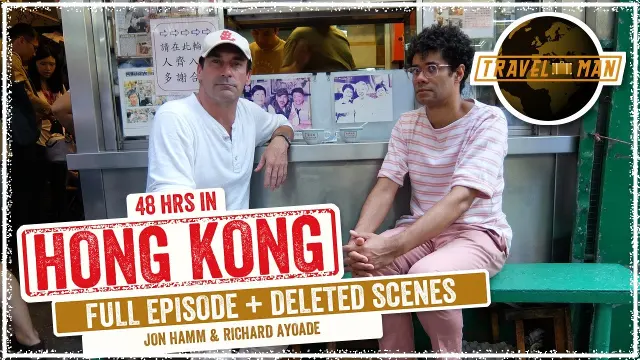
 Travel Man: Jon Hamm and Richard Ayoade in Hong Kong
#Travel Show
1 ideas
Travel Man: Jon Hamm and Richard Ayoade in Hong Kong
Get new #Travel Show ideas by email
Every Thursday: the week's best ideas, with the newest from #Travel Show.
Related tags
Travel Show: A Guide to Travel Television
A travel show is a television programme built around journeys: someone goes somewhere, and we go with them. The format is deceptively simple, but it has become one of the most durable kinds of factual television, because it satisfies two appetites at once — curiosity about the wider world and the pleasure of watching someone else navigate it.
Where it comes from
Travel filming is nearly as old as cinema itself; early filmmakers carried cameras to other countries and brought back moving pictures of streets, crowds and landscapes. Television inherited that habit and added a host. From the post-war decades onward, travel programming settled into a recognisable shape: a presenter, a route, and a camera that follows both. The genre has since branched in many directions, but the basic contract — take me somewhere I have not been — has not changed.
The main kinds
Read more
- The presenter-led journey, in which a single curious traveller carries the series with their reactions and commentary.
- The destination guide, offering practical orientation: where to stay, what to eat, how to move around.
- The slow or immersive travelogue, less interested in itineraries than in landscape, silence and observation.
- The food-centred travel show, where the journey is organised around markets, kitchens and local cooking.
- The competitive or challenge format, which puts travellers under time or budget pressure.
- The historical or cultural travelogue, following a route through architecture, art or a period of history.
What makes a good one
The best travel shows do more than display pretty places. They convey a sense of place: how a city sounds in the morning, how people actually live there, what a region smells like and argues about. Good hosts are not necessarily experts — they are good company, genuinely interested, willing to be lost, and honest when something disappoints them. A programme that admits difficulty tends to be more convincing than one that presents every destination as flawless.
If you are new to the genre
Start with a place you already know something about, so you can judge how the programme treats it. Notice whether locals are given room to speak or are used as decoration. Pay attention to how much of the trip happens in transit, because travel shows are often at their most revealing in stations, buses and waiting rooms rather than at landmarks.
Practical notes
Viewers often watch travel shows for planning, and the genre rewards a little scepticism. Screen time is edited, seasons vary, and a place filmed on a bright day can look very different in the rain. Use programmes as a source of ideas rather than a source of facts about prices, opening hours or access, and check practical details separately before you go.
Whether you watch to plan a trip or simply to leave your own street for an hour, the appeal is the same: the quiet reminder that elsewhere is a real place, inhabited by people going about their ordinary days.
#Travel Show: frequently asked questions
What exactly counts as a travel show?
It is factual television built around a journey, where a host goes somewhere and the camera takes the viewer along. What separates it from a simple holiday video is structure: a route, a presenter, and a deliberate interest in how a place actually works. The subject is not just the scenery but the experience of moving through somewhere unfamiliar.
How do I pick the right kind of travel show for my mood?
Decide first whether you want information or atmosphere. Destination guides suit planning, food-led programmes suit appetite and curiosity about daily life, and slow travelogues suit evenings when you want landscape more than itinerary. If you enjoy personality as much as place, choose a presenter-led journey; if you want pressure and momentum, a challenge format delivers that.
What makes a host worth watching?
The strongest hosts are good company rather than walking encyclopedias: curious, willing to be lost, and honest when something falls flat. A presenter who admits a place disappointed them makes the rest of the journey more believable. Watch whether locals get room to speak, or whether they are only there to decorate the host's reactions.
Can I use travel shows to plan a real trip?
Yes, but treat them as a source of ideas rather than facts. Editing compresses distances, seasons change how a place looks and feels, and a bright filming day hides a lot. Note down what interests you, then verify practical details like access and timing somewhere independent before you commit.
What do people get wrong when they watch travel programmes?
The usual mistake is taking the itinerary as a recommendation, when it was assembled for filming convenience. Another is skipping the transit scenes, which are often the most revealing part of the trip. Also be wary of judging a whole region by a single episode filmed in its most photogenic corner.
Any viewing ideas for a family evening or a rainy afternoon?
Food-centred shows work well for mixed ages because the appeal is immediate and needs no background knowledge. A destination guide set somewhere the family has talked about can turn into a shared planning session. And a slow travelogue is good background for a quiet afternoon when nobody wants to concentrate hard.
Videos come from YouTube and posts from Instagram; titles and summaries are our own. All rights belong to their creators.