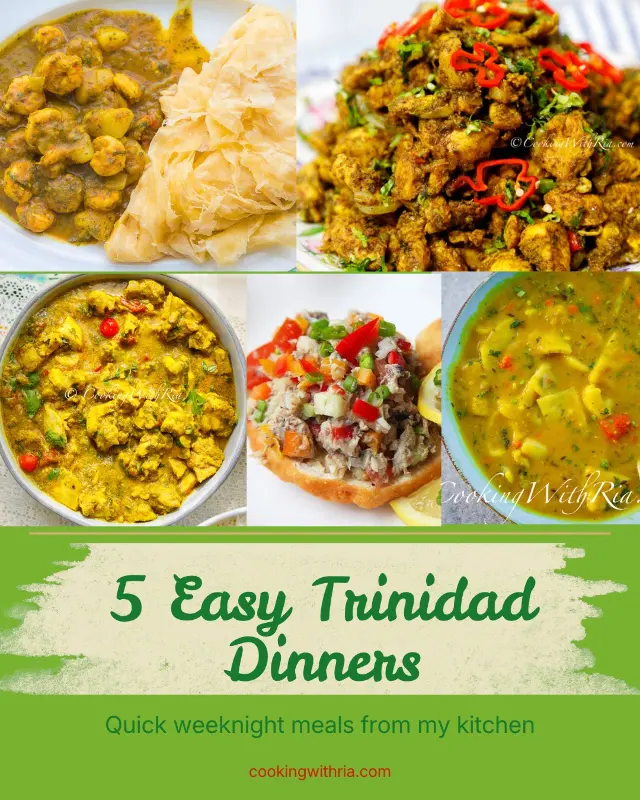
 Five Easy Trinidadian Dinners to Cook This Week
#Trinidadian Food
1 ideas
Five Easy Trinidadian Dinners to Cook This Week
Get new #Trinidadian Food ideas by email
Every Thursday: the week's best ideas, with the newest from #Trinidadian Food.
Related tags
Trinidadian Food: Flavours, Traditions and Basics
Trinidadian food is a vibrant Caribbean cuisine shaped by many influences, including West African, Indian, Indigenous, European and Chinese traditions. It reflects the island’s history of migration and cultural mixing, so meals often combine bold seasoning, slow-cooked stews, fresh herbs, fiery peppers and comforting breads or rice. The result is food that feels both deeply home-cooked and richly layered.
What defines Trinidadian food
At its heart, Trinidadian cooking is about balance: savoury, spicy, tangy and aromatic flavours working together. Many dishes begin with a seasoning base made from onion, garlic, fresh herbs and pepper, then build with ingredients such as tomatoes, coconut milk, curry spices, legumes, root vegetables or meat. Rice, roti, cassava, ground provisions and bread are common staples, while chutneys and pickles often add brightness.
This cuisine is not one single style, but a collection of traditions that have long shared the same kitchen. You may find curried dishes, stewed dishes, fried snacks, soups, stuffed breads and one-pot meals, all part of the same food culture.
Read more
Common dishes and styles
Some of the best-known Trinidadian foods are everyday dishes meant to satisfy and nourish. Curries are especially important, often made with chicken, goat, seafood, chickpeas or vegetables. Stews are usually darker and richer, developed with seasoning, herbs and browning before simmering slowly.
You will also find:
- Doubles, a popular street food made with curried chickpeas and fried flatbread
- Roti, a soft flatbread served with curried fillings
- Pelau, a one-pot rice dish with meat, peas and seasonings
- Callaloo, a leafy, often coconut-based soup or side dish
- Bake and shark, a well-known sandwich made with fried fish and bread
- Pastelles, savoury parcels often associated with festive cooking
Techniques and ingredients
Trinidadian food often relies on layering flavour rather than using complicated methods. A seasoning paste, marinating, browning, roasting and slow simmering are all common approaches. Fresh herbs such as thyme and culantro, along with hot peppers and aromatic spices, are used with confidence but usually in a way that supports the main ingredients rather than overpowering them.
Key ingredients to know include:
- Coconut milk
- Chickpeas and split peas
- Rice
- Plantain
- Cassava and other ground provisions
- Scotch bonnet or other hot peppers
- Curry spices and fresh seasonings
Tips for beginners
If you are new to Trinidadian food, start with a few familiar dishes and focus on building flavour slowly. Taste as you go, especially with pepper and salt, because the seasoning should feel lively but balanced. If a recipe calls for a seasoning base, take your time with it; this step often gives the dish its depth.
It also helps to think of Trinidadian cooking as practical and flexible. Many dishes can be adjusted with different proteins or vegetables, and leftovers often taste even better the next day. Try serving rich curries with rice or roti, and pair fried or savoury dishes with something fresh or tangy to keep the meal balanced.
Trinidadian food is generous, colourful and full of character. Once you understand its basic flavours and techniques, you will find it welcoming and wonderfully adaptable in your own kitchen.
Videos come from YouTube and posts from Instagram; titles and summaries are our own. All rights belong to their creators.